We use cookies

Our website uses essential cookies and, with your consent, additional cookies to measure performance and improve our services. Cookie Policy.

You can change your choice at any time.

MMedXYNews
HomeVideos
© 2026 MedXY
Contact usAbout usPrivacy PolicyMedXY story
MedXY AI/MedXY News/Cardiology

Cardiology

Ask MedXY AI
What is the latest evidence?Key clinical updatesGuideline changes

Latest news

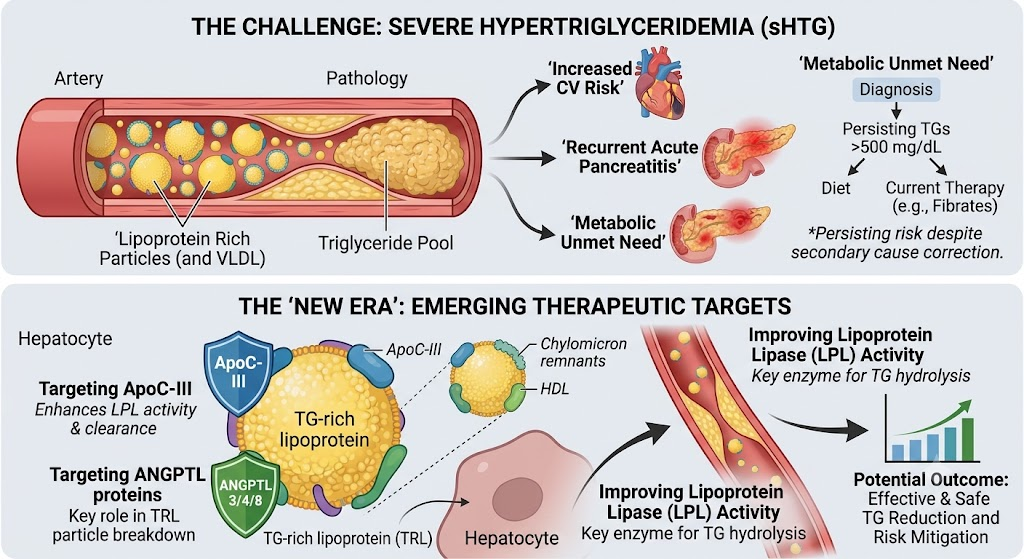
Severe Hypertriglyceridemia: New Therapies and Evolving Understanding
Cardiologyplozasiransevere hypertriglyceridemia

Severe Hypertriglyceridemia: New Therapies and Evolving Understanding

By MedXY|Jul 25, 2026

Severe hypertriglyceridemia (TG >500 mg/dL) affects ~1 in 88 adults and carries risks of pancreatitis and cardiovascular disease. Novel therapies targeting apoC-III, notably plozasiran siRNA, demonstrate dramatic TG reductions and pancreatitis risk mitigation. Pediatric management remains guideline-limited. Standardization of definitions is needed.
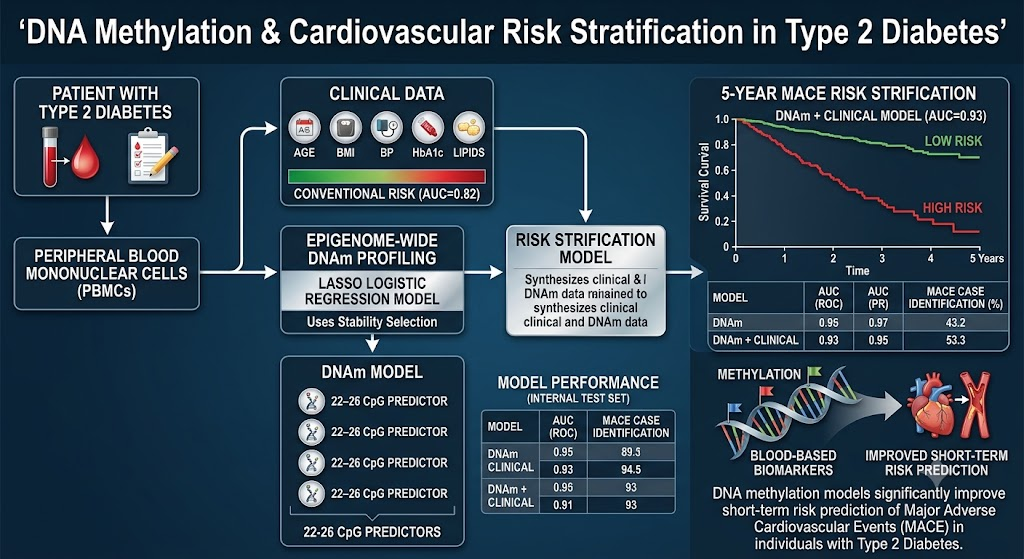
Blood-Based DNA Methylation Models May Improve Cardiovascular Risk Prediction in Type 2 Diabetes
CardiologyDNA methylationcardiovascular risk

Blood-Based DNA Methylation Models May Improve Cardiovascular Risk Prediction in Type 2 Diabetes

By MedXY|Jul 25, 2026

A study of 305 individuals with type 2 diabetes found that blood-based DNA methylation models predicted 5-year major adverse cardiovascular events with high accuracy, suggesting potential for improved risk stratification.

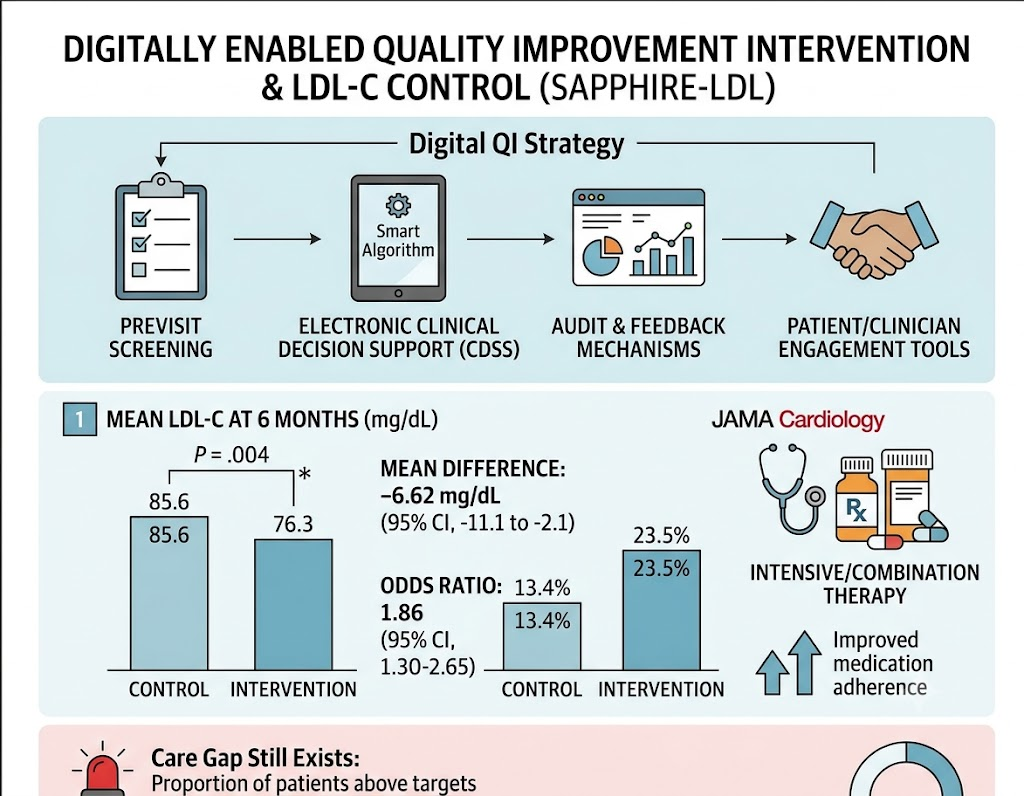
Digitally Enabled QI Intervention Modestly Improves LDL-C Control in ASCVD: SAPPHIRE-LDL Trial
CardiologyLDL-CASCVD

Digitally Enabled QI Intervention Modestly Improves LDL-C Control in ASCVD: SAPPHIRE-LDL Trial

By MedXY|Jul 25, 2026

A cluster RCT in Brazil found that a digitally enabled quality improvement intervention modestly reduced LDL-C and increased treatment intensification in ASCVD patients, but a care gap remained.

Carotid Plaque Macrophage Subtypes and Lipid-Associated Markers Predict Secondary Cardiovascular Events After Endarterectomy
Cardiologymacrophagessecondary MACE

Carotid Plaque Macrophage Subtypes and Lipid-Associated Markers Predict Secondary Cardiovascular Events After Endarterectomy

By MedXY|Jul 25, 2026

Single-cell analysis of carotid plaques identifies four macrophage subtypes, with lipid-associated macrophage markers PLIN2 and TREM1 predicting secondary major adverse cardiovascular events after endarterectomy.

CardiologyObeseThoracostomy

Optimizing Needle Thoracostomy in Obese Patients: Chest Wall Thickness Influences on Site Selection and Needle Length

By MedXY|Jul 24, 2026

Highlight 1. Chest wall thickness (CWT) varies significantly between anatomical sites used for needle thoracostomy…

Initiation, Adherence, and Persistence to Guideline-Directed Medical Therapy After Heart Failure Hospitalization: Bridging the Gap Between Prescription and Sustained Use
Cardiologyguideline-directed medical therapyheart failure

Initiation, Adherence, and Persistence to Guideline-Directed Medical Therapy After Heart Failure Hospitalization: Bridging the Gap Between Prescription and Sustained Use

By MedXY|Jul 24, 2026

This review synthesizes contemporary evidence on initiation, adherence, and persistence of guideline-directed medical therapy after heart failure hospitalization, highlighting critical gaps and strategies to improve long-term patient outcom

Olorofim for Poorly Controlled Disseminated Coccidioidomycosis: Phase 2b Clinical Efficacy and Safety Insights
Cardiologyantifungal therapyclinical trial

Olorofim for Poorly Controlled Disseminated Coccidioidomycosis: Phase 2b Clinical Efficacy and Safety Insights

By MedXY|Jul 24, 2026

This review synthesizes key findings evaluating olorofim’s clinical effectiveness and safety in patients with refractory disseminated coccidioidomycosis, emphasizing its potential role amid limited treatment options.

Loss of ATP-Dependent Citrate Lyase Disrupts Cardiac Metabolism and Drives Left Ventricular Dysfunction
Cardiologyheart failure

Loss of ATP-Dependent Citrate Lyase Disrupts Cardiac Metabolism and Drives Left Ventricular Dysfunction

By MedXY|Jul 25, 2026

A translational study combining human heart tissue, CRISPR mouse models, and multi-omics reveals that loss of the ACL enzyme alters cardiac metabolism, promoting left ventricular dysfunction; restoring citrate flux via IDH1 deletion improves function in mice.

Oral Semaglutide and Cardiovascular Benefits in the SOUL Trial: Impact of Baseline and Changes in HbA1c and BMI on Clinical Outcomes
CardiologyBMIcardiovascular risk

Oral Semaglutide and Cardiovascular Benefits in the SOUL Trial: Impact of Baseline and Changes in HbA1c and BMI on Clinical Outcomes

By MedXY|Jul 22, 2026

This analysis of the SOUL trial shows oral semaglutide reduces major cardiovascular events, with greater benefits linked to higher baseline HbA1c and larger HbA1c reductions, while BMI changes did not significantly affect outcomes.

GLP-1 Receptor Agonists: A Breakthrough in Reducing Atherosclerosis and Cardiovascular Risk Beyond Diabetes and Obesity
Cardiologyatherosclerosiscardiovascular events

GLP-1 Receptor Agonists: A Breakthrough in Reducing Atherosclerosis and Cardiovascular Risk Beyond Diabetes and Obesity

By MedXY|Jul 22, 2026

GLP-1 receptor agonists significantly reduce atherosclerosis progression, inflammatory biomarkers, and cardiovascular events independent of glycaemic control and obesity status, evidenced by robust preclinical and large-scale clinical data.

Impact of Medically Tailored Groceries on Glycemic Control in Medicaid-Insured Adults with Type 2 Diabetes: Insights from a Randomized Controlled Trial
CardiologyHbA1cMedicaid

Impact of Medically Tailored Groceries on Glycemic Control in Medicaid-Insured Adults with Type 2 Diabetes: Insights from a Randomized Controlled Trial

By MedXY|Jul 21, 2026

Medically tailored groceries modestly improve HbA1c and significantly enhance food and nutrition security among Medicaid-insured adults with type 2 diabetes, supporting ‘Food Is Medicine’ strategies in chronic disease management

Development and Validation of a Simplified Martin-Hopkins LDL-C Equation Using Machine Learning
Cardiologycardiovascular riskLDL-C estimation

Development and Validation of a Simplified Martin-Hopkins LDL-C Equation Using Machine Learning

By MedXY|Jul 19, 2026

This study introduces and validates a simplified machine learning-based equation for estimating LDL cholesterol, showing comparable accuracy to the original Martin-Hopkins method and improved ease of use.

Peripheral Artery Disease: Emerging Advances in Medical Therapy to Reduce Cardiovascular and Limb Risks
CardiologyAntithrombotic treatmentLipid lowering

Peripheral Artery Disease: Emerging Advances in Medical Therapy to Reduce Cardiovascular and Limb Risks

By MedXY|Jul 18, 2026

This article reviews recent advances in the medical management of peripheral artery disease, emphasizing comprehensive risk factor control, novel pharmacotherapies, and individualized approaches to improve cardiovascular and limb outcomes i

Revolutionizing Myocardial Scar Detection: AI-Powered Contrast-Free MRI via Virtual Native Enhancement
AIartificial intelligenceContrast-Free Imaging

Revolutionizing Myocardial Scar Detection: AI-Powered Contrast-Free MRI via Virtual Native Enhancement

By MedXY|Jul 18, 2026

A prospective multicenter study demonstrates that AI-driven virtual native enhancement (VNE) MRI can accurately detect and quantify myocardial scars without contrast agents, potentially reducing the need for gadolinium-based imaging in clin

Evaluating Riociguat in Early Pulmonary Vascular Disease: Insights from the ESRA Phase IIa Trial
Cardiologyclinical trialpulmonary arterial hypertension

Evaluating Riociguat in Early Pulmonary Vascular Disease: Insights from the ESRA Phase IIa Trial

By MedXY|Jul 17, 2026

The ESRA trial demonstrates that riociguat is safe and effectively reduces pulmonary vascular resistance in early pulmonary vascular disease, though secondary benefits remain unproven in this early-stage, mostly connective tissue disease-as

Bridging the Gap: Improving Skilled Nursing Facility-to-Home Transitions for Heart Failure Patients
CardiologyDischarge Communicationheart failure

Bridging the Gap: Improving Skilled Nursing Facility-to-Home Transitions for Heart Failure Patients

By MedXY|Jul 16, 2026

This study reveals significant gaps in discharge communication, self-care education, medication management, and follow-up coordination during skilled nursing facility-to-home transitions after heart failure hospitalization, highlighting the

Non-HDL Cholesterol and Apolipoprotein B Measures and Risk of Atherosclerotic Cardiovascular Disease
Cardiologyapolipoprotein Batherosclerosis

Non-HDL Cholesterol and Apolipoprotein B Measures and Risk of Atherosclerotic Cardiovascular Disease

By MedXY|Jul 16, 2026

This study compares the predictive value of non-HDL cholesterol and apolipoprotein B for atherosclerotic cardiovascular disease risk in individuals not on lipid-lowering medication.

Temporal Trends in Oral Anticoagulant Use and Clinical Outcomes Among Older Adults with Atrial Fibrillation: Insights from a Danish Nationwide Study and Contemporary Evidence
Cardiologyatrial fibrillationelderly patients

Temporal Trends in Oral Anticoagulant Use and Clinical Outcomes Among Older Adults with Atrial Fibrillation: Insights from a Danish Nationwide Study and Contemporary Evidence

By MedXY|Jul 16, 2026

Recent decades saw increased anticoagulant use and reduced stroke risk in elderly AF patients, especially with DOACs, but bleeding risks rise notably in very elderly patients, highlighting tailored management needs.

Coronary Artery Calcium and Statin Allocation in the Era of PREVENT: Evidence from MESA
Cardiologyatherosclerotic cardiovascular diseaseCAC

Coronary Artery Calcium and Statin Allocation in the Era of PREVENT: Evidence from MESA

By MedXY|Jul 16, 2026

This study assesses how coronary artery calcium (CAC) scoring refines statin eligibility using the new PREVENT risk calculator, emphasizing its value in borderline risk patients and cautioning against withholding statins solely for CAC 0 in

Hypoxia-Induced BACH1 Elevation Drives Pulmonary Hypertension via Activation of TGFBR2/SMAD Signaling
CardiologyBACH1Huyết Áp Phổi

Hypoxia-Induced BACH1 Elevation Drives Pulmonary Hypertension via Activation of TGFBR2/SMAD Signaling

By MedXY|Jul 15, 2026

BACH1 stabilization under hypoxia promotes pulmonary hypertension by enhancing TGFBR2/SMAD pathway activity in pulmonary artery smooth muscle cells, suggesting BACH1 as a promising therapeutic target for PH.

Prev
12 / 25
1…1011121314…25
Next
Ask MedXY AI

Most popular

Intimate Health
Five Benefits for Women Continuing Sexual Activity After Menopause
Intimate Health
Why Some Women Have a Strong Sex Drive—And Why Men Shouldn't Worry About It
Nursing & care
How often should a couple have sex?
Intimate Health
Classic Intimacy Recommendations: How to Help Women Reach Orgasm and Enjoy Mutual Pleasure
Intimate Health
What Makes a Woman "Physiologically Addicted" Is Never Money, But These Two Relationship Qualities

Browse by specialty

Open language-specific specialty feeds and department pages.

news6629 articlesCardiology1375 articlesClinical Updates1288 articlesOncology1139 articlesDiabetes & Endocrinology842 articlesNeurology820 articlesPublic Health595 articlesGastroenterology572 articles
Hematology-Oncology
487 articles
Pediatrics484 articles
Internal Medicine444 articles