Delphi-2M: The AI That Predicts Your Health 20 Years Ahead
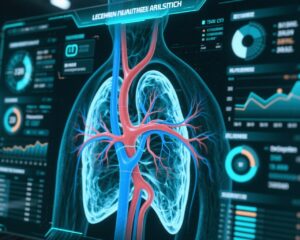
A new AI model, Delphi-2M, predicts the risk of over 1,000 diseases up to 20 years in the future with remarkable accuracy, transforming disease prevention and personalized health management.

Our website uses essential cookies and, with your consent, additional cookies to measure performance and improve our services. Cookie Policy.
You can change your choice at any time.

A new AI model, Delphi-2M, predicts the risk of over 1,000 diseases up to 20 years in the future with remarkable accuracy, transforming disease prevention and personalized health management.


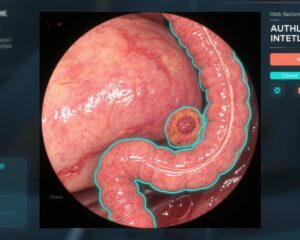
A multicenter trial demonstrated that integrating AI-based computer-aided detection with water exchange colonoscopy significantly increases adenomas per colonoscopy without prolonging procedure time or increasing non-neoplastic lesion detec

This review evaluates AI agent systems built on large language models in healthcare, demonstrating improved clinical task accuracy over base models, especially in complex scenarios. Multi-agent architectures show promise but require further

An RCT evaluated an AI-assisted framework for electrodiagnostic report interpretation, finding no significant improvement over standard physician reporting but highlighting potential workflow benefits for routine cases.

The AID-ME trial demonstrates that an AI-powered clinical decision support system significantly improves remission rates and accelerates symptom improvement in moderate to severe major depressive disorder.

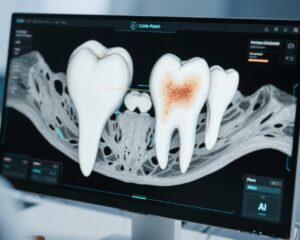
A study assessing the AI-based platform Diagnocat reveals high sensitivity but moderate specificity in detecting periapical radiolucencies on CBCT scans of non-root-filled molars, with decreased accuracy post-root treatment, underscoring th

A randomized controlled trial demonstrates that integrating deep language learning model (DLM) simulations into surgical training significantly improves history-taking skills and communication confidence among senior medical students.

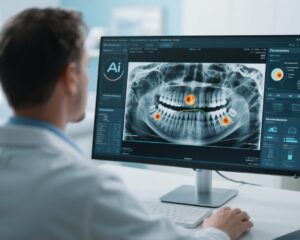
A randomized controlled trial demonstrates that AI assistance moderately improves dentists’ accuracy in diagnosing periapical radiolucencies, mainly by reducing false positives, with significant benefits for junior clinicians and a sh

Machine learning models trained on clinical data improve prediction of coronary artery disease on CT scans compared to traditional risk scores, potentially guiding better resource utilization in cardiovascular care.

A 28-day RCT demonstrates that a conversational AI trained on a large language model effectively reduces mild depression and anxiety symptoms in young adults through dialog interventions integrated in short video apps.

A randomized trial demonstrates that leaving small non-neoplastic colorectal polyps in situ with AI-assisted optical diagnosis is as safe and effective as systematic removal, supporting less invasive colonoscopy strategies.

A novel deep learning model predicted retinal nerve fiber layer thickness from optic disc photos, enabling risk stratification for primary open-angle glaucoma in ocular hypertension patients, with baseline and longitudinal changes strongly

Deep learning models predicting RNFL thickness from optic disc photographs can identify ocular hypertension patients at higher risk for primary open-angle glaucoma, enhancing early risk assessment and monitoring disease progression.

スマートフォンを用いたスマートデジタル介入(Smart-T)は、低所得者成人において26週間の7日間禁煙率を有意に改善し、ニコチン置換療法と組み合わせた場合、標準的なQuitGuideアプリを上回ることが示されました。

The Smart-T smartphone intervention significantly improves 7-day smoking abstinence at 26 weeks in low-income adults, outperforming the standard QuitGuide app when combined with nicotine replacement therapy.

Artificial intelligence is dramatically transforming pharmaceutical R&D by accelerating drug discovery, formulation, and clinical trials, while presenting new opportunities and challenges for the industry, especially in China.

AI-enhanced ECG models, initially designed for specific cardiac diagnoses, reveal broader cardiovascular risk detection and prediction capabilities, challenging their use as condition-specific tools and supporting their role as comprehensiv

AI holds promise to alleviate peer review challenges, improving efficiency and quality while preserving human oversight to ensure fairness and integrity in scientific publishing.

A multidisciplinary Chinese team has developed an AI-driven MRI-pathology foundation model that enables accurate, non-invasive diagnosis and grading of prostate cancer, significantly improving clinical decision-making and reducing unnecessa

Mobile app-assisted screening in primary care settings identified new heart failure cases in one-third of at-risk patients, especially those with preserved ejection fraction, highlighting a promising route for early diagnosis.
Open language-specific specialty feeds and department pages.