We use cookies

Our website uses essential cookies and, with your consent, additional cookies to measure performance and improve our services. Cookie Policy.

You can change your choice at any time.

MMedXYNews
HomeVideos
MedXY AI/MedXY News/Tag: Alzheimer's disease
MedXY News
EnglishTag

Alzheimer's disease

Ask MedXY AI
type 2 diabetesclinical trialheart failureimmunotherapyobesitycardiovascular riskatrial fibrillationbiomarkerscritical careclinical trialsHypertensionartificial intelligenceCardiologyoncologypublic healthtype 1 diabetesdiabetesMortalityAlzheimer's diseasecardiovascular diseasebreast cancerepidemiology

Latest news

Tag

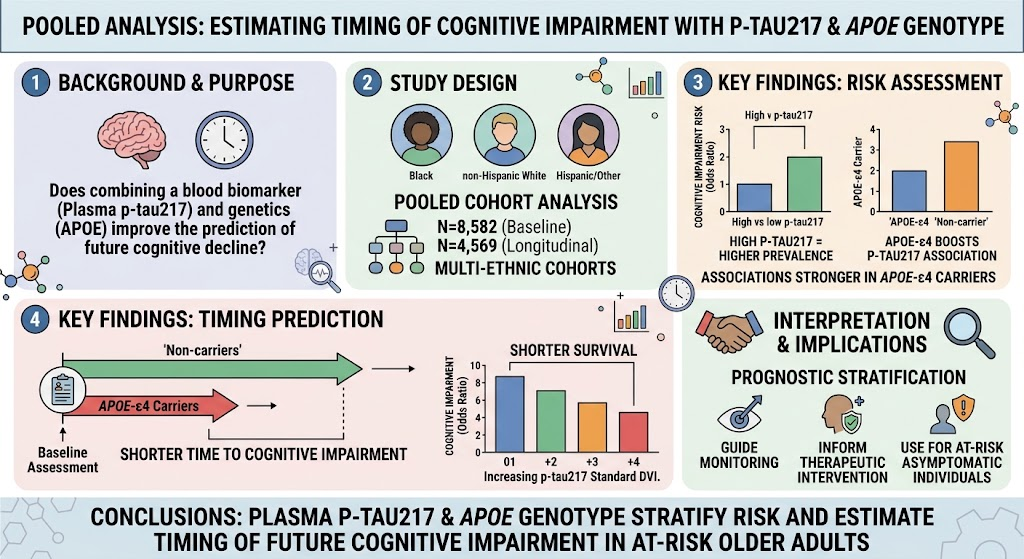
Integrating Plasma p-tau217 and APOE Genotype to Predict Cognitive Decline Across Diverse Populations
Internal Medicinecognitive impairmentKiểu gen APOE

Integrating Plasma p-tau217 and APOE Genotype to Predict Cognitive Decline Across Diverse Populations

By MedXY|Sep 13, 2026

This pooled analysis of seven multi-ethnic cohorts demonstrates the combined prognostic value of plasma phosphorylated tau 217 concentrations and APOE-ε4 genotype for predicting risk and timing of cognitive impairment, emphasizing biomarker
Unraveling Alzheimer’s Disease Progression in Down Syndrome via Blood Proteome Dynamics
Neurologyblood proteomelongitudinal biomarkers

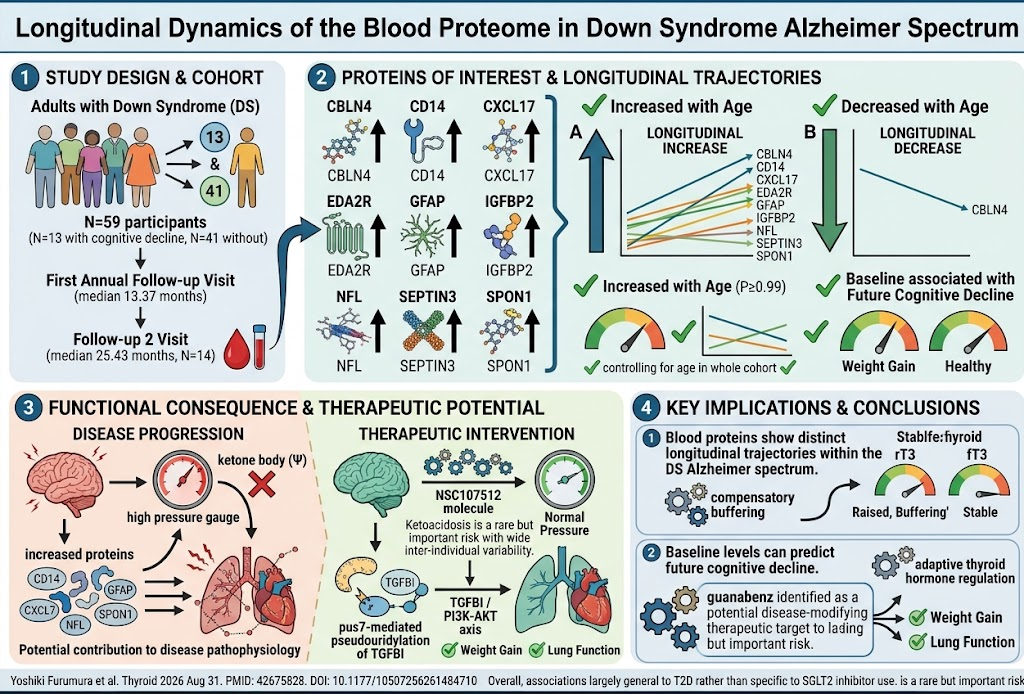
Unraveling Alzheimer’s Disease Progression in Down Syndrome via Blood Proteome Dynamics

By MedXY|Sep 5, 2026

Longitudinal analysis of blood proteins reveals distinctive trajectories and associations with cognitive decline in adults with Down syndrome, shedding light on Alzheimer’s disease pathophysiology in this high-risk group.

Plasma Biomarkers for Neocortical Tau Burden
Neurologyタウ病理Plasma Proteins

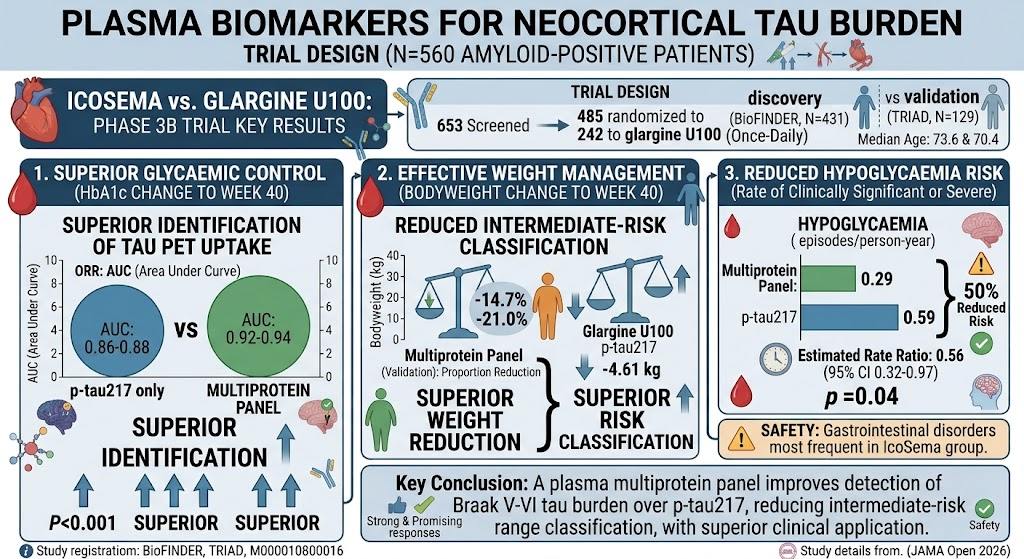
Plasma Biomarkers for Neocortical Tau Burden

By MedXY|Aug 15, 2026

A multiprotein plasma panel improves detection of advanced neocortical tau pathology in Alzheimer’s disease risk individuals beyond p-tau217 alone, enhancing patient stratification and clinical trial selection.

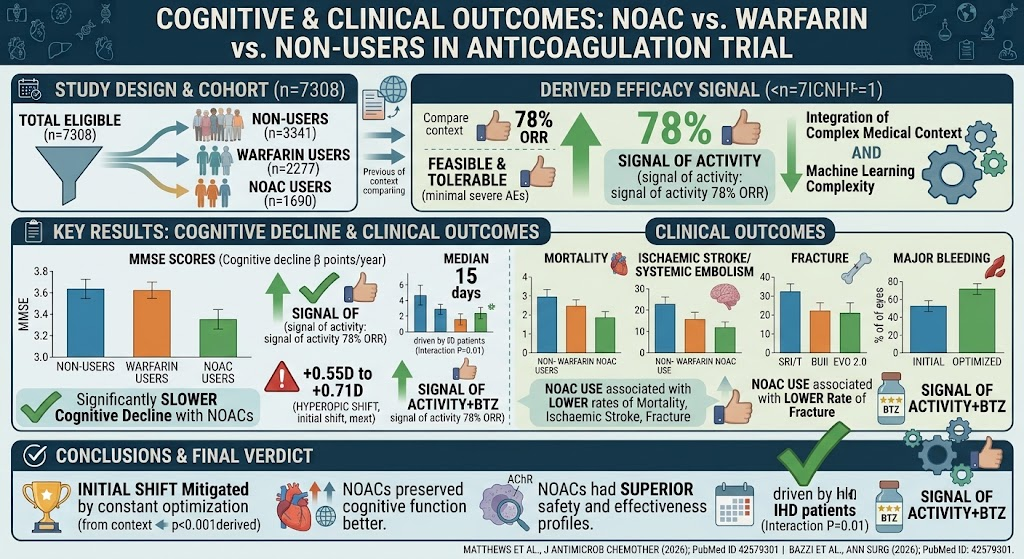
Oral Anticoagulants, Cognition, and Clinical Outcomes in Atrial Fibrillation and Alzheimer’s Disease: Insights from a Swedish Nationwide Study
CardiologyNOACsoral anticoagulants

Oral Anticoagulants, Cognition, and Clinical Outcomes in Atrial Fibrillation and Alzheimer’s Disease: Insights from a Swedish Nationwide Study

By MedXY|Aug 13, 2026

This review synthesizes evidence linking NOAC use to slower cognitive decline and improved clinical outcomes in patients with atrial fibrillation and Alzheimer’s disease, highlighting advantages over warfarin and non-use.

Discriminating Prion Diseases from Alzheimer’s Disease Using Plasma Biomarkers: The Crucial Role of NfL/p-tau217 Ratio
NeurologyAlzheimer's diseaseDấu hiệu sinh học huyết tương

Discriminating Prion Diseases from Alzheimer’s Disease Using Plasma Biomarkers: The Crucial Role of NfL/p-tau217 Ratio

By MedXY|Jul 14, 2026

Plasma phosphorylated tau biomarkers overlap in Alzheimer’s and prion diseases, risking diagnostic confusion. The NfL/p-tau217 ratio emerges as an accurate plasma biomarker to distinguish prion diseases from Alzheimer’s, improving diagnosti

Prior Traumatic Brain Injury and Alzheimer Disease Blood Biomarkers: Diagnostic Challenges and Clinical Implications
Clinical UpdatesAlzheimer's diseaseamyloid beta

Prior Traumatic Brain Injury and Alzheimer Disease Blood Biomarkers: Diagnostic Challenges and Clinical Implications

By MedXY|Jul 1, 2026

This review examines the impact of traumatic brain injury on the accuracy of Alzheimer disease blood biomarkers, highlighting reduced diagnostic performance in TBI-affected populations and the implications for clinical interpretation.

Influence of Parity on Cognitive Decline and Hippocampal Atrophy in Amyloid-Positive Postmenopausal Women
NeurologyParityβ-Amyloid

Influence of Parity on Cognitive Decline and Hippocampal Atrophy in Amyloid-Positive Postmenopausal Women

By MedXY|Aug 18, 2026

Higher parity in cognitively unimpaired postmenopausal women with positive β-amyloid status is linked to accelerated cognitive decline and hippocampal volume reduction, suggesting parity modulates resilience to Alzheimer’s pathology in prec

Identification of Genetic Modifiers of Autosomal Dominant Alzheimer’s Disease: A Genome-Wide Association Study
NeurologyAlzheimer's diseasegenetics

Identification of Genetic Modifiers of Autosomal Dominant Alzheimer’s Disease: A Genome-Wide Association Study

By MedXY|Jun 10, 2026

A genome-wide study identified three genetic modifiers of autosomal dominant Alzheimer’s disease, linking them to disease risk, earlier onset, and biomarker changes involving amyloid, tau, TDP-43, and brain aging.

Women’s Elevated P-Tau217 Levels and Faster Cognitive Decline: Implications for Preclinical Alzheimer’s Disease
NeurologyAlzheimer's diseasep-tau217

Women’s Elevated P-Tau217 Levels and Faster Cognitive Decline: Implications for Preclinical Alzheimer’s Disease

By MedXY|Apr 30, 2026

Women with high amyloid-β show higher p-tau217 levels and faster tau accumulation than men, leading to greater cognitive decline. This sex-specific tau response may redefine preclinical Alzheimer’s diagnostics and therapeutics.

Sex-Specific Differences in P-Tau217 and Tau Aggregation: Implications for Preclinical Alzheimer’s Disease
NeurologyAlzheimer's diseasebiomarkers

Sex-Specific Differences in P-Tau217 and Tau Aggregation: Implications for Preclinical Alzheimer’s Disease

By MedXY|Apr 30, 2026

Women exhibit higher plasma p-tau217 levels and tau aggregation than men in amyloid-positive individuals, suggesting sex-specific pathways in Alzheimer’s disease progression.

Precision Blood-Based Diagnostics for Alzheimer’s Disease: The Synergistic Role of Plasma p-tau217 and eMTBR-tau243
Clinical UpdatesAlzheimer's diseasebiomarkers

Precision Blood-Based Diagnostics for Alzheimer’s Disease: The Synergistic Role of Plasma p-tau217 and eMTBR-tau243

By MedXY|Apr 9, 2026

This review synthesizes recent clinical evidence on the integration of plasma p-tau217 and eMTBR-tau243, highlighting how sequential biomarker testing improves the diagnosis of symptomatic Alzheimer’s disease and predicts longitudinal cogni

Beyond Aging: Traumatic Brain Injury and Depression Emerge as Leading Predictors of Dementia in US Veterans
NeurologyAlzheimer's diseaseMillion Veteran Program

Beyond Aging: Traumatic Brain Injury and Depression Emerge as Leading Predictors of Dementia in US Veterans

By MedXY|Mar 12, 2026

A large-scale analysis of the VA Million Veteran Program reveals that TBI, depression, and specific military environmental exposures significantly elevate the 10-year risk of Alzheimer’s and related dementias, highlighting critical targets

Precision Diagnostics in Alzheimer’s Disease: Optimizing Plasma p-tau217 Cutoffs for Patients with Comorbidities
Clinical UpdatesAlzheimer's diseasebiomarkers

Precision Diagnostics in Alzheimer’s Disease: Optimizing Plasma p-tau217 Cutoffs for Patients with Comorbidities

By MedXY|Mar 10, 2026

This review synthesizes evidence on the impact of kidney function, BMI, and anemia on plasma p-tau217 diagnostic accuracy, advocating for subgroup-specific cutoff strategies to improve clinical outcomes.

Dual-Pathology Burden: How Comorbid Alzheimer’s and FTLD Drive Distinct Neuropsychiatric Phenotypes
NeurologyAlzheimer's diseaseneuropathology

Dual-Pathology Burden: How Comorbid Alzheimer’s and FTLD Drive Distinct Neuropsychiatric Phenotypes

By MedXY|Mar 9, 2026

This study highlights how comorbid Alzheimer’s and FTLD neuropathologies manifest through unique neuropsychiatric profiles, such as increased anxiety and personality changes, providing clinicians with vital clues for identifying mixed

Evaluating Low-Dose Lithium Carbonate for the Management of Mild Cognitive Impairment: A 2-Year Randomized Pilot Study
NeurologyAlzheimer's diseaseclinical trial

Evaluating Low-Dose Lithium Carbonate for the Management of Mild Cognitive Impairment: A 2-Year Randomized Pilot Study

By MedXY|Mar 2, 2026

This pilot randomized clinical trial investigated low-dose lithium for Mild Cognitive Impairment (MCI). While primary outcomes regarding cognition and neuroimaging were not statistically significant, the study established the intervention&#

Sex-Specific P-Tau217 Dynamics: Why Women Exhibit Accelerated Tau Accumulation and Cognitive Decline
NeurologyAlzheimer's diseasep-tau217

Sex-Specific P-Tau217 Dynamics: Why Women Exhibit Accelerated Tau Accumulation and Cognitive Decline

By MedXY|Feb 20, 2026

A multi-cohort study demonstrates that women with amyloid-β pathology show higher plasma p-tau217 levels and faster tau PET accumulation than men, providing a biological basis for their increased risk of rapid cognitive decline in preclinic

The Landscape of Late-Life Dementia: Why Mixed Neuropathologies Are the Rule, Not the Exception
NeurologyAlzheimer's diseasecognitive decline

The Landscape of Late-Life Dementia: Why Mixed Neuropathologies Are the Rule, Not the Exception

By MedXY|Feb 12, 2026

A large-scale longitudinal study reveals that over 80% of community-dwelling older adults harbor mixed neuropathologies, identifying five distinct profiles that dictate specific cognitive decline trajectories, with ADNC and LATE-NC clusters

Biologically Informed p-tau217 Cutoffs: Refining Alzheimer’s Diagnosis Across Diverse Patient Profiles
NeurologyAlzheimer's diseasebiomarkers

Biologically Informed p-tau217 Cutoffs: Refining Alzheimer’s Diagnosis Across Diverse Patient Profiles

By MedXY|Feb 6, 2026

Standard single cutoffs for plasma p-tau217 are significantly confounded by kidney function, BMI, and anemia. A new study demonstrates that subgroup-specific or double-cutoff strategies markedly improve diagnostic accuracy and cost-effectiv

Liraglutide and Alzheimer’s Disease: Can GLP-1 Agonists Bridge the Metabolic-Cognitive Gap?
Diabetes & EndocrinologyAlzheimer's diseaseGLP-1/胰高血糖素激动剂

Liraglutide and Alzheimer’s Disease: Can GLP-1 Agonists Bridge the Metabolic-Cognitive Gap?

By MedXY|Feb 4, 2026

The Phase 2b ELAD trial investigated liraglutide’s efficacy in mild-to-moderate Alzheimer’s disease. While it failed its primary metabolic endpoint, significant improvements in executive function suggest a nuanced role for GLP-1

Tau Pathology Acts as a Switch: How Soluble Amyloid Drives Early Metabolic and Neuropsychiatric Symptoms in Alzheimer’s Disease
NeurologyAlzheimer's diseasemetabolic dysfunction

Tau Pathology Acts as a Switch: How Soluble Amyloid Drives Early Metabolic and Neuropsychiatric Symptoms in Alzheimer’s Disease

By MedXY|Feb 2, 2026

Recent clinical evidence reveals that soluble amyloid-beta oligomers, rather than traditional plaques, drive glucose dysregulation and depression in early Alzheimer’s disease. Crucially, these associations are modulated by tau pathology, su

1 / 4
1234
Next
Ask MedXY AI

Most popular

Intimate Health
Five Benefits for Women Continuing Sexual Activity After Menopause
Intimate Health
Why Some Women Have a Strong Sex Drive—And Why Men Shouldn't Worry About It
Nursing & care
How often should a couple have sex?
Intimate Health
Classic Intimacy Recommendations: How to Help Women Reach Orgasm and Enjoy Mutual Pleasure
Intimate Health
What Makes a Woman "Physiologically Addicted" Is Never Money, But These Two Relationship Qualities
© 2026 MedXY
Contact usAbout usPrivacy PolicyMedXY story