We use cookies

Our website uses essential cookies and, with your consent, additional cookies to measure performance and improve our services. Cookie Policy.

You can change your choice at any time.

MMedXYNews
HomeVideos
© 2026 MedXY
Contact usAbout usPrivacy PolicyMedXY story
MedXY AI/MedXY News/Tag: Alzheimer's disease
MedXY News
EnglishTag

Alzheimer's disease

Ask MedXY AI
type 2 diabetesclinical trialheart failureimmunotherapyobesitycardiovascular riskatrial fibrillationbiomarkerscritical careclinical trialsHypertensionartificial intelligenceCardiologyoncologypublic healthtype 1 diabetesdiabetesMortalityAlzheimer's diseasecardiovascular diseasebreast cancerepidemiology

Latest news

Tag

Crenezumab Fails to Meet Primary Endpoints in Preclinical Autosomal-Dominant Alzheimer’s: Insights from the API ADAD Colombia Trial
NeurologyAlzheimer's diseaseclinical trials

Crenezumab Fails to Meet Primary Endpoints in Preclinical Autosomal-Dominant Alzheimer’s: Insights from the API ADAD Colombia Trial

By MedXY|Jan 28, 2026

A Phase 2 trial of crenezumab in cognitively unimpaired PSEN1 mutation carriers found no significant clinical benefit over 5-8 years, suggesting that robust amyloid plaque removal may be essential for disease modification in early-stage Alz


Oligodendrocyte Myelin Glycoprotein: A Novel Plasma Determinant of Neurodegenerative Resiliency
NeurologyAlzheimer's diseasebiomarkers

Oligodendrocyte Myelin Glycoprotein: A Novel Plasma Determinant of Neurodegenerative Resiliency

By MedXY|Jan 7, 2026

A comprehensive multi-cohort proteomic study identifies Oligodendrocyte Myelin Glycoprotein (OMG) as a causal biomarker for neurodegenerative resiliency, linking its peripheral abundance to axonal integrity and reduced risk of dementia and

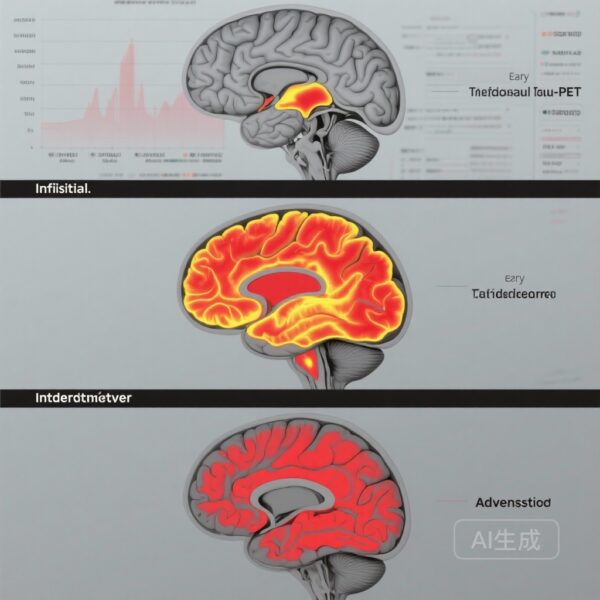
Age and Sex Redefine the Amyloid-to-Tau Transition: Establishing Patient-Centered PET Thresholds for Alzheimer’s Disease
NeurologyAlzheimer's diseaseprecision medicine

Age and Sex Redefine the Amyloid-to-Tau Transition: Establishing Patient-Centered PET Thresholds for Alzheimer’s Disease

By MedXY|Jan 6, 2026

This study establishes patient-centered amyloid PET thresholds for tauopathy onset, revealing that age and sex significantly influence the transition from amyloidosis to tau accumulation. These personalized cut-offs better predict cognitive

Significant 1-Year Risk of Cardiovascular Events in Cognitive Impairment Highlights Safety Concerns for Anti-Amyloid Therapy
CardiologyAlzheimer's diseaseanticoagulation

Significant 1-Year Risk of Cardiovascular Events in Cognitive Impairment Highlights Safety Concerns for Anti-Amyloid Therapy

By MedXY|Jan 6, 2026

A longitudinal study reveals that over 5% of patients with MCI or dementia develop new indications for anticoagulants or thrombolytics within a year, complicating the use of anti-amyloid monoclonal antibodies due to increased intracranial h

Beyond the Lungs: How Ambient Air Pollution Drives Alzheimer’s Neuropathology and Cognitive Decline
NeurologyAlzheimer's diseaseNeuroimaging

Beyond the Lungs: How Ambient Air Pollution Drives Alzheimer’s Neuropathology and Cognitive Decline

By MedXY|Jan 2, 2026

Emerging evidence confirms that air pollution, particularly PM2.5 and NO2, is directly associated with Alzheimer’s neuropathology, structural brain changes, and cognitive decline. New research highlights that these effects are partially med

Predicting Alzheimer’s Progression: The Power of Tau-Clinical Mismatch in Identifying Copathology and Resilience
NeurologyAlzheimer's diseaseprecision medicine

Predicting Alzheimer’s Progression: The Power of Tau-Clinical Mismatch in Identifying Copathology and Resilience

By MedXY|Dec 26, 2025

This study demonstrates that the mismatch between tau burden and clinical symptoms identifies individuals with non-AD copathology or cognitive resilience. These findings offer a precision medicine framework for predicting disease trajectori

Blarcamesine in Early Alzheimer’s Disease: Promising Results Amidst Controversies
Internal MedicineAlzheimer's diseaseclinical trials

Blarcamesine in Early Alzheimer’s Disease: Promising Results Amidst Controversies

By MedXY|Dec 25, 2025

Blarcamesine shows potential in slowing early Alzheimer’s progression, but questions about trial data robustness and transparency have been raised.

Antiviral Therapy Fails to Slow Alzheimer’s: The VALAD Trial Reveals Unexpected Cognitive Worsening with Valacyclovir
NeurologyAlzheimer's diseaseclinical trial

Antiviral Therapy Fails to Slow Alzheimer’s: The VALAD Trial Reveals Unexpected Cognitive Worsening with Valacyclovir

By MedXY|Dec 25, 2025

The VALAD randomized clinical trial found that valacyclovir did not improve outcomes in patients with early symptomatic Alzheimer’s and HSV seropositivity. Instead, patients receiving the antiviral showed significantly greater cognitive dec

Plasma p-tau217 and GFAP Emerge as Robust Predictors of Alzheimer’s Progression in Down Syndrome
NeurologyAlzheimer's diseaseDown syndrome

Plasma p-tau217 and GFAP Emerge as Robust Predictors of Alzheimer’s Progression in Down Syndrome

By MedXY|Dec 23, 2025

A pivotal longitudinal study demonstrates that plasma p-tau217 and GFAP accurately predict amyloid-β and tau deposition, cognitive decline, and dementia risk in adults with Down syndrome, offering a transformative, non-invasive tool for cli

Stage-specific Tau-PET Dynamics in Biological Alzheimer’s Disease: Implications for Trial Design and Outcome Selection
NeurologyAlzheimer's diseasebiomarkers

Stage-specific Tau-PET Dynamics in Biological Alzheimer’s Disease: Implications for Trial Design and Outcome Selection

By MedXY|Dec 13, 2025

Longitudinal tau-PET accumulation follows distinct regional patterns across biological AD stages; aligning trial inclusion and outcome ROIs to baseline tau stage can substantially reduce sample sizes and improve power for disease-modifying

Connectivity as a Universal Predictor of Tau Progression in Atypical Alzheimer’s Disease: A Multicentre Evidence Synthesis
Clinical UpdatesAlzheimer's diseaseFunctional Connectivity

Connectivity as a Universal Predictor of Tau Progression in Atypical Alzheimer’s Disease: A Multicentre Evidence Synthesis

By MedXY|Dec 13, 2025

Functional connectivity reliably predicts spatial and temporal tau propagation patterns across atypical Alzheimer’s disease variants, underpinning personalized approaches to diagnosis and therapy.

Low‑Dose Interleukin‑2 Expands Regulatory T Cells and Modulates Biomarkers in Mild–Moderate Alzheimer’s Disease: Phase 2a Randomized Trial Shows Safety and Promising Signals
Allergy & ImmunologyAlzheimer's diseaselow-dose IL-2

Low‑Dose Interleukin‑2 Expands Regulatory T Cells and Modulates Biomarkers in Mild–Moderate Alzheimer’s Disease: Phase 2a Randomized Trial Shows Safety and Promising Signals

By MedXY|Dec 6, 2025

A phase 2a randomized trial found low‑dose IL‑2 given every 4 weeks was safe, expanded regulatory T cells, altered peripheral inflammatory mediators, increased CSF Aβ42, stabilized NfL, and trended toward slower cognitive decline in mild–mo

Lipoprotein(a) and Dementia: Large Cohorts Show No Clear Link — But Small Apo(a) Isoforms May Raise Alzheimer’s Risk
CardiologyAlzheimer's diseaseDementia

Lipoprotein(a) and Dementia: Large Cohorts Show No Clear Link — But Small Apo(a) Isoforms May Raise Alzheimer’s Risk

By MedXY|Nov 28, 2025

A pooled analysis of three large cohorts found no consistent association between circulating lipoprotein(a) and Alzheimer’s disease or vascular dementia, but genetic evidence for very small apo(a) isoforms suggests a modest increase in Alzh

Aducanumab Removes Superficial Cortical Amyloid but Associates with Local Vascular Injury and ARIA: Clinicopathological Evidence from a Retrospective Case–Control Study
NeurologyAlzheimer's diseaseneuropathology

Aducanumab Removes Superficial Cortical Amyloid but Associates with Local Vascular Injury and ARIA: Clinicopathological Evidence from a Retrospective Case–Control Study

By MedXY|Nov 24, 2025

Autopsy of aducanumab-treated Alzheimer’s cases shows preferential clearance of superficial layer I amyloid, PET Centiloid reductions, and ARIA-associated microvascular pathology, implicating perivascular amyloid removal and vessel injury a

Amyloid PET Centiloid Predicts Lifetime and 10‑Year Risk of MCI and Dementia in Cognitively Unimpaired Adults
NeurologyAlzheimer's diseaseamyloid PET

Amyloid PET Centiloid Predicts Lifetime and 10‑Year Risk of MCI and Dementia in Cognitively Unimpaired Adults

By MedXY|Nov 24, 2025

A large Mayo Clinic Study of Aging analysis shows lifetime and 10‑year absolute risk of MCI and dementia rise monotonically with amyloid PET centiloid values, modified by age, sex, and APOE ε4 status; out‑of‑study ascertainment substantiall

Tracking Steps to Slow Alzheimer’s: Physical Activity Linked to Reduced Tau Accumulation and Slower Decline in Preclinical AD
NeurologyAlzheimer's diseasePhysical Activity

Tracking Steps to Slow Alzheimer’s: Physical Activity Linked to Reduced Tau Accumulation and Slower Decline in Preclinical AD

By MedXY|Nov 13, 2025

In cognitively unimpaired older adults with elevated amyloid, higher daily step counts were associated with slower inferior-temporal tau accumulation and attenuated cognitive and functional decline, with benefit plateauing around 5,000–7,50

Two-Year 40 Hz Audiovisual Stimulation in Mild Alzheimer’s: Safety, EEG Entrainment, and Early Biomarker Signals
Neurology40 HzAlzheimer's disease

Two-Year 40 Hz Audiovisual Stimulation in Mild Alzheimer’s: Safety, EEG Entrainment, and Early Biomarker Signals

By MedXY|Nov 9, 2025

An open-label two-year extension in five patients with mild Alzheimer’s disease found daily 1‑hour 40 Hz audiovisual stimulation to be safe, produced sustained EEG gamma entrainment in late‑onset cases, and was associated with smaller

Contactless In-Home Longitudinal Monitoring of Night-Time Sleep Patterns and Physiology in Aging and Alzheimer’s Disease
Clinical UpdatesAlzheimer's disease

Contactless In-Home Longitudinal Monitoring of Night-Time Sleep Patterns and Physiology in Aging and Alzheimer’s Disease

By MedXY|Nov 9, 2025

This review synthesizes evidence on contactless, longitudinal sleep monitoring revealing Alzheimer’s disease-specific nocturnal behaviors and introduces the DRI-SI-AD digital biomarker for tracking dementia progression.

Persistent Depressive Symptoms After MCI Strongly Predict Progression to Alzheimer’s Disease
NeurologyAlzheimer's diseasedepression

Persistent Depressive Symptoms After MCI Strongly Predict Progression to Alzheimer’s Disease

By MedXY|Nov 5, 2025

In an ADNI longitudinal cohort, persistently elevated depressive symptoms over 36 months after MCI diagnosis were associated with a dose‑dependent, substantially higher hazard of conversion to Alzheimer’s disease over long-term follow-up.

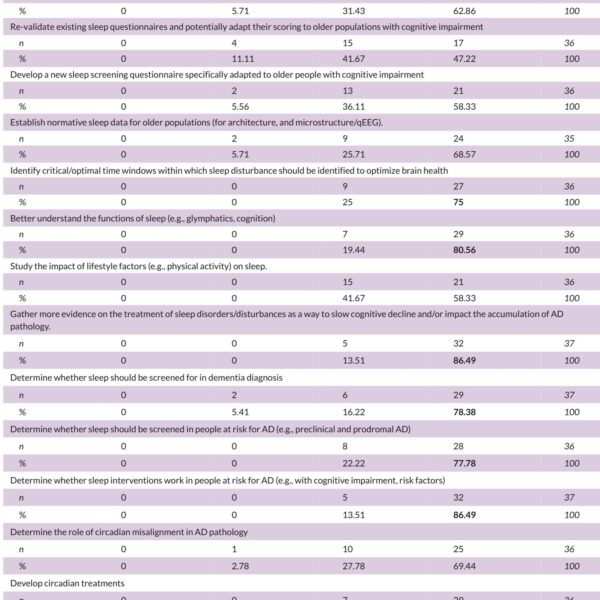
New International Research Recommendations on Sleep and Circadian Measures in Aging and Alzheimer’s Disease
NeurologyactigraphyAlzheimer's disease

New International Research Recommendations on Sleep and Circadian Measures in Aging and Alzheimer’s Disease

By MedXY|Nov 5, 2025

An expert Delphi consensus from ISTAART lays out core data, methods and research priorities to harmonize sleep and circadian studies in aging and Alzheimer’s disease.

Prev
2 / 4
1234
Next
Ask MedXY AI

Most popular

Intimate Health
Five Benefits for Women Continuing Sexual Activity After Menopause
Intimate Health
Why Some Women Have a Strong Sex Drive—And Why Men Shouldn't Worry About It
Nursing & care
How often should a couple have sex?
Intimate Health
Classic Intimacy Recommendations: How to Help Women Reach Orgasm and Enjoy Mutual Pleasure
Intimate Health
What Makes a Woman "Physiologically Addicted" Is Never Money, But These Two Relationship Qualities