We use cookies

Our website uses essential cookies and, with your consent, additional cookies to measure performance and improve our services. Cookie Policy.

You can change your choice at any time.

MMedXYNews
HomeVideos
© 2026 MedXY
Contact usAbout usPrivacy PolicyMedXY story
MedXY AI/MedXY News/Tag: MRI biomarkers
MedXY News
EnglishTag

MRI biomarkers

Ask MedXY AI
type 2 diabetesclinical trialheart failureimmunotherapyobesitycardiovascular riskatrial fibrillationbiomarkerscritical careclinical trialsHypertensionartificial intelligenceCardiologyoncologypublic healthtype 1 diabetesdiabetesMortalityAlzheimer's diseasecardiovascular diseasebreast cancerepidemiology

Latest news

Tag

MRI-Derived EOAD-Signature Atrophy as a Prognostic Biomarker in Early-Onset Mild Cognitive Impairment
NeurologyEarly-Onset Alzheimer Diseasemild cognitive impairment

MRI-Derived EOAD-Signature Atrophy as a Prognostic Biomarker in Early-Onset Mild Cognitive Impairment

By MedXY|Aug 28, 2026

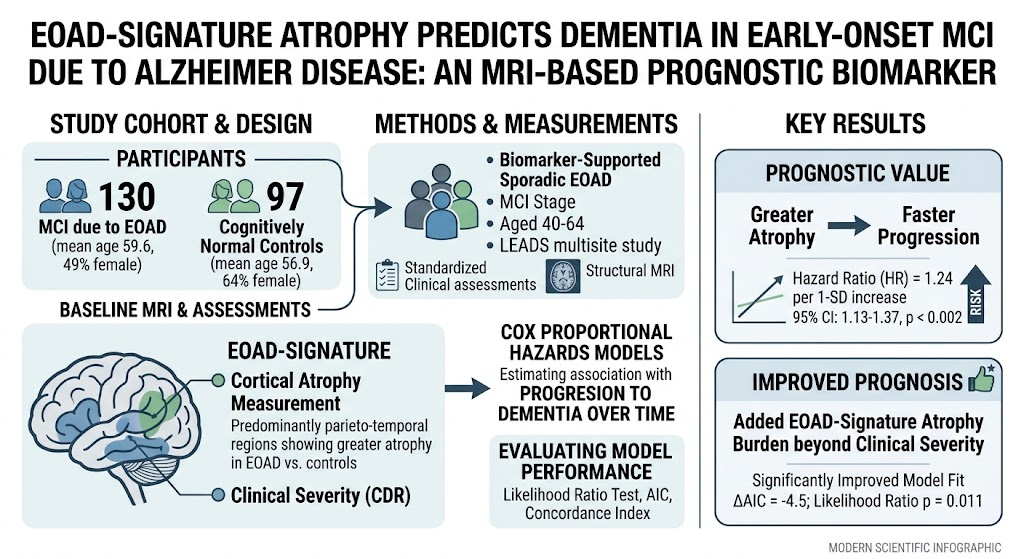
Baseline cortical atrophy within an EOAD-specific brain signature predicts progression from mild cognitive impairment to dementia, providing a valuable MRI biomarker for individualized prognosis in early-onset Alzheimer disease.
Clinical Implications of Hyperintense Reperfusion Marker and Ocular Gadolinium Leakage Post-Thrombectomy: Insights from the ETIS Registry
Clinical Updatesmechanical thrombectomy
blood–brain barrier

Clinical Implications of Hyperintense Reperfusion Marker and Ocular Gadolinium Leakage Post-Thrombectomy: Insights from the ETIS Registry

By MedXY|Aug 25, 2026

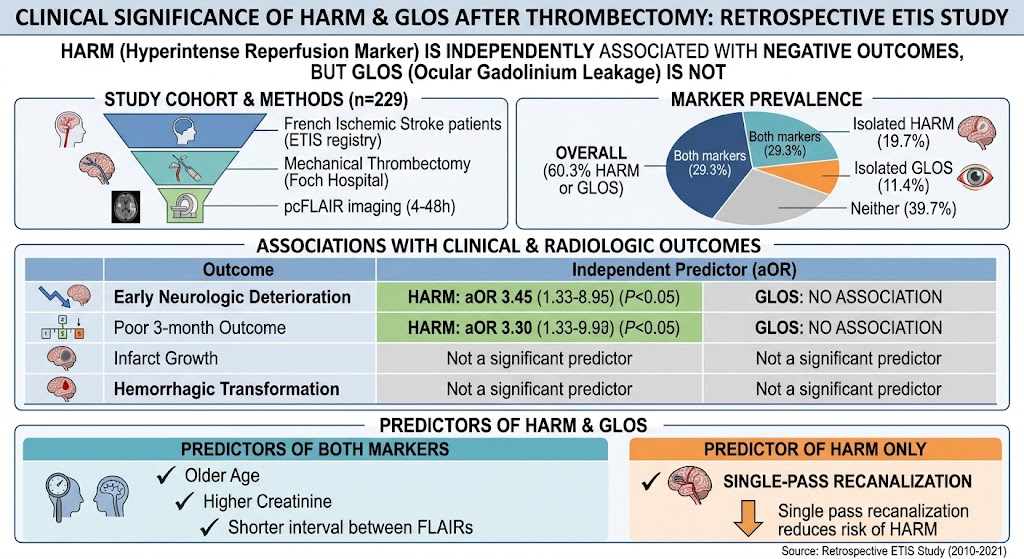
This review elucidates the prognostic significance of HARM and GLOS as imaging biomarkers after mechanical thrombectomy, highlighting their associations with early neurological outcomes and infarct progression.

Paramagnetic Rim Lesions as Predictors of Progression in Multiple Sclerosis: Insights from a 5-Year Longitudinal Study
NeurologyParamagnetic Rim LesionsBrain Atrophy

Paramagnetic Rim Lesions as Predictors of Progression in Multiple Sclerosis: Insights from a 5-Year Longitudinal Study

By MedXY|Aug 22, 2026

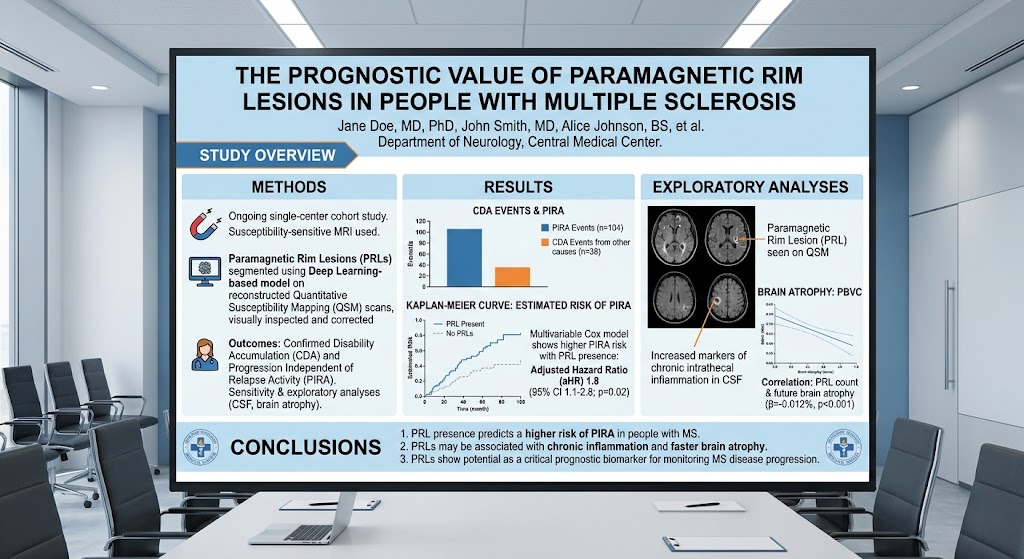
Paramagnetic rim lesions detected via MRI are associated with increased risk of disability progression independent of relapse activity and accelerated brain atrophy in multiple sclerosis, highlighting their role as prognostic biomarkers for

Validating VasCog-2-WSO Criteria: Early MRI Detection of Vascular Cognitive Impairment and Mortality Risk in Stroke- and Dementia-Free Adults
Cardiologycardiovascular riskvascular cognitive impairment

Validating VasCog-2-WSO Criteria: Early MRI Detection of Vascular Cognitive Impairment and Mortality Risk in Stroke- and Dementia-Free Adults

By MedXY|Aug 4, 2026

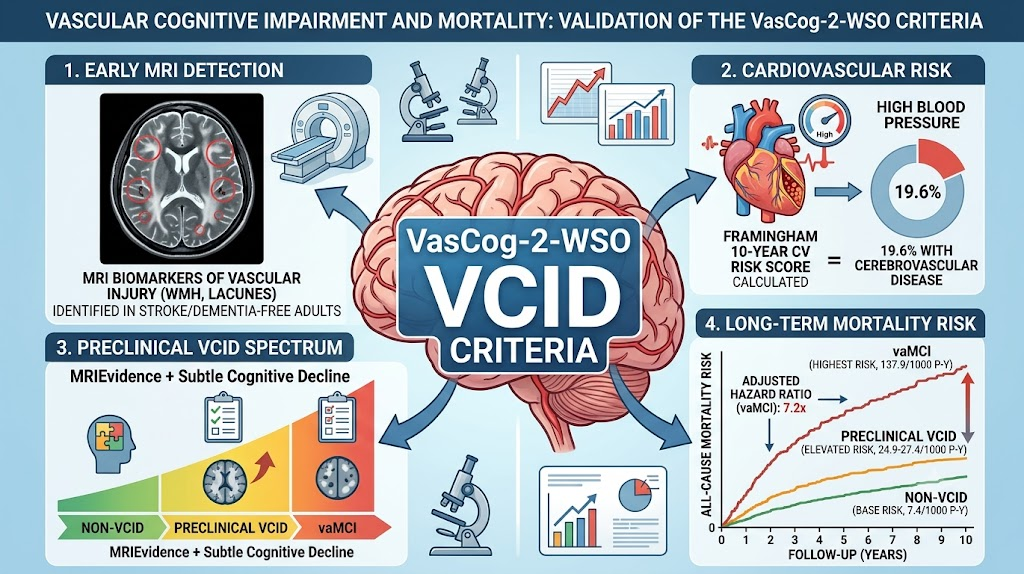
The VasCog-2-WSO criteria effectively detect MRI-defined vascular cognitive impairment in asymptomatic adults, correlating with increased cardiovascular risk and mortality, highlighting their utility for early diagnosis and community risk s

Familial Microvascular Traits and Neuropsychiatric Factors Reflected in Brain Perivascular Space Morphometry
NeurologyMicrovascular healthMRI biomarkers

Familial Microvascular Traits and Neuropsychiatric Factors Reflected in Brain Perivascular Space Morphometry

By MedXY|Jul 20, 2026

Brain perivascular space morphometry reveals familial microvascular architecture and neuropsychiatric influences, offering a novel imaging biomarker of cerebral microvascular health beyond traditional vascular risk factors.

The Prognostic Significance of Paramagnetic Rim Lesions in Radiologically Isolated Syndrome: A New Paradigm for Early Multiple Sclerosis Diagnosis
Clinical UpdatesMRI biomarkersmultiple sclerosis

The Prognostic Significance of Paramagnetic Rim Lesions in Radiologically Isolated Syndrome: A New Paradigm for Early Multiple Sclerosis Diagnosis

By MedXY|Mar 11, 2026

This review explores how paramagnetic rim lesions (PRLs), as markers of chronic active demyelination, serve as powerful predictors for clinical Multiple Sclerosis conversion in individuals with radiologically isolated syndrome.

T2 Mapping Detects BMI-Linked Cartilage Changes and Lateral Compartment Signal Differences in Population-Based Knee OA
newsBMIknee osteoarthritis

T2 Mapping Detects BMI-Linked Cartilage Changes and Lateral Compartment Signal Differences in Population-Based Knee OA

By MedXY|Nov 2, 2025

In a large population-based sample, cartilage T2 relaxation times correlated with BMI and were higher in knees with MRI-defined osteoarthritis, particularly in lateral cartilage subregions; T2 did not reflect patient-reported symptoms.

Ask MedXY AI

Most popular

Intimate Health
Five Benefits for Women Continuing Sexual Activity After Menopause
Intimate Health
Why Some Women Have a Strong Sex Drive—And Why Men Shouldn't Worry About It
Nursing & care
How often should a couple have sex?
Intimate Health
Classic Intimacy Recommendations: How to Help Women Reach Orgasm and Enjoy Mutual Pleasure
Intimate Health
What Makes a Woman "Physiologically Addicted" Is Never Money, But These Two Relationship Qualities