We use cookies

Our website uses essential cookies and, with your consent, additional cookies to measure performance and improve our services. Cookie Policy.

You can change your choice at any time.

MMedXYNews
HomeVideos
© 2026 MedXY
Contact usAbout usPrivacy PolicyMedXY story
MedXY AI/MedXY News/Tag: Lipoprotein(a)
MedXY News
EnglishTag

Lipoprotein(a)

Ask MedXY AI
type 2 diabetesclinical trialheart failureimmunotherapyobesitycardiovascular riskatrial fibrillationbiomarkerscritical careclinical trialsHypertensionartificial intelligenceCardiologyoncologypublic healthtype 1 diabetesdiabetesMortalityAlzheimer's diseasecardiovascular diseasebreast cancerepidemiology

Latest news

Tag

Aspirin Use, Lipoprotein(a), and Calcific Aortic Valve Disease: Insights from the Multi-Ethnic Study of Atherosclerosis
CardiologyLipoprotein(a)calcific aortic valve disease

Aspirin Use, Lipoprotein(a), and Calcific Aortic Valve Disease: Insights from the Multi-Ethnic Study of Atherosclerosis

By MedXY|Sep 11, 2026

This review synthesizes evidence linking aspirin use to reduced risk of calcific aortic valve disease in persons with elevated lipoprotein(a), highlighting the potential for targeted preventive strategies.
Lepodisiran’s Impact on Oxidized Phospholipids in Lipoprotein(a): Advancing Cardiovascular Risk Reduction
CardiologysiRNA therapy
Lipoprotein(a)

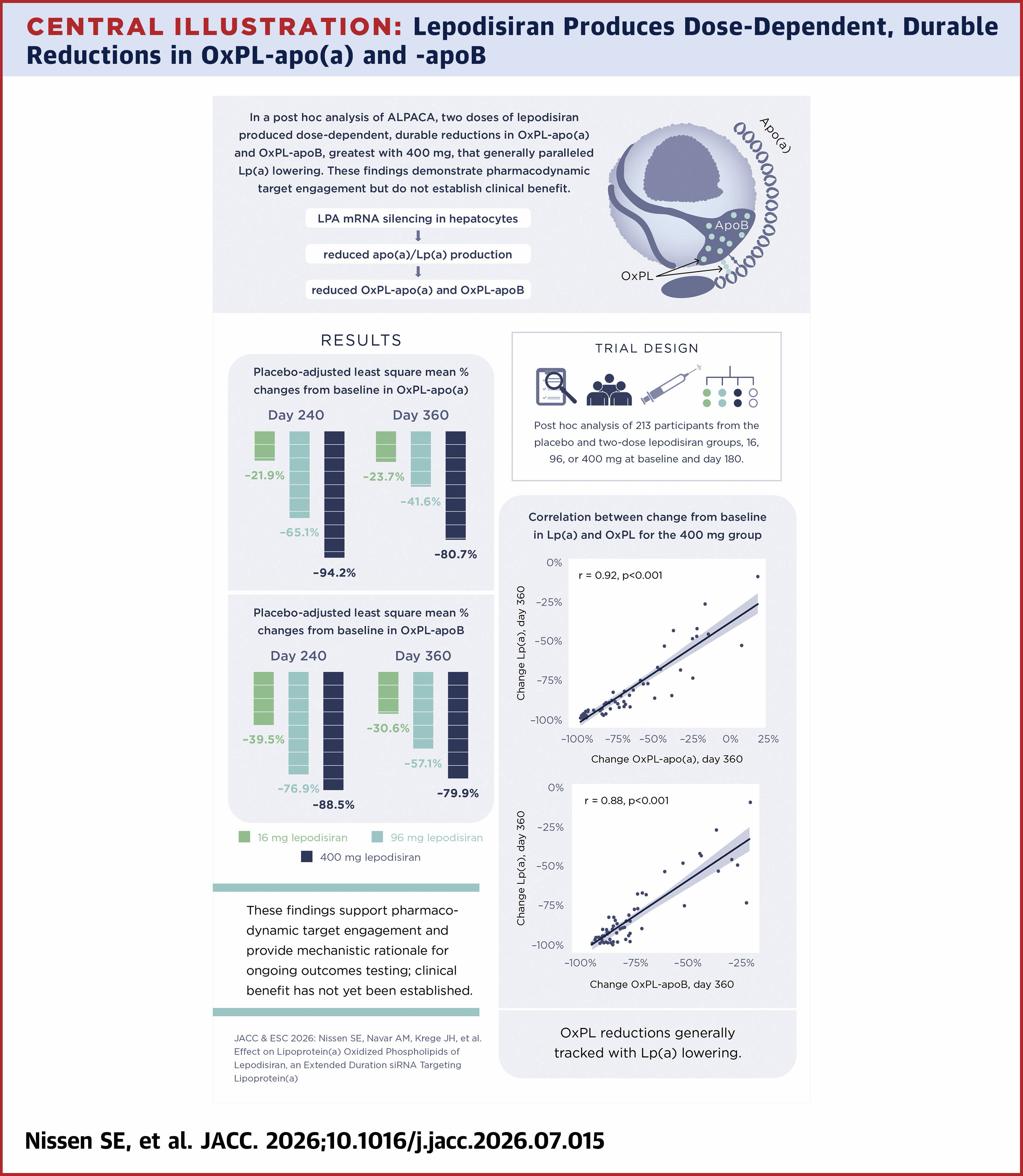
Lepodisiran’s Impact on Oxidized Phospholipids in Lipoprotein(a): Advancing Cardiovascular Risk Reduction

By MedXY|Sep 6, 2026

Lepodisiran, an siRNA targeting Lp(a), significantly reduces oxidized phospholipids on apo(a) and apoB, highlighting its therapeutic potential in lowering cardiovascular risk linked to elevated Lp(a).

Lipoprotein(a) and Atherosclerotic Cardiovascular Disease Risk Across the Adult Lifespan: Insights from a Large Population Study
CardiologyLipoprotein(a)cardiovascular risk

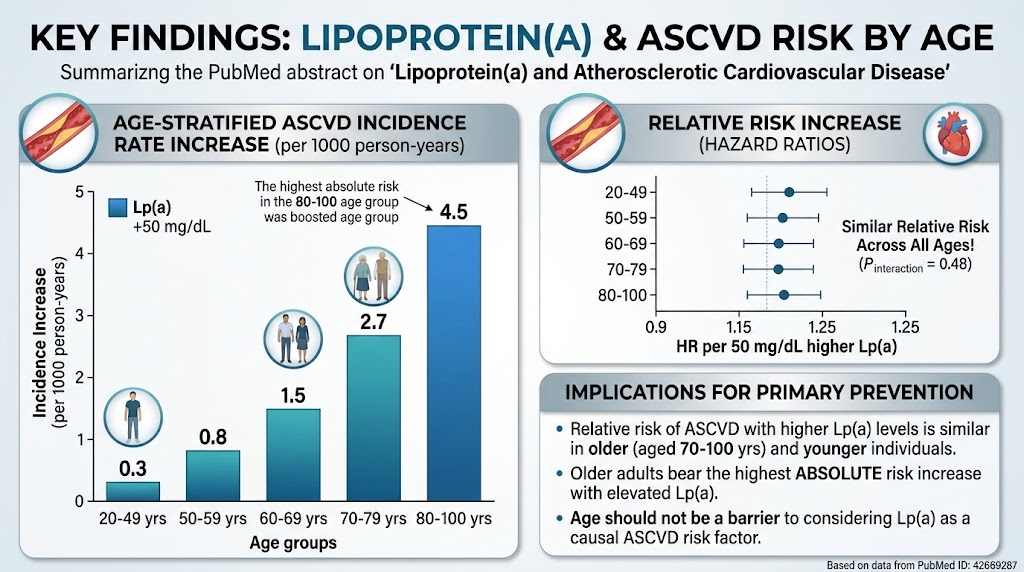
Lipoprotein(a) and Atherosclerotic Cardiovascular Disease Risk Across the Adult Lifespan: Insights from a Large Population Study

By MedXY|Sep 1, 2026

Elevated lipoprotein(a) confers a consistent relative risk increase for atherosclerotic cardiovascular disease across all adult ages, with absolute risks rising substantially in older adults.

Assessing Cardiovascular Risk in First-Degree Relatives of Individuals with Elevated Lipoprotein(a): Insights from a Swedish Cohort Study
Cardiologycardiovascular riskfamily history

Assessing Cardiovascular Risk in First-Degree Relatives of Individuals with Elevated Lipoprotein(a): Insights from a Swedish Cohort Study

By MedXY|Jul 12, 2026

A cohort study demonstrates increased major cardiovascular event risk in first-degree relatives of individuals with high plasma lipoprotein(a), supporting cascade screening for targeted prevention.

Risk-weighted apoB: A Superior Predictor of Coronary Heart Disease Risk Beyond Traditional Lipid Measures
CardiologyCoronary heart diseaseLipid biomarkers

Risk-weighted apoB: A Superior Predictor of Coronary Heart Disease Risk Beyond Traditional Lipid Measures

By MedXY|Jul 10, 2026

Risk-weighted apoB (RW-apoB) integrates LDL, TRL/remnants, and Lp(a) atherogenicity to improve coronary heart disease risk prediction, outperforming conventional lipid biomarkers like apoB and LDL-C in multiple population cohorts including

Obicetrapib’s Impact on Lipoprotein(a) in High Cardiovascular Risk Patients: A Comprehensive Pooled Analysis
Cardiologycardiovascular riskCholesteryl Ester Transfer Protein Inhibitor

Obicetrapib’s Impact on Lipoprotein(a) in High Cardiovascular Risk Patients: A Comprehensive Pooled Analysis

By MedXY|Jul 7, 2026

Obicetrapib significantly lowers lipoprotein(a), LDL cholesterol, and apolipoprotein B in high cardiovascular risk patients, offering a promising addition to lipid-lowering therapies, especially for patients with mild to moderate Lp(a) elev

Inflammation as a Modifier of Lipoprotein(a)–Associated Cardiovascular Risk: Insights from the UK Biobank
CardiologyAortic Valve Stenosiscoronary artery disease

Inflammation as a Modifier of Lipoprotein(a)–Associated Cardiovascular Risk: Insights from the UK Biobank

By MedXY|Jun 27, 2026

Elevated lipoprotein(a) increases coronary artery disease risk, but this study reveals that inflammation—particularly IL-6 levels—modulates this risk, highlighting the importance of inflammatory biomarkers in cardiovascular risk assessment

Higher Lipoprotein(a) Marks Greater Coronary Risk Without Prior MI or Stroke, While Evolocumab Delivers Similar Relative Benefit and Larger Absolute Gains
Cardiologycoronary preventionEvolocumab

Higher Lipoprotein(a) Marks Greater Coronary Risk Without Prior MI or Stroke, While Evolocumab Delivers Similar Relative Benefit and Larger Absolute Gains

By MedXY|May 25, 2026

In VESALIUS-CV, elevated baseline Lp(a) independently predicted major coronary events, especially MI, in patients without prior MI or stroke. Evolocumab reduced relative risk similarly across Lp(a) levels, with numerically greater absolute

Synergistic Risk Assessment: Coronary Artery Calcium Scoring Remains Vital in Patients with Elevated Lipoprotein(a)
CardiologyASCVD riskcoronary artery calcium

Synergistic Risk Assessment: Coronary Artery Calcium Scoring Remains Vital in Patients with Elevated Lipoprotein(a)

By MedXY|Mar 30, 2026

A large-scale multicohort study demonstrates that while elevated Lipoprotein(a) increases cardiovascular risk, Coronary Artery Calcium (CAC) scoring remains a powerful independent predictor of events, even in patients with high Lp(a) levels

Coronary Artery Calcium Scoring Remains the Definitive Risk Stratifier for Patients With Elevated Lipoprotein(a)
CardiologyCardiologycoronary artery calcium

Coronary Artery Calcium Scoring Remains the Definitive Risk Stratifier for Patients With Elevated Lipoprotein(a)

By MedXY|Mar 17, 2026

A large multicohort study involving 11,319 participants confirms that Coronary Artery Calcium (CAC) scoring effectively stratifies cardiovascular risk even in individuals with high Lipoprotein(a), providing clinical clarity for personalized

Lipoprotein(a) and the 30-Year Horizon: Redefining Long-Term Cardiovascular and Stroke Risk in Women
Cardiologycardiovascular diseaseischemic stroke

Lipoprotein(a) and the 30-Year Horizon: Redefining Long-Term Cardiovascular and Stroke Risk in Women

By MedXY|Jan 25, 2026

Longitudinal data from the Women’s Health Study reveal that elevated Lipoprotein(a) is a potent, independent predictor of myocardial infarction and ischemic stroke over three decades, suggesting a critical need for universal screening in pr

Oxidized Phospholipids on ApoB-100: Dissecting the Link Between Lipoprotein(a), Platelet Reactivity, and Long-Term Cardiovascular Risk
CardiologyLipoprotein(a)

Oxidized Phospholipids on ApoB-100: Dissecting the Link Between Lipoprotein(a), Platelet Reactivity, and Long-Term Cardiovascular Risk

By MedXY|Dec 30, 2025

This evidence-based analysis of the EXCELSIOR trial explores the relationship between OxPL-apoB, platelet activation, and long-term outcomes, finding that while these phospholipids predict major cardiovascular events, they do not appear to

Alirocumab Neutralizes the Pro-inflammatory Risk of Oxidized Phospholipids After Acute Coronary Syndrome
Cardiologyacute coronary syndromeAlirocumab

Alirocumab Neutralizes the Pro-inflammatory Risk of Oxidized Phospholipids After Acute Coronary Syndrome

By MedXY|Dec 25, 2025

A secondary analysis of the ODYSSEY OUTCOMES trial reveals that oxidized phospholipids on apolipoprotein B-100 (OxPL-apoB) independently predict cardiovascular risk in ACS patients, particularly when Lp(a) levels are low. Treatment with ali

Evaluating AHA PREVENT Equations and Lipoprotein(a) in Cardiovascular Risk Stratification: Integrative Insights from MESA and UK Biobank Cohorts
CardiologyASCVDcardiovascular risk

Evaluating AHA PREVENT Equations and Lipoprotein(a) in Cardiovascular Risk Stratification: Integrative Insights from MESA and UK Biobank Cohorts

By MedXY|Dec 3, 2025

This review synthesizes evidence on the performance of AHA PREVENT equations in individuals with elevated lipoprotein(a), emphasizing its independent risk association and potential to enhance personalized ASCVD risk prediction.

High Lipoprotein(a) Predicts Recurrent ASCVD — Intensified LDL‑Lowering, Especially PCSK9 Inhibitors, May Attenuate Risk
CardiologyLipoprotein(a)PCSK9 inhibitors

High Lipoprotein(a) Predicts Recurrent ASCVD — Intensified LDL‑Lowering, Especially PCSK9 Inhibitors, May Attenuate Risk

By MedXY|Dec 2, 2025

In 273,770 US patients with established ASCVD, rising lipoprotein(a) (nmol/L) was steadily associated with higher risk of recurrent events; the excess risk was partially blunted in those receiving high‑impact LDL‑lowering therapy, most nota

Lipoprotein(a) and Dementia: Large Cohorts Show No Clear Link — But Small Apo(a) Isoforms May Raise Alzheimer’s Risk
CardiologyAlzheimer's diseaseDementia

Lipoprotein(a) and Dementia: Large Cohorts Show No Clear Link — But Small Apo(a) Isoforms May Raise Alzheimer’s Risk

By MedXY|Nov 28, 2025

A pooled analysis of three large cohorts found no consistent association between circulating lipoprotein(a) and Alzheimer’s disease or vascular dementia, but genetic evidence for very small apo(a) isoforms suggests a modest increase in Alzh

Long-Term Stroke Risk in Healthy Women: The Predictive Role of hsCRP, LDL Cholesterol, and Lipoprotein(a)
CardiologyhsCRPLDL Cholesterol

Long-Term Stroke Risk in Healthy Women: The Predictive Role of hsCRP, LDL Cholesterol, and Lipoprotein(a)

By MedXY|Oct 22, 2025

A 30-year prospective study reveals that elevated hsCRP, LDL cholesterol, and lipoprotein(a) levels independently and collectively increase the risk of ischaemic stroke in healthy women, advocating for early biomarker screening in stroke pr

Lipoprotein(a) as a Prognostic Indicator for Extracoronary Atherosclerotic Disease Progression: Insights from the UK Biobank
CardiologyatherosclerosisCarotid Stenosis

Lipoprotein(a) as a Prognostic Indicator for Extracoronary Atherosclerotic Disease Progression: Insights from the UK Biobank

By MedXY|Oct 6, 2025

Elevated lipoprotein(a) levels significantly predict incident peripheral artery disease and carotid stenosis, as well as progression to major limb events, underscoring its value as a prognostic biomarker for extracoronary atherosclerotic va

Lipoprotein(a) as an Independent Predictor of Peripheral Artery Disease and Carotid Stenosis: Insights from a Large UK Biobank Study
Cardiologycardiovascular riskCarotid Stenosis

Lipoprotein(a) as an Independent Predictor of Peripheral Artery Disease and Carotid Stenosis: Insights from a Large UK Biobank Study

By MedXY|Sep 30, 2025

A landmark UK Biobank study demonstrates that elevated lipoprotein(a) independently predicts both the onset and progression of peripheral artery disease and carotid stenosis, beyond traditional cardiovascular risk factors.

Ask MedXY AI

Most popular

Intimate Health
Five Benefits for Women Continuing Sexual Activity After Menopause
Intimate Health
Why Some Women Have a Strong Sex Drive—And Why Men Shouldn't Worry About It
Nursing & care
How often should a couple have sex?
Intimate Health
Classic Intimacy Recommendations: How to Help Women Reach Orgasm and Enjoy Mutual Pleasure
Intimate Health
What Makes a Woman "Physiologically Addicted" Is Never Money, But These Two Relationship Qualities