We use cookies

Our website uses essential cookies and, with your consent, additional cookies to measure performance and improve our services. Cookie Policy.

You can change your choice at any time.

MMedXYNews
HomeVideos
© 2026 MedXY
Contact usAbout usPrivacy PolicyMedXY story
MedXY AI/MedXY News/Pediatrics

Pediatrics

Ask MedXY AI
What is the latest evidence?Key clinical updatesGuideline changes

Latest news

Early Enteral Nutrition in Critically Ill Children: Promising Associations but Very Low Certainty — What Clinicians Should Know
Critical CareMortality

Early Enteral Nutrition in Critically Ill Children: Promising Associations but Very Low Certainty — What Clinicians Should Know

By MedXY|Dec 13, 2025

A systematic review and meta-analysis found early enteral nutrition (EEN) in critically ill children associated with lower mortality (adjusted OR 0.36) and improvements in several clinical outcomes, but evidence certainty is very low due to


Expectant Management Improves Early Survival Without Increasing BPD: Results from the PDA Randomized Clinical Trial
Cardiologyexpectant managementpatent ductus arteriosus

Expectant Management Improves Early Survival Without Increasing BPD: Results from the PDA Randomized Clinical Trial

By MedXY|Dec 12, 2025

In extremely preterm infants with a protocol-defined PDA, expectant management yielded similar rates of death or BPD at 36 weeks’ postmenstrual age but significantly higher survival compared with active pharmacologic closure.

School Feeding Programs: Comprehensive Evidence on Benefits for Socioeconomically Disadvantaged School Children’s Physical and Psychological Health
Clinical Updateseducational outcomessocioeconomic disadvantage

School Feeding Programs: Comprehensive Evidence on Benefits for Socioeconomically Disadvantaged School Children’s Physical and Psychological Health

By MedXY|Dec 12, 2025

This review synthesizes global evidence, including meta-analyses, showing that school feeding programs modestly improve math achievement, enrollment, and growth metrics in socioeconomically disadvantaged children, with limited effects on re

Restrictive versus Liberal Transfusion Thresholds in Very Low Birthweight Infants: Fewer Transfusions Without Harm to Survival or Early Neurodevelopment
Hematology-Oncologyneurodevelopmentrestrictive transfusion

Restrictive versus Liberal Transfusion Thresholds in Very Low Birthweight Infants: Fewer Transfusions Without Harm to Survival or Early Neurodevelopment

By MedXY|Dec 12, 2025

A Cochrane meta-analysis of six RCTs (3,451 infants) finds restrictive hemoglobin thresholds reduce transfusion exposure modestly with no detectable effect on mortality or neurodevelopmental impairment at 18–26 months.

Hemoglobin Rules in European PICUs: 12.8% of Children Received RBCs in 2023 — Many Transfused Above the 7 g/dL Threshold
Critical Carecritical carered blood cells

Hemoglobin Rules in European PICUs: 12.8% of Children Received RBCs in 2023 — Many Transfused Above the 7 g/dL Threshold

By MedXY|Dec 11, 2025

A 28‑day point‑prevalence study across 44 European PICUs found 12.8% of children received red‑cell transfusions; hemoglobin was the dominant trigger, often above the recommended 7.0 g/dL threshold, and transfusion exposure correlated with 2

Higher Mortality When Children on Mechanical Ventilation Are Cared for Outside ICUs: National Japanese Cohort Signals Need for Pediatric ICU Centralization
Critical Carehealth systemsOutcomes

Higher Mortality When Children on Mechanical Ventilation Are Cared for Outside ICUs: National Japanese Cohort Signals Need for Pediatric ICU Centralization

By MedXY|Dec 11, 2025

A national retrospective cohort of 129,375 mechanically ventilated children in Japan found most received care on general wards and that ward care was associated with higher in-hospital mortality than ICU care after propensity matching (6.4%

Dose-Dependent Radiation and Chemotherapy Risks for Colorectal Subsequent Malignancies in Childhood Cancer Survivors: Clinical Implications from a CCSS Analysis
newschemotherapyChildhood Cancer Survivors

Dose-Dependent Radiation and Chemotherapy Risks for Colorectal Subsequent Malignancies in Childhood Cancer Survivors: Clinical Implications from a CCSS Analysis

By MedXY|Dec 10, 2025

A CCSS analysis of 25,723 five-year childhood cancer survivors shows clear dose-response relationships between colorectum-specific radiation dose, irradiated colorectal volume, several chemotherapy exposures (notably procarbazine, high alky

Predicting Serious Bacterial Infections in Young Infants with Fever: A Safer Approach to Lumbar Punctures
Emergency MedicineBacteremia

Predicting Serious Bacterial Infections in Young Infants with Fever: A Safer Approach to Lumbar Punctures

By MedXY|Dec 8, 2025

An updated clinical prediction tool accurately identifies invasive bacterial infections in infants under 28 days old, potentially reducing unnecessary lumbar punctures while ensuring no cases of bacterial meningitis are missed.

Hydrocortisone in Preterm Infants and School-Age Functional Outcomes: Comprehensive Review of Evidence from Randomized Clinical Trials
Clinical Updateshydrocortisoneneurodevelopment

Hydrocortisone in Preterm Infants and School-Age Functional Outcomes: Comprehensive Review of Evidence from Randomized Clinical Trials

By MedXY|Dec 15, 2025

Neonatal hydrocortisone treatment in preterm infants at high risk for bronchopulmonary dysplasia does not improve school-age functional outcomes, highlighting the persistent burden of developmental impairment despite intervention.

Withholding Two Daunorubicin Doses in Induction Preserves Outcomes and Lowers Fungal Risk in Favorable-Risk Pediatric B-ALL
Hematology-Oncologyinduction therapypediatric ALL

Withholding Two Daunorubicin Doses in Induction Preserves Outcomes and Lowers Fungal Risk in Favorable-Risk Pediatric B-ALL

By MedXY|Dec 8, 2025

In children with favorable B-lineage ALL, omission of two daunorubicin doses late in induction was noninferior for 5-year EFS and OS and associated with fewer invasive fungal infections, supporting reduced anthracycline exposure in selected

Chromosome 1q Gain, Not Lung Nodule Burden, Best Predicts Outcomes in Stage IV Favorable‑Histology Wilms Tumor
newsbệnh Wilmspediatric oncology

Chromosome 1q Gain, Not Lung Nodule Burden, Best Predicts Outcomes in Stage IV Favorable‑Histology Wilms Tumor

By MedXY|Dec 8, 2025

In AREN0533, number and size of pulmonary metastases had limited prognostic value after standardized therapy; gain of chromosome 1q emerged as a stronger, independent predictor of event‑free and overall survival in children with favorable‑h

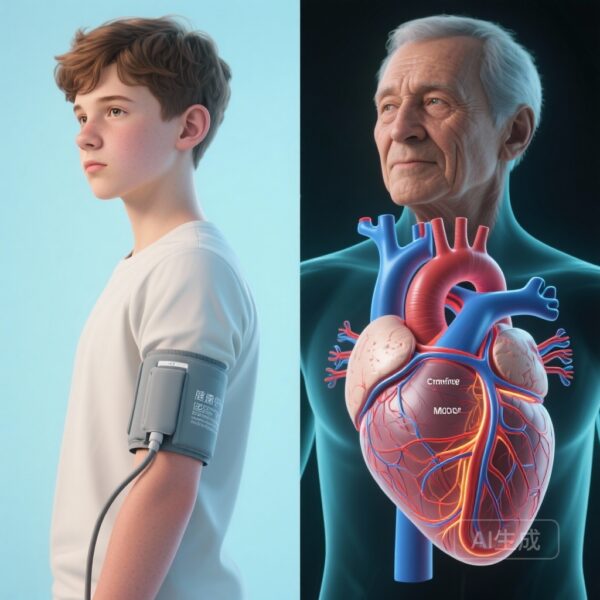
Elevated Blood Pressure in Adolescence Predicts Dose‑Dependent Coronary Atherosclerosis in Middle Age: Implications for Early Detection and Prevention
CardiologyatherosclerosisCoronary CTA

Elevated Blood Pressure in Adolescence Predicts Dose‑Dependent Coronary Atherosclerosis in Middle Age: Implications for Early Detection and Prevention

By MedXY|Dec 2, 2025

A Swedish cohort study of 10,222 men linked adolescent blood pressure to coronary atherosclerosis by CCTA ~40 years later; higher systolic BP in adolescence, even in the ‘elevated’ range, was associated with greater odds of severe (>50%)

Full Milk Feeds From Day 1 in Late Preterm Infants: Large RCT Shows No Shorter Hospital Stay and No Signal for Increased NEC or Hypoglycaemia
newsenteral feedingPediatrics

Full Milk Feeds From Day 1 in Late Preterm Infants: Large RCT Shows No Shorter Hospital Stay and No Signal for Increased NEC or Hypoglycaemia

By MedXY|Dec 1, 2025

The FEED1 trial randomized 2088 infants born at 30+0 to 32+6 weeks to full enteral feeds from day 1 versus gradual feeding with IV support. Full feeds did not shorten hospital stay and showed no increase in necrotising enterocolitis or clin

EuTCV Vi‑CRM197 (Single‑ and Multidose) Is Non‑Inferior to Typbar TCV in Infants and Well Tolerated Across Age Groups in Kenya and Senegal
Infectious Diseasesimmunogenicityphase 3 trial

EuTCV Vi‑CRM197 (Single‑ and Multidose) Is Non‑Inferior to Typbar TCV in Infants and Well Tolerated Across Age Groups in Kenya and Senegal

By MedXY|Nov 30, 2025

A multicentre phase 3 trial shows single‑ and multidose EuTCV (Vi‑CRM197) are immunologically non‑inferior to Typbar TCV in infants 9–12 months, with comparable safety and reactogenicity across ages — supporting WHO prequalification.

Mirikizumab Shows Promising Efficacy and Acceptable Safety in Pediatric Moderately-to-Severely Active Ulcerative Colitis: Results from the SHINE-1 Phase 2 Trial
GastroenterologybiologicsIL-23

Mirikizumab Shows Promising Efficacy and Acceptable Safety in Pediatric Moderately-to-Severely Active Ulcerative Colitis: Results from the SHINE-1 Phase 2 Trial

By MedXY|Nov 30, 2025

The multicentre open-label SHINE-1 phase 2 trial found that mirikizumab produced clinically meaningful induction and maintenance responses in children with moderate-to-severe ulcerative colitis, with an acceptable safety profile over 52 wee

Rigid Gas-Permeable Contact Lenses Improve Visual Rehabilitation After Primary Congenital Glaucoma Surgery: Results of the CLEVR‑PCG Randomized Trial
newsamblyopia

Rigid Gas-Permeable Contact Lenses Improve Visual Rehabilitation After Primary Congenital Glaucoma Surgery: Results of the CLEVR‑PCG Randomized Trial

By MedXY|Nov 25, 2025

In children after primary congenital glaucoma surgery with poor spectacle response, rigid gas‑permeable contact lenses produced greater improvements in worse‑eye visual acuity, contrast sensitivity, and near stereoacuity over 12 months comp

Five-Year Visual Outcomes After Lensectomy for Childhood Traumatic Cataract: Modest Vision Gains but High Rates of Visual Axis Opacification in Pseudophakia
newsglaucoma

Five-Year Visual Outcomes After Lensectomy for Childhood Traumatic Cataract: Modest Vision Gains but High Rates of Visual Axis Opacification in Pseudophakia

By MedXY|Nov 25, 2025

A prospective PEDIG cohort found modest long-term vision after lensectomy for pediatric traumatic cataract, low 5-year glaucoma prevalence, and high 5-year surgery rates for visual axis opacification in pseudophakic eyes, especially without

Rare but Real: Higher Risks of Vascular and Inflammatory Disease After SARS‑CoV‑2 Infection Than After BNT162b2 Vaccination in Children and Adolescents
newsCOVID-19 vaccinationmyocarditis

Rare but Real: Higher Risks of Vascular and Inflammatory Disease After SARS‑CoV‑2 Infection Than After BNT162b2 Vaccination in Children and Adolescents

By MedXY|Nov 24, 2025

A nationwide English cohort study (n≈13.9M) found transient but significant increases in rare vascular and inflammatory events after first SARS‑CoV‑2 infection and a smaller, short-lived increase in myocarditis/pericarditis after first BNT1

Orodispersible Ivermectin and Moxidectin–Albendazole Combinations Deliver Major Gains Against Trichuris trichiura in Children: Dose‑response, Safety, and Programmatic Implications
Infectious Diseasesalbendazoleivermectin

Orodispersible Ivermectin and Moxidectin–Albendazole Combinations Deliver Major Gains Against Trichuris trichiura in Children: Dose‑response, Safety, and Programmatic Implications

By MedXY|Nov 24, 2025

Two randomized trials from Pemba Island show orodispersible ivermectin–albendazole yields dose‑dependent high cure rates in preschool children, and moxidectin–albendazole is superior to albendazole alone in school‑aged children, both with a

Once-Weekly Navepegritide Raises Growth Velocity and Improves Skeletal and Functional Outcomes in Children with Achondroplasia: Results from the APPROACH Trial
news

Once-Weekly Navepegritide Raises Growth Velocity and Improves Skeletal and Functional Outcomes in Children with Achondroplasia: Results from the APPROACH Trial

By MedXY|Nov 24, 2025

The APPROACH randomized trial found once-weekly navepegritide significantly increased annualized growth velocity and produced favorable skeletal alignment and physical-function improvements in children with achondroplasia, with an acceptabl

Prev
15 / 25
1…1314151617…25
Next
Ask MedXY AI

Most popular

Intimate Health
Five Benefits for Women Continuing Sexual Activity After Menopause
Intimate Health
Why Some Women Have a Strong Sex Drive—And Why Men Shouldn't Worry About It
Nursing & care
How often should a couple have sex?
Intimate Health
Classic Intimacy Recommendations: How to Help Women Reach Orgasm and Enjoy Mutual Pleasure
Intimate Health
What Makes a Woman "Physiologically Addicted" Is Never Money, But These Two Relationship Qualities

Browse by specialty

Open language-specific specialty feeds and department pages.

news6629 articlesCardiology1375 articlesClinical Updates1288 articlesOncology1139 articlesDiabetes & Endocrinology842 articlesNeurology820 articlesPublic Health595 articlesGastroenterology572 articles
Hematology-Oncology
487 articles
Pediatrics484 articles
Internal Medicine444 articles