We use cookies

Our website uses essential cookies and, with your consent, additional cookies to measure performance and improve our services. Cookie Policy.

You can change your choice at any time.

MMedXYNews
HomeVideos
© 2026 MedXY
Contact usAbout usPrivacy PolicyMedXY story
MedXY AI/MedXY News/Emergency Medicine

Emergency Medicine

Ask MedXY AI
What is the latest evidence?Key clinical updatesGuideline changes

Latest news

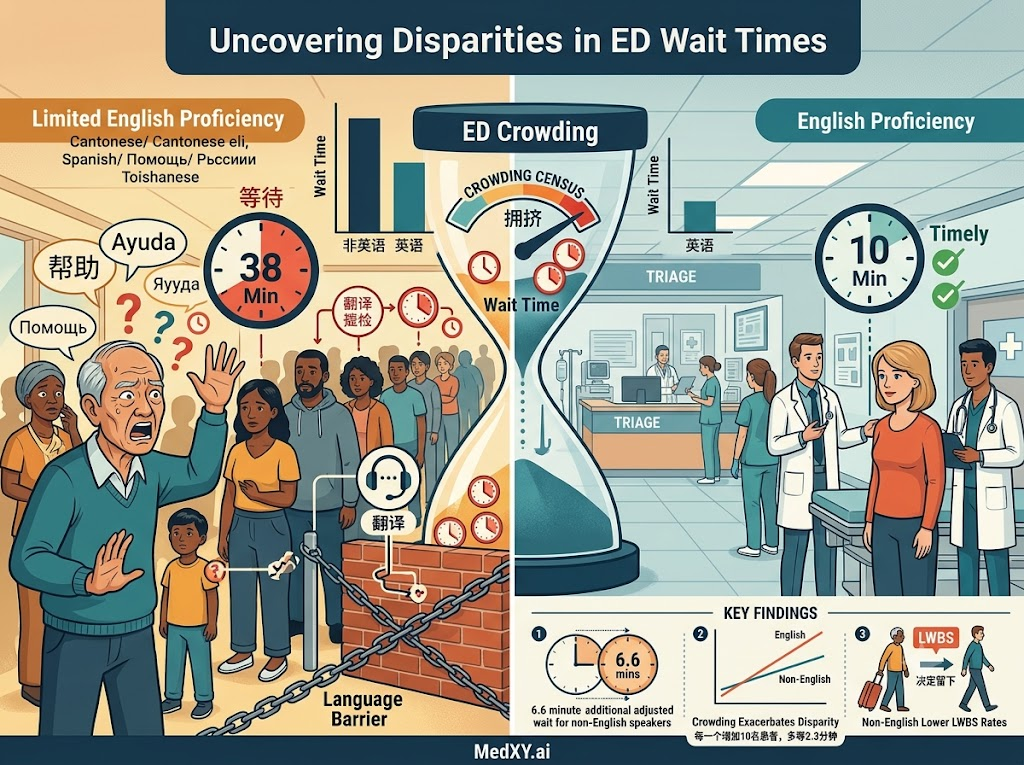
Language Barriers and Emergency Department Crowding: Uncovering Disparities in Wait Times at an Academic Medical Center
Emergency MedicineED Wait Timeshealth disparities

Language Barriers and Emergency Department Crowding: Uncovering Disparities in Wait Times at an Academic Medical Center

By MedXY|Aug 4, 2026

Non-English-speaking patients experience significantly longer emergency department wait times, especially during crowding, highlighting healthcare inequities that warrant system-level policy responses.

Intramuscular Chemical Sedation in Emergency Mental Health Patients Associated with Black Race, Police Arrival, and Involuntary Holds
Emergency Medicineemergency departmentmental health

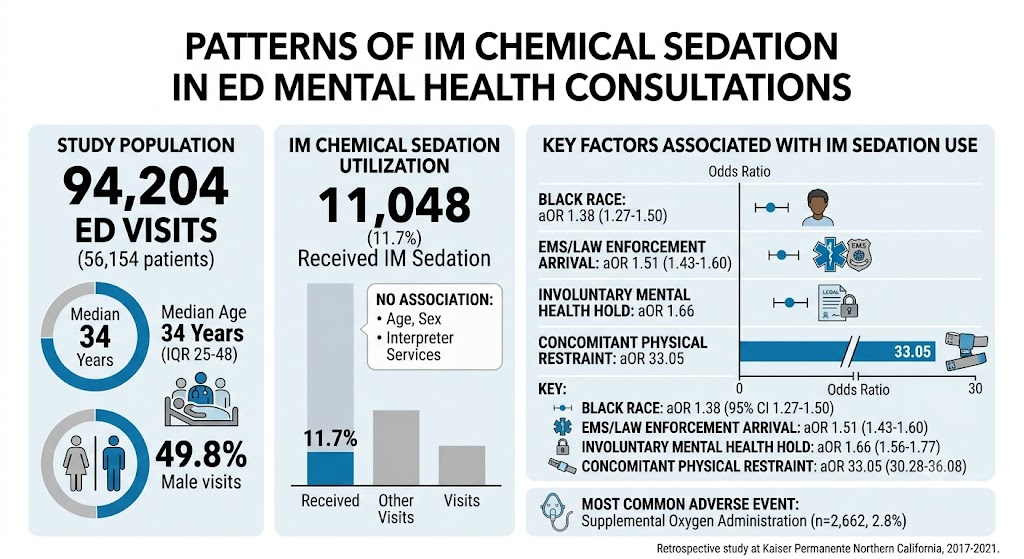
Intramuscular Chemical Sedation in Emergency Mental Health Patients Associated with Black Race, Police Arrival, and Involuntary Holds

By MedXY|Jul 29, 2026

A study of over 94,000 ED visits found that intramuscular chemical sedation during mental health consultations was more common among Black patients, those arriving with EMS or law enforcement, and those on involuntary holds.

Persistent Gender Disparities in Emergency Medicine: A 20-Year Scoping Review
Emergency Medicinegender disparitiesemergency medicine

Persistent Gender Disparities in Emergency Medicine: A 20-Year Scoping Review

By MedXY|Jul 27, 2026

A comprehensive scoping review of 191 studies confirms widespread gender disparities disadvantaging women emergency physicians in compensation, leadership, and recognition, with little improvement over time.

Awake Intubation in Emergency Settings: Incidence, Techniques, and Outcomes from a Decade of Airway Registries
Anesthesiologyadverse eventsawake intubation

Awake Intubation in Emergency Settings: Incidence, Techniques, and Outcomes from a Decade of Airway Registries

By MedXY|Jul 21, 2026

This study examines emergency physician-performed awake intubations over 10 years, highlighting a 7.2% incidence, high success rates (92%), and low adverse events in a tertiary emergency department.

Resuscitation From Out-of-Hospital Cardiac Arrest: Reliable Association of EtCO2 with ROSC
Critical Careemergency medicineEtCO2 monitoring

Resuscitation From Out-of-Hospital Cardiac Arrest: Reliable Association of EtCO2 with ROSC

By MedXY|Jul 18, 2026

This study examines the duration of end-tidal CO2 monitoring needed to distinguish return of spontaneous circulation (ROSC) during out-of-hospital cardiac arrest resuscitation, finding 7 to 21 minutes depending on witness status and initial

Enhancing Suicide Prevention: Teen and Caregiver Views on Lethal Means Safety Planning in the Emergency Department
Emergency Medicineadolescent mental healthemergency department

Enhancing Suicide Prevention: Teen and Caregiver Views on Lethal Means Safety Planning in the Emergency Department

By MedXY|Jul 14, 2026

This study explores teen and caregiver perspectives on lethal means safety counseling in the emergency department, highlighting its importance, preferred tool features, and challenges involving autonomy and family dynamics, informing tailor

Transforming Emergency Psychiatric Care: How a Novel Staffing Model Cuts Length of Stay
Emergency Medicineemergency departmentLength of Stay

Transforming Emergency Psychiatric Care: How a Novel Staffing Model Cuts Length of Stay

By MedXY|Jul 12, 2026

A novel Psychiatric Model of Care integrating specialized nurse practitioners in the ED significantly reduced length of stay for psychiatric emergency patients, particularly those on involuntary holds, enhancing efficiency and patient flow.

Prolonged Emergency Department Stay Linked to Increased 30-Day Mortality: Insights from a National Observational Study in England
Emergency Medicine30-day mortalityemergency department

Prolonged Emergency Department Stay Linked to Increased 30-Day Mortality: Insights from a National Observational Study in England

By MedXY|Jul 9, 2026

A large-scale English study reveals longer stays in Type 1 emergency departments correlate with greater 30-day all-cause mortality, highlighting urgent need to understand underlying causes beyond direct time effects.

Variation in Pediatric Critical Illness Experience Across Emergency Departments: Implications for Care and Transport
Emergency Medicineaccess to careEmergency Department Volume

Variation in Pediatric Critical Illness Experience Across Emergency Departments: Implications for Care and Transport

By MedXY|Jul 7, 2026

This study reveals that most emergency departments rarely encounter critically ill children, and only a minority of these cases could be redirected to high-volume centers, challenging the feasibility of universal direct transport policies f

Accelerating Care in Intracerebral Hemorrhage: The Impact of Mobile Stroke Units
Emergency Medicineantihypertensive therapyĐơn Vị Cấp Cứu Đột Quỵ Di Động

Accelerating Care in Intracerebral Hemorrhage: The Impact of Mobile Stroke Units

By MedXY|Jul 5, 2026

Mobile Stroke Units enable faster diagnosis and initiation of antihypertensive treatment in intracerebral hemorrhage, significantly reducing time to care compared with conventional EMS transportation.

Enhancing End-of-Life Mortality Prediction in Emergency Departments Using Collaborative AI Tools
AIartificial intelligenceemergency medicine

Enhancing End-of-Life Mortality Prediction in Emergency Departments Using Collaborative AI Tools

By MedXY|Jul 2, 2026

A study comparing physician-based surprise question, AI-driven GEST model, and a combined approach shows improved accuracy and efficiency in predicting 6-month mortality among older ED patients.

Embracing Uncertainty: Integrating Palliative Care into Emergency Medicine Practice
Emergency MedicineChăm sóc Hướng đến Bệnh nhânemergency medicine

Embracing Uncertainty: Integrating Palliative Care into Emergency Medicine Practice

By MedXY|Jun 30, 2026

Palliative care in emergency medicine is a vital approach focused on early needs recognition, compassionate communication during uncertainty, and sustained clinical presence to aid decision-making and improve patient and family support.

Optimizing Mild Traumatic Brain Injury Care: Safely Reducing Transfers to Higher-Level Trauma Centers
Emergency MedicineIntracranial Hemorrhagelevel III trauma center

Optimizing Mild Traumatic Brain Injury Care: Safely Reducing Transfers to Higher-Level Trauma Centers

By MedXY|Jun 29, 2026

Selective local management of mild traumatic brain injury with intracranial hemorrhage shows comparable safety and outcomes to transfer to level I trauma centers, reducing unnecessary patient transfers.

Impact of Emergency Department-to-ICU Transfer Times on Mortality Across Critical Care Diagnoses: Insights from a Dutch Cohort Study
Critical Carecardiac arrestcritical care

Impact of Emergency Department-to-ICU Transfer Times on Mortality Across Critical Care Diagnoses: Insights from a Dutch Cohort Study

By MedXY|Jun 26, 2026

This study explores how delays in transferring patients from the emergency department to the ICU influence hospital mortality, revealing diagnosis- and hospital-type-specific associations, particularly in cardiac arrest and trauma cases.

Evaluating Point-of-Care Ultrasound Accuracy for Right Ventricular Dysfunction in Pulmonary Embolism: A Comparative Analysis with Consultative Echocardiography
Cardiologyechocardiographyemergency medicine

Evaluating Point-of-Care Ultrasound Accuracy for Right Ventricular Dysfunction in Pulmonary Embolism: A Comparative Analysis with Consultative Echocardiography

By MedXY|Jun 26, 2026

This study assesses the accuracy of emergency physician-interpreted point-of-care ultrasound compared to cardiologist-interpreted consultative echocardiography for detecting right ventricular dysfunction in emergency patients with pulmonary

When Shift Hours Add Up: Emergency Department Medication Errors Rise as Clinicians Get Tired
Emergency Medicineclinician fatigueemergency medicine

When Shift Hours Add Up: Emergency Department Medication Errors Rise as Clinicians Get Tired

By MedXY|Jun 19, 2026

Pharmacy interventions on ED medication orders increased as clinicians spent more time on shift. The association persisted across roles and shift types, suggesting fatigue-related risks but varying by site.

Ultra-Early Remote Ischemic Postconditioning After Thrombectomy Appears Safe but Does Not Improve 90-Day Stroke Recovery
Emergency Medicineacute ischemic strokeEndovascular Thrombectomy

Ultra-Early Remote Ischemic Postconditioning After Thrombectomy Appears Safe but Does Not Improve 90-Day Stroke Recovery

By MedXY|Jun 10, 2026

In the EnTRIPS randomized trial, ultra-early remote ischemic postconditioning after successful endovascular thrombectomy was safe but did not significantly improve 90-day functional independence in acute ischemic stroke.

Emergency Medicine Training Must Evolve for a Permanently Crowded, Boarded ED
Emergency MedicineboardingED crowding

Emergency Medicine Training Must Evolve for a Permanently Crowded, Boarded ED

By MedXY|Jun 9, 2026

A 2026 Annals commentary argues that boarding and crowding are enduring emergency department realities and that residency education should shift from avoidance to deliberate preparation for safe, effective practice in constrained systems.

Routine Laboratory Testing Rarely Improves Emergency Department Medical Screening for Adult Psychiatric Presentations
Emergency Medicineemergency departmentlaboratory testing

Routine Laboratory Testing Rarely Improves Emergency Department Medical Screening for Adult Psychiatric Presentations

By MedXY|Jun 6, 2026

A 145-publication scoping review finds that ED medical screening of adults with psychiatric complaints is dominated by low-level evidence, with society statements generally discouraging routine laboratory testing in otherwise low-risk patie

Point-of-Care Ultrasound in Acute Care Did More Than Diagnose: It Reassured Patients, Reduced Burden, and Deepened Trust
Emergency Medicinepatient experiencepoint-of-care ultrasound

Point-of-Care Ultrasound in Acute Care Did More Than Diagnose: It Reassured Patients, Reduced Burden, and Deepened Trust

By MedXY|Jun 6, 2026

A qualitative study found that patients experienced point-of-care ultrasound as emotionally reassuring, physically convenient, and closely tied to physician communication and trust during acute care.

Prev
2 / 8
1234…8
Next
Ask MedXY AI

Most popular

Intimate Health
Five Benefits for Women Continuing Sexual Activity After Menopause
Intimate Health
Why Some Women Have a Strong Sex Drive—And Why Men Shouldn't Worry About It
Nursing & care
How often should a couple have sex?
Intimate Health
Classic Intimacy Recommendations: How to Help Women Reach Orgasm and Enjoy Mutual Pleasure
Intimate Health
What Makes a Woman "Physiologically Addicted" Is Never Money, But These Two Relationship Qualities

Browse by specialty

Open language-specific specialty feeds and department pages.

news6629 articlesCardiology1375 articlesClinical Updates1288 articlesOncology1139 articlesDiabetes & Endocrinology842 articlesNeurology820 articlesPublic Health595 articlesGastroenterology572 articles
Hematology-Oncology
487 articles
Pediatrics484 articles
Internal Medicine444 articles