We use cookies

Our website uses essential cookies and, with your consent, additional cookies to measure performance and improve our services. Cookie Policy.

You can change your choice at any time.

MMedXYNews
HomeVideos
MedXY AI/MedXY News/Section: Critical Care

Therapeutic Hypothermia at 35°C vs. Controlled Normothermia in ICU Heatstroke: Insights from a Pilot RCT
MedXY Editorial Team•Sep 3, 2026•Critical Care
intensive careHeatstrokeTargeted Temperature ManagementTherapeutic Hypothermiaclinical trial

Highlight

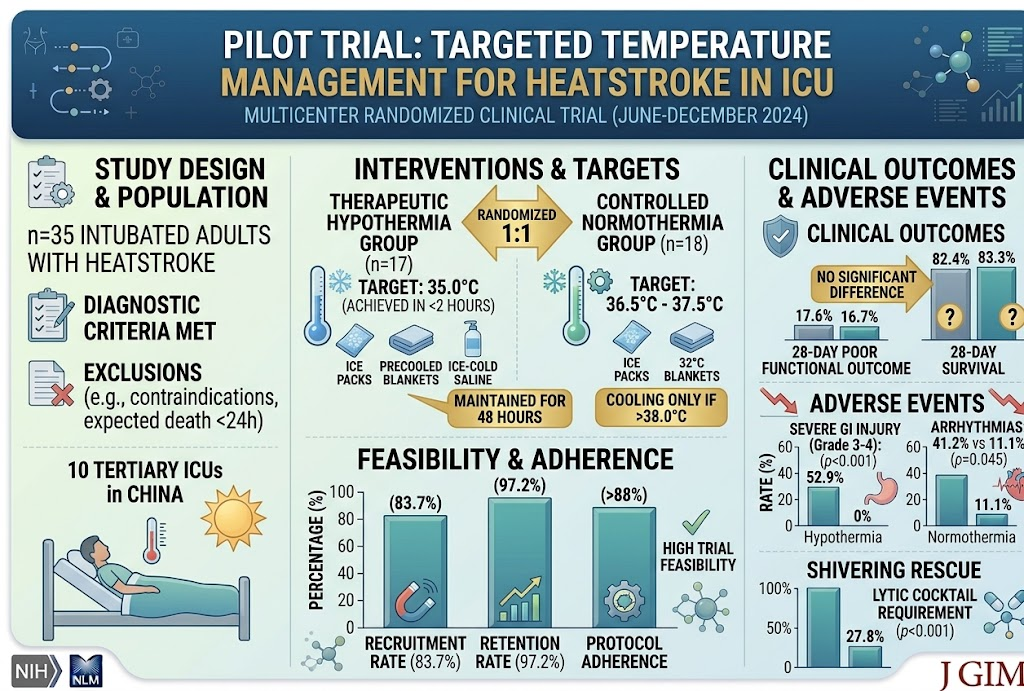
This pilot randomized controlled trial examined targeted temperature management (TTM) at 35°C compared to controlled normothermia (36.5°C–37.5°C) in intubated adult heatstroke patients admitted to intensive care units (ICUs). The study demonstrated operational feasibility for a larger trial but revealed no differences in survival or neurological outcomes. However, therapeutic hypothermia was associated with significantly higher rates of severe gastrointestinal injury and cardiac arrhythmias. Additionally, universal and intensified pharmacologic treatment was required to control shivering in the hypothermia group, raising safety concerns. These findings suggest therapeutic hypothermia should not be routinely applied in ICU heatstroke management until further data confirm benefit and safety.

Background

MedXY registered readers

Sign in free to continue reading

Create or use your MedXY account to unlock the complete article.

This article was created using several editorial tools, including AI, as part of the process. Human editors reviewed this content before publication.

Related articles

Open language-specific specialty feeds and department pages.

Evaluating Cusatuzumab Combined with Venetoclax ± Azacitidine in Unfit Newly Diagnosed AML: Insights from the Phase Ib ELEVATE TrialThe phase Ib ELEVATE study demonstrates that cusatuzumab combined with venetoclax and azacitidine offers a promising tolerable and effective frontline therapy for patients with newly diagnosed acute myeloid leukemia ineligible for intensiveSep 9, 2026Gabapentin for Cough in Idiopathic Pulmonary Fibrosis: Efficacy and Safety Insights from a Randomized Controlled TrialA randomized, double-blind, placebo-controlled trial demonstrates gabapentin’s significant efficacy and acceptable safety for treating cough in IPF, supporting its clinical use amid limited alternatives.Sep 1, 2026The Microbiome in Critical Illness: Transforming ICU Care Through Microbial InsightsThis review explores how the human microbiome influences management and outcomes in critically ill patients, emphasizing gastrointestinal microbial dynamics, disruption by critical illness and therapies, and emerging interventions to restorAug 28, 2026
Loading comments...
MedXY briefing

Get the free newsletter

Evidence-led clinical news, trends, and analysis—delivered to your inbox.

Ask MedXY AI

Most popular

Intimate Health
Five Benefits for Women Continuing Sexual Activity After Menopause
Intimate Health
Why Some Women Have a Strong Sex Drive—And Why Men Shouldn't Worry About It
Nursing & care
How often should a couple have sex?
Intimate Health
Classic Intimacy Recommendations: How to Help Women Reach Orgasm and Enjoy Mutual Pleasure
Intimate Health
What Makes a Woman "Physiologically Addicted" Is Never Money, But These Two Relationship Qualities
© 2026 MedXY
Contact usAbout usPrivacy PolicyMedXY story
Post-ICU Frailty in Older Adults Following Septic Shock: Key Predictors and Clinical Implications
This study identifies baseline frailty, organ dysfunction severity, and corticosteroid use as independent predictors of severe post-intensive care frailty in older septic shock survivors, highlighting critical factors for targeted post-ICU
Aug 26, 2026
Individualized vs Standard Blood Pressure Control During Mechanical Thrombectomy for Acute Ischemic Stroke: Insights from the DETERMINE Randomized Clinical TrialA randomized clinical trial comparing individualized versus standard blood pressure control during mechanical thrombectomy for ischemic stroke showed no significant difference in 90-day functional outcomes or safety.Aug 24, 2026
Deupirfenidone: A New Horizon in Slowing Idiopathic Pulmonary Fibrosis ProgressionDeupirfenidone, a deuterated form of pirfenidone, demonstrated efficacy in slowing lung function decline in IPF patients, with a favorable safety profile in a phase 2b trial, offering promise for improved treatment outcomes.Aug 17, 2026