MMedXYNews
Ask AIHomeVideos
© 2026 MedXY
Contact usAbout usPrivacy PolicyMedXY story
MedXY News/Otorhinolaryngology

Section

Otorhinolaryngology

315 articles

Ask AI
All specialtiesOtorhinolaryngologynewsClinical UpdatesCardiologyOncology

Latest updates

news

Treatment of a Mandibular Molar with Primary Failure of Eruption: A Case Report

A 12-year-old female with primary failure of eruption (PFE) affecting the right mandibular first molar is treated successfully via extraction and orthodontic repositioning, restoring function and occlusion.


Nov 13, 2025Sign in to read
Neurology

APOE ε4, Age and Sex Converge to Disturb Anterior Olfactory Nucleus Physiology: Electrophysiologic Evidence for Early Alzheimer’s Vulnerability

In vivo awake recordings in transgenic mice show APOE ε4 reduces neuronal excitability in the anterior olfactory nucleus (AON); adult females are more excitable than males (a sex difference lost with aging), while aging amplifies network os

Nov 5, 2025
news

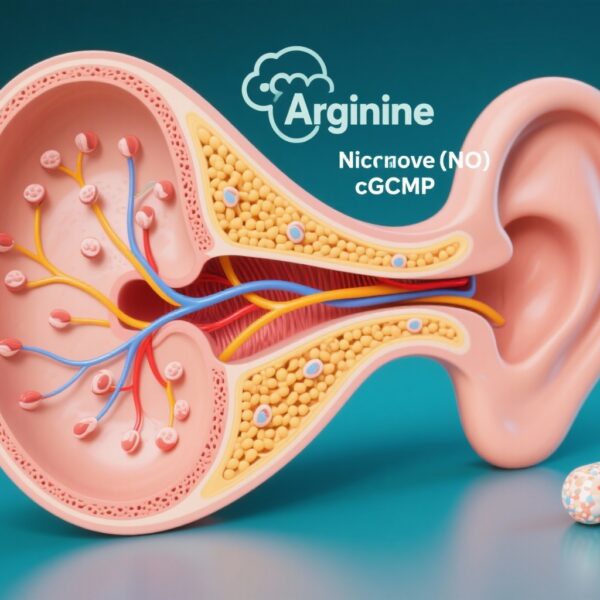
Carboxypeptidase D (CPD) Mutations Cause Congenital Hearing Loss — and Point to an Actionable NO/cGMP Pathway

A JCI study links recessive CPD missense variants to congenital deafness, defines a pathogenic mechanism through impaired arginine–NO–cGMP signaling with ER stress and apoptosis, and shows rescue in models with arginine or sildenafil — offe

Nov 4, 2025
news

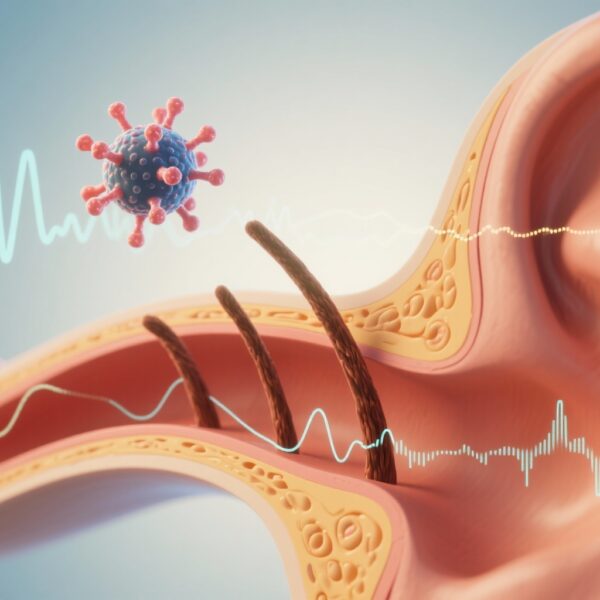
AAV‑OTOF Gene Therapy Restores Substantial Hearing in DFNB9 Across Ages — Rapid, Age‑dependent Benefits in a First-in‑Human Trial

A single‑arm trial of AAV‑OTOF (Anc80L65) in 10 patients (1.5–23.9 years) with autosomal recessive deafness 9 showed good tolerability and rapid, clinically meaningful hearing gains, with optimal outcomes in children aged 5–8 years; longer

Nov 4, 2025
news

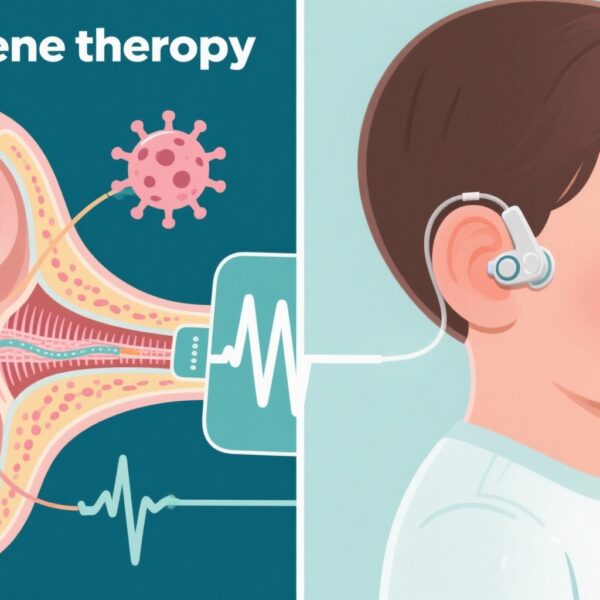
OTOF Gene Therapy Rivaled—and in Some Domains Outperformed—Cochlear Implants in Restoring Hearing and Speech in Congenital Deafness

A 2022–2024 nonblinded cohort study found OTOF gene therapy produced rapid, durable gains in auditory thresholds, speech perception, mismatch-negativity responses, and music perception versus cochlear implantation in children with genetical

Nov 4, 2025
news

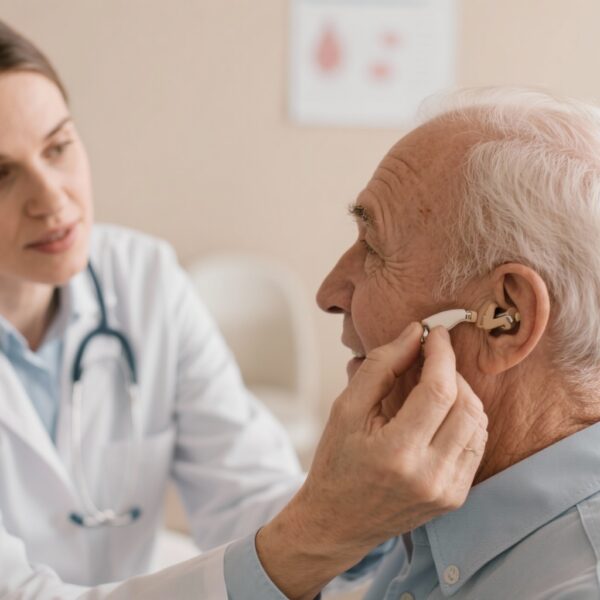
Fast versus Slow Compression in Hearing Aids: Hearing Thresholds Predict Preference but Not Speech Outcomes

A randomized crossover trial in older adults found that hearing-loss severity — not cognition or prior hearing-aid experience — predicts preference for slow versus fast compression; speech recognition in quiet and noise was unchanged by com

Nov 4, 2025Sign in to read
news

Unilateral Pediatric Chronic Otitis Media with Effusion Impairs Binaural Hearing and Raises Tinnitus Risk: Evidence Challenging Conservative Management

A prospective cross-sectional study finds unilateral chronic otitis media with effusion (COME) in children is associated with poorer spatial release from masking and high tinnitus prevalence, suggesting potential central auditory consequenc

Nov 4, 2025
news

NLRP3 Inflammasome in Hearing Loss: Mechanisms and Emerging Therapeutic Strategies

The NLRP3 inflammasome plays a central role in inflammation-mediated sensorineural hearing loss (SNHL). Genetic and acquired activation causes cochlear damage through cytokine release and pyroptosis. Targeted therapies, including IL-1 block

Nov 4, 2025
news

Hearing Aids Improve Some Aspects of Socio-Emotional Well‑being — But Not All: Insights from the WHAM Longitudinal Study

The WHAM longitudinal study finds modest psychosocial benefits from hearing‑aid uptake—reduced depression in people without tinnitus and lower loneliness in older adults—while showing limited mediation by self-perceived hearing disability a

Nov 4, 2025
news

Lower, More Frequent Cisplatin Dosing Substantially Reduces Hearing Loss in Head and Neck Cancer Without Compromising Short‑Term Survival

A multicenter retrospective cohort shows weekly low‑dose cisplatin markedly lowers ototoxicity compared with standard high‑dose every‑3‑week cisplatin in CRT for head and neck squamous cell carcinoma, with similar two‑year survival.

Nov 4, 2025Sign in to read
news

Cochlear Implant Benefits in Children with Single‑Sided Deafness: Better in Quiet, Challenged in Noise — and Time Matters

In 185 children receiving unilateral cochlear implants, residual acoustic hearing favored the non-implanted ear in quiet (especially for SSD), but noise attenuated that advantage. Shorter auditory deprivation and longer CI experience reduce

Nov 4, 2025
Clinical Updates

Longitudinal Developmental Outcomes and Early Cochlear Implantation Benefits in Children with Prelingual Single-Sided Deafness: Evidence Synthesis and Clinical Recommendations

Early cochlear implantation in children with prelingual single-sided deafness improves spatial hearing and cognitive outcomes, supporting neurodevelopment and mitigating risks of auditory deprivation and cortical reorganization.

Nov 4, 2025
news

Early Cochlear Implantation Shows Variable but Clinically Relevant Benefits in Children with Single-Sided Deafness: A Western Australian 10‑Year Series

A retrospective 10‑year series from Perth Children’s Hospital reports heterogeneous long‑term outcomes after pediatric cochlear implantation for single‑sided deafness; earlier implantation (within 1 year) was associated with greater l

Nov 4, 2025Sign in to read
news

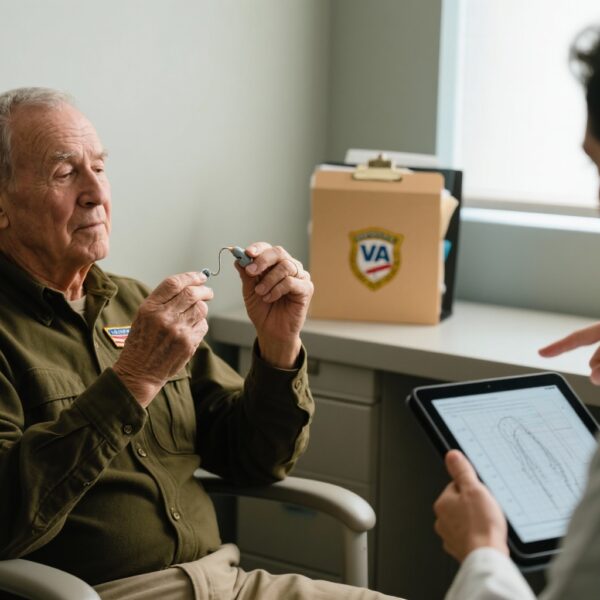
Pre-Fitting Predictors of 2‑Year Hearing Aid Use in 284,175 US Veterans: When Patient Context Matters More Than Audiometry

In 284,175 US veterans, nonmodifiable pre‑fitting factors—health comorbidity, mental status, prior hearing‑aid experience, age, race/ethnicity, and partnership—were independently associated with 2‑year hearing‑aid use persistence, beyond au

Nov 4, 2025
news

Hearing Loss Delays Semantic Prediction When Listening Is Demanding: Two-Stage Prediction Impaired by Cognitive Load

A visual-world eye-tracking study in older adults shows that postlingual hearing loss delays verb-driven semantic prediction—especially under higher listening demand—while simple agent-based prediction is preserved.

Nov 4, 2025Sign in to read
Diabetes & Endocrinology

Type 2 Diabetes Quadruples Risk of Hearing Loss — Meta-analysis Finds Predominant High-Frequency Impairment and Links to Duration and HbA1c

A PRISMA systematic review and meta-analysis of 17 studies (2019–2024) found type 2 diabetes is associated with a 4.19-fold greater odds of hearing loss, especially at high frequencies; duration >10 years and higher HbA1c amplified risk.

Nov 4, 2025Sign in to read
news

DB-OTO Restores and Sustains Hearing in Otoferlin-Deficient Mice: A Hair-Cell–Targeted Dual-AAV Strategy Advances to Clinical Testing

DB-OTO, a hair-cell-specific dual-AAV gene therapy encoding full-length human otoferlin, achieved dose-dependent and sustained auditory restoration in OTOF-deficient mice, supporting an ongoing Phase I/II pediatric trial.

Nov 4, 2025
Infectious Diseases

Epstein-Barr Virus Serology as a Predictor of Persistent Oral HPV Infection in Men: Insights From the Finnish Family HPV Study

A Finnish longitudinal study reveals that elevated Epstein-Barr virus antibody levels are significantly associated with persistent oral HPV infections, highlighting potential viral interplay in oropharyngeal oncogenesis risk.

Oct 27, 2025
Oncology

Evaluating Atezolizumab Maintenance Therapy in High-Risk Locally Advanced Squamous Cell Carcinoma of the Head and Neck: Insights from the IMvoke010 Trial

Atezolizumab maintenance therapy after multimodal definitive treatment failed to improve event-free or overall survival in high-risk LA SCCHN patients in the phase 3 IMvoke010 trial, highlighting challenges in immunotherapy for this setting

Oct 25, 2025
news

DB-OTO Gene Therapy: A Breakthrough Treatment for OTOF-Related Inherited Deafness in Children

Regeneron’s DB-OTO gene therapy shows promising results in restoring natural hearing in children with profound hearing loss caused by OTOF gene mutations, with 75% achieving significant hearing improvement after a single treatment.

Oct 24, 2025
Previous
15 / 16
1…13141516
Next

Most read

  1. 01news

    Mapping the Gap: Geographic Disparities in Otolaryngologist Availability Versus Patient Demand in the U.S.

Go deeper with MedXY AI

Explore the evidence behind the news.

Ask AI
MedXY briefing

Stay informed

Medical news and research updates, delivered to your inbox.