We use cookies

Our website uses essential cookies and, with your consent, additional cookies to measure performance and improve our services. Cookie Policy.

You can change your choice at any time.

MMedXYNews
HomeVideos
© 2026 MedXY
Contact usAbout usPrivacy PolicyMedXY story
MedXY AI/MedXY News/Critical Care

Critical Care

Ask MedXY AI
What is the latest evidence?Key clinical updatesGuideline changes

Latest news

A 250‑ml Ultrafiltration Challenge Identifies Patients at Risk of Becoming Preload‑Dependent During CRRT
Critical Carecardiac indexCRRT

A 250‑ml Ultrafiltration Challenge Identifies Patients at Risk of Becoming Preload‑Dependent During CRRT

By MedXY|Nov 7, 2025

A randomized cross‑over trial found that a 250‑ml net ultrafiltration challenge reliably identified preload‑independent critically ill patients who became preload‑dependent during continuous renal replacement therapy; a ≥5% calibrated cardi


Circulating Endothelial Transcriptomic Signatures Predict Worse Outcomes in COVID-19, Respiratory Failure and ARDS
Critical CareARDSCOVID-19

Circulating Endothelial Transcriptomic Signatures Predict Worse Outcomes in COVID-19, Respiratory Failure and ARDS

By MedXY|Nov 7, 2025

Transcriptomic deconvolution of blood identifies elevated circulating endothelial signatures (ECS%) that associate with higher 28‑day mortality and worse respiratory trajectories in pediatric respiratory failure and adults hospitalized with

Resistance Training in the ICU Improves Muscle, Function, and Survival — HMB Adds Only Modest Benefit
Critical Carecritical careICU‑acquired weakness

Resistance Training in the ICU Improves Muscle, Function, and Survival — HMB Adds Only Modest Benefit

By MedXY|Nov 7, 2025

A multicenter 2×2 factorial RCT in 266 critically ill adults shows that in‑ICU resistance training improves discharge physical function, muscle mass, patient‑reported outcomes, and lowers 6‑ and 12‑month mortality; HMB supplementation produ

Sodium Bicarbonate in Severe Metabolic Acidemia with AKI: No Survival Benefit but Less Dialysis — Insights from BICARICU-2
Critical Careacute kidney injurycritical care

Sodium Bicarbonate in Severe Metabolic Acidemia with AKI: No Survival Benefit but Less Dialysis — Insights from BICARICU-2

By MedXY|Nov 7, 2025

The BICARICU-2 randomized trial found that intravenous sodium bicarbonate in patients with severe metabolic acidemia and moderate-to-severe acute kidney injury did not reduce 90‑day mortality, but was associated with a substantial reduction

Trunk Inclination Changes Worsen Compliance and Raise PaCO2 in Obese ARDS Patients: Clinical Implications from a Seven-Study Pooled Analysis
Critical CareARDSmechanical ventilation

Trunk Inclination Changes Worsen Compliance and Raise PaCO2 in Obese ARDS Patients: Clinical Implications from a Seven-Study Pooled Analysis

By MedXY|Nov 7, 2025

A secondary analysis of 159 mechanically ventilated ARDS patients shows that increasing trunk inclination reduces respiratory system, lung, and chest wall compliance—especially in patients with obesity—and is associated with increased PaCO2

Choice of Vasopressor in Septic Shock: Does It Change Kidney Outcomes? A Critical Appraisal of the Evidence
Critical Careacute kidney injuryrenal outcomes

Choice of Vasopressor in Septic Shock: Does It Change Kidney Outcomes? A Critical Appraisal of the Evidence

By MedXY|Nov 7, 2025

A systematic review of 17 randomized trials (n=4,259) found no consistent renoprotective effect from any vasopressor in septic shock. Heterogeneous definitions, underpowered studies, and reliance on RRT limit conclusions; standardized renal

Adjunctive Terlipressin in Refractory Septic Shock: Lowers High-Dose Catecholamine Need at 6 Hours but No Mortality Benefit
Critical Carecritical careseptic shock

Adjunctive Terlipressin in Refractory Septic Shock: Lowers High-Dose Catecholamine Need at 6 Hours but No Mortality Benefit

By MedXY|Nov 7, 2025

In a double-blind RCT of 130 patients with refractory septic shock, terlipressin increased the proportion achieving MAP ≥65 mmHg with low catecholamine exposure at 6 hours versus placebo but did not change 28-day mortality; digital ischemia

Inhaled PEG‑Adrenomedullin in ARDS: Safe but Ineffective — Phase 2 RCT Stopped for Futility
Critical CareARDS

Inhaled PEG‑Adrenomedullin in ARDS: Safe but Ineffective — Phase 2 RCT Stopped for Futility

By MedXY|Nov 7, 2025

A multicentre randomized Phase 2a/b trial found inhaled pegylated adrenomedullin (PEG‑ADM) well tolerated in ventilated ARDS patients but without improvement in ventilator‑free survival or a composite clinical utility index; the study was s

Baseline SGLT2 Inhibitor Use Associated with Lower Risk of Sepsis-Induced Cardiomyopathy and Improved Outcomes in Type 2 Diabetes: Insights from a Large Propensity-Matched Cohort
Cardiologyobservational studySepsis-induced cardiomyopathy

Baseline SGLT2 Inhibitor Use Associated with Lower Risk of Sepsis-Induced Cardiomyopathy and Improved Outcomes in Type 2 Diabetes: Insights from a Large Propensity-Matched Cohort

By MedXY|Nov 7, 2025

A large propensity-matched cohort study found that baseline SGLT2 inhibitor use versus DPP4 inhibitor therapy in adults with type 2 diabetes and infection was associated with lower 30-day sepsis-induced cardiomyopathy and improved 1-year mo

Therapeutic Plasma Exchange May Improve Transplant-Free Survival in Severe Amatoxin-Associated Acute Liver Failure
Critical CareAcute liver failurehepatic encephalopathy

Therapeutic Plasma Exchange May Improve Transplant-Free Survival in Severe Amatoxin-Associated Acute Liver Failure

By MedXY|Nov 6, 2025

A multinational retrospective cohort found adjunctive plasma exchange was associated with higher 28‑day transplant-free survival in amatoxin-related ALF patients with grade ≥2 hepatic encephalopathy.

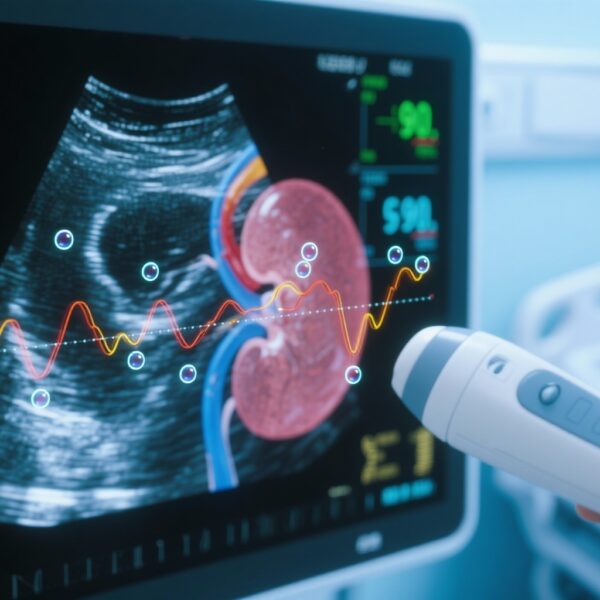
Renal Contrast‑Enhanced Ultrasound Is Reproducible in Stable Critically Ill Patients — mTT Is the Most Robust Metric
Critical Carecritical care

Renal Contrast‑Enhanced Ultrasound Is Reproducible in Stable Critically Ill Patients — mTT Is the Most Robust Metric

By MedXY|Nov 6, 2025

In stable critically ill patients, contrast‑enhanced ultrasound (CEUS) renal perfusion metrics are reproducible; amplitude measures (RBV, PI) are more dose‑sensitive while mean transit time (mTT) shows greater robustness across infusion cha

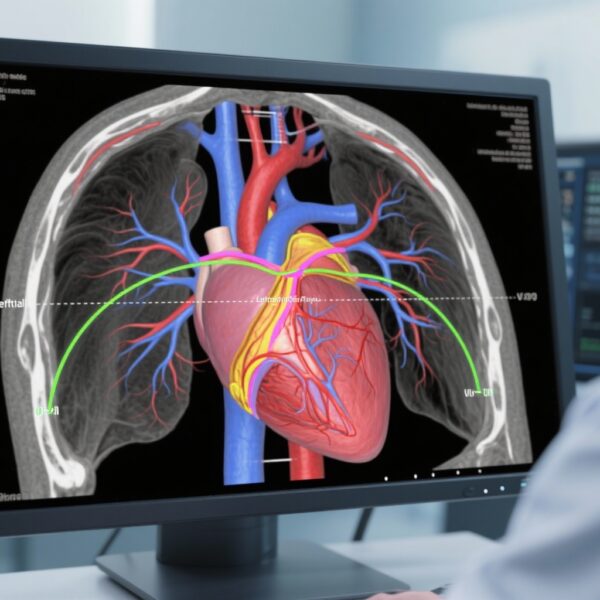
Septal Curvature Ratio on CTPA Identifies Normotensive PE Patients at High Risk of Early Deterioration
Critical Carepulmonary embolismrisk stratification

Septal Curvature Ratio on CTPA Identifies Normotensive PE Patients at High Risk of Early Deterioration

By MedXY|Nov 6, 2025

A multicentre prospective study shows the ventricular septum curvature ratio on CTPA strongly predicts 30‑day clinical deterioration in normotensive acute pulmonary embolism, outperforming conventional single metrics and offering potential

Indirect Calorimetry Reveals Hypermetabolism That Predicts Accelerated Muscle Loss and Energy Deficit Risk in ICU Patients
Critical Caremuscle wasting

Indirect Calorimetry Reveals Hypermetabolism That Predicts Accelerated Muscle Loss and Energy Deficit Risk in ICU Patients

By MedXY|Nov 6, 2025

Serial indirect calorimetry–measured hypermetabolism is independently associated with more rapid CT-quantified muscle wasting and higher risk of energy deficit in critically ill adults, suggesting personalized metabolic monitoring could gui

Lactate Predicts Citrate Accumulation During Continuous Kidney Replacement Therapy: incidence, severity, and clinical implications
Critical Care

Lactate Predicts Citrate Accumulation During Continuous Kidney Replacement Therapy: incidence, severity, and clinical implications

By MedXY|Nov 6, 2025

In 911 critically ill patients on RCA-CKRT, citrate accumulation occurred in 17%. Pre-CKRT lactate strongly predicted accumulation (OR 2.34 per 1-unit increase on log scale); VIS was less discriminatory. Accumulation linked to liver dysfunc

New Persistent Opioid Use Among ICU Survivors After Discharge: Incidence, Predictors, and Nationwide Cohort Insights
AnesthesiologyOpioid Userisk factors

New Persistent Opioid Use Among ICU Survivors After Discharge: Incidence, Predictors, and Nationwide Cohort Insights

By MedXY|Nov 6, 2025

New persistent opioid use develops in 4.2% of opioid-naïve ICU survivors by six months post-discharge, with early opioid prescription as the strongest predictor. Risk varies by opioid potency and patient factors, highlighting tailored taper

Rescue Noninvasive Ventilation After Extubation: High Failure but No Clear Increase in Hospital Mortality — A Post‑hoc RINO Trial Analysis
Critical Carecritical careextubation failure

Rescue Noninvasive Ventilation After Extubation: High Failure but No Clear Increase in Hospital Mortality — A Post‑hoc RINO Trial Analysis

By MedXY|Nov 6, 2025

A post‑hoc analysis of the RINO trial found rescue NIV for post‑extubation respiratory failure had a 58% failure rate but was associated with lower ICU mortality and no clear increase in hospital mortality when applied with prespecified re‑

Hemorrhage Dominates Obstetric ICU Admissions in Japan: Insights from a Nationwide Inpatient Database
Critical Carebệnh suất mẹpostpartum hemorrhage

Hemorrhage Dominates Obstetric ICU Admissions in Japan: Insights from a Nationwide Inpatient Database

By MedXY|Nov 6, 2025

A nationwide Japanese study of 8,184 peripartum ICU admissions (2010–2022) found hemorrhage accounted for 52.6% of cases; interventions commonly included transfusion (71.5%), mechanical ventilation (28.0%), and transcatheter arterial emboli

Preventing Post‑Induction Hypotension With Low‑Dose Norepinephrine Reduces Postoperative Complications After Major Abdominal Surgery
AnesthesiologyIntraoperative HypotensionMajor Abdominal Surgery

Preventing Post‑Induction Hypotension With Low‑Dose Norepinephrine Reduces Postoperative Complications After Major Abdominal Surgery

By MedXY|Nov 6, 2025

A single‑center RCT found that starting a titrated norepinephrine infusion at anesthesia induction reduced intraoperative hypotension and lowered 30‑day medico‑surgical complications compared with reactive ephedrine boluses in high‑risk abd

Higher Standardized ICU Admission Ratio After Rapid Response Calls Is Linked to Better Neurologic and Survival Outcomes: Insights from a Multicenter Japanese Registry
Critical Carecritical care outcomesICU admission

Higher Standardized ICU Admission Ratio After Rapid Response Calls Is Linked to Better Neurologic and Survival Outcomes: Insights from a Multicenter Japanese Registry

By MedXY|Nov 6, 2025

A multicenter retrospective Japanese study found that hospitals admitting more patients to ICU than predicted after rapid response activations had fewer poor neurologic outcomes or deaths within 30 days, suggesting ICU utilization after RRS

Continuous Intravenous Sedation Produces Novel EEG ‘Ups’ in Early Acute Hypoxemic Respiratory Failure — Implications for Monitoring and Outcomes
AnesthesiologyAcute Hypoxemic Respiratory Failurecritical care

Continuous Intravenous Sedation Produces Novel EEG ‘Ups’ in Early Acute Hypoxemic Respiratory Failure — Implications for Monitoring and Outcomes

By MedXY|Nov 6, 2025

In mechanically ventilated patients with early acute hypoxemic respiratory failure, continuous IV sedation produces EEG patterns (EEG Ups) not seen in natural sleep; these patterns correlate with sedation dose, drug combinations, clinical s

Prev
13 / 16
1…111213141516
Next
Ask MedXY AI

Most popular

Intimate Health
Five Benefits for Women Continuing Sexual Activity After Menopause
Intimate Health
Why Some Women Have a Strong Sex Drive—And Why Men Shouldn't Worry About It
Nursing & care
How often should a couple have sex?
Intimate Health
Classic Intimacy Recommendations: How to Help Women Reach Orgasm and Enjoy Mutual Pleasure
Intimate Health
What Makes a Woman "Physiologically Addicted" Is Never Money, But These Two Relationship Qualities

Browse by specialty

Open language-specific specialty feeds and department pages.

news6629 articlesCardiology1375 articlesClinical Updates1288 articlesOncology1139 articlesDiabetes & Endocrinology842 articlesNeurology820 articlesPublic Health595 articlesGastroenterology572 articles
Hematology-Oncology
487 articles
Pediatrics484 articles
Internal Medicine444 articles