We use cookies

Our website uses essential cookies and, with your consent, additional cookies to measure performance and improve our services. Cookie Policy.

You can change your choice at any time.

MMedXYNews
HomeVideos
© 2026 MedXY
Contact usAbout usPrivacy PolicyMedXY story
MedXY AI/MedXY News/Otorhinolaryngology

Otorhinolaryngology

Ask MedXY AI
What is the latest evidence?Key clinical updatesGuideline changes

Latest news

Engasertib Shows Promise for Recurrent Epistaxis in HHT: Proof‑of‑Concept Trial Demonstrates Reduced Bleeding with Acceptable Short‑Term Safety
Hematology-OncologyAKT inhibitorengasertib

Engasertib Shows Promise for Recurrent Epistaxis in HHT: Proof‑of‑Concept Trial Demonstrates Reduced Bleeding with Acceptable Short‑Term Safety

By MedXY|Nov 27, 2025

In a randomized, double‑blind, placebo‑controlled proof‑of‑concept trial, oral engasertib reduced epistaxis frequency and duration in hereditary hemorrhagic telangiectasia (HHT) with a safety profile similar to placebo except for reversible


More Than Half of Hispanic Medicare Beneficiaries Aged 65+ Have Hearing Loss — Yet Few Use Hearing Aids
newshearing aidspublic health

More Than Half of Hispanic Medicare Beneficiaries Aged 65+ Have Hearing Loss — Yet Few Use Hearing Aids

By MedXY|Nov 25, 2025

A nationally representative 2022 study found hearing loss in 54.6% of Hispanic US adults 65+; only 8.3% of those with hearing loss reported using hearing aids, underscoring major access gaps.

Severe Late Radiation Toxicities in Head and Neck Cancer: Common, Preventable, and Linked to Worse Survival
newshead and neck cancerIMRT

Severe Late Radiation Toxicities in Head and Neck Cancer: Common, Preventable, and Linked to Worse Survival

By MedXY|Nov 25, 2025

A large single-center cohort (n=7,622) shows 12.6% of head and neck cancer patients develop severe (≥RTOG grade 3) radiation-related late toxicities; modifiable factors and specialized multidisciplinary late-effects care may reduce risk and

One in Three Head and Neck Cancer Survivors Still Have Supportive Care Needs at Five Years — Fear of Recurrence and Pain Drive Long-Term Demand
newsfear of cancer recurrencehead and neck cancer

One in Three Head and Neck Cancer Survivors Still Have Supportive Care Needs at Five Years — Fear of Recurrence and Pain Drive Long-Term Demand

By MedXY|Nov 24, 2025

Longitudinal data from 403 head and neck cancer survivors show that while information and health-system needs decline between years 2 and 5, one-third report at least one moderate-to-high unmet supportive care need at year 5—notably fatigue

Half of Long‑Term Head and Neck Cancer Survivors Report Unmet Supportive Care Needs — A Multinational Cohort Highlights Clinical and System Drivers
newshead and neck cancerhealth systems

Half of Long‑Term Head and Neck Cancer Survivors Report Unmet Supportive Care Needs — A Multinational Cohort Highlights Clinical and System Drivers

By MedXY|Nov 24, 2025

A multinational cross‑sectional study of 1,097 head and neck cancer survivors >5 years after diagnosis found that ~50% report moderate‑to‑high unmet supportive care needs, driven by HNC‑specific, psychological and physical/daily living c

Preoperative Clues That Predict Who Will Receive Adjuvant Therapy After Surgery for Oral Cavity Cancer
newsadjuvant therapyhead and neck oncology

Preoperative Clues That Predict Who Will Receive Adjuvant Therapy After Surgery for Oral Cavity Cancer

By MedXY|Nov 22, 2025

In a multicenter cohort of 3,980 oral cavity squamous cell carcinoma patients, preoperative clinical and tumor features—including age, comorbidity, tumor subsite, size, clinical stage, and biopsy grade—predicted receipt and intensity of adj

Updated Basal Calcitonin Cutoffs Predict Extent of Lymph Node Metastasis in Medullary Thyroid Cancer — Practical Thresholds for Surgery Planning
newsmedullary thyroid carcinoma

Updated Basal Calcitonin Cutoffs Predict Extent of Lymph Node Metastasis in Medullary Thyroid Cancer — Practical Thresholds for Surgery Planning

By MedXY|Nov 23, 2025

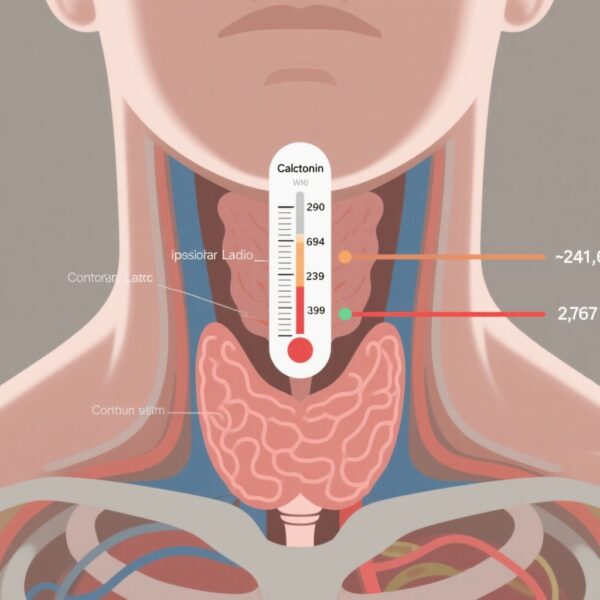
A multicenter Chinese cohort of 509 initially treated MTC patients identifies new preoperative basal calcitonin thresholds (241.9, 693.9, 2378.5, 2787.1 pg/mL) that better predict central, ipsilateral lateral, bilateral/contralateral latera

HNC-8D: A Head and Neck Cancer–Specific Utility Measure That Improves Discrimination of Post‑treatment Health States
newshead and neck cancerquality of life

HNC-8D: A Head and Neck Cancer–Specific Utility Measure That Improves Discrimination of Post‑treatment Health States

By MedXY|Nov 21, 2025

A multinational team developed and valued the HNC-8D, an 8-dimension, head and neck cancer–specific health utility instrument derived from EORTC QLQ-C30/H&N43. Valuation in 250 participants yielded mean absolute prediction errors of 0.0

Myocardial Injury Is Common After Major Head and Neck Surgery and Predicts Early Mortality: Insights from the VISION Cohort
CardiologyHead and neck surgerymyocardial injury

Myocardial Injury Is Common After Major Head and Neck Surgery and Predicts Early Mortality: Insights from the VISION Cohort

By MedXY|Nov 21, 2025

A VISION cohort analysis found myocardial injury after major head and neck surgery (MINS) in 11.9% overall and 23.8% of patients ≥75, strongly associated with 30‑day mortality and longer hospital stay; most events were clinically silent wit

Expect-It: A Validated Decision Tool That Improves Planning for Camera-Assisted and Awake Intubation in Head and Neck Surgery
Anesthesiologyairway managementawake intubation

Expect-It: A Validated Decision Tool That Improves Planning for Camera-Assisted and Awake Intubation in Head and Neck Surgery

By MedXY|Nov 21, 2025

A prospectively developed and validated algorithm (Expect-It) using clinical, exam, and transnasal videoendoscopy data improves sensitivity for selecting camera-assisted and awake tracheal intubation and increases first-attempt success in h

Updated Basal Calcitonin Cutoffs Better Predict Extent of Lymph Node Metastasis in Medullary Thyroid Cancer
Diabetes & Endocrinologymedullary thyroid carcinoma

Updated Basal Calcitonin Cutoffs Better Predict Extent of Lymph Node Metastasis in Medullary Thyroid Cancer

By MedXY|Nov 21, 2025

A multicenter Chinese cohort identifies new preoperative basal calcitonin thresholds (241.9, 693.9, 2378.5, 2787.1 pg/mL) that stratify risk of central, ipsilateral lateral, bilateral/contralateral lateral, and upper mediastinal lymph node

Adjuvant Chemoradiotherapy Helps Patients with Major — Not Minor — Extranodal Extension in Oral Cavity SCC
newsAdjuvant ChemoradiotherapyExtranodal Extension

Adjuvant Chemoradiotherapy Helps Patients with Major — Not Minor — Extranodal Extension in Oral Cavity SCC

By MedXY|Nov 21, 2025

A multicenter cohort study shows adjuvant chemoradiotherapy improves disease-free and overall survival for oral cavity SCC patients with major extranodal extension (>2 mm) but provides no clear benefit for those with minor ENE (≤2 mm).

HPV-Positive Oropharyngeal Cancer Retains a Strong Survival Advantage After Surgery in Patients Aged ≥70
newselderlyHPV

HPV-Positive Oropharyngeal Cancer Retains a Strong Survival Advantage After Surgery in Patients Aged ≥70

By MedXY|Nov 21, 2025

In a multi-center cohort of 345 surgically treated patients aged 70 or older with tonsil or base‑of‑tongue SCC, p16 positivity was associated with substantially better 5‑year overall and disease‑free survival compared with p16‑negative tumo

Unilateral TORS for HPV-Positive Tonsillar Cancer Appears Safe — Bilateral Contralateral Tonsillectomy May Add Harm Without Clear Benefit
newsHPVoropharyngeal cancer

Unilateral TORS for HPV-Positive Tonsillar Cancer Appears Safe — Bilateral Contralateral Tonsillectomy May Add Harm Without Clear Benefit

By MedXY|Nov 21, 2025

In a retrospective cohort of 158 HPV-positive tonsil SCC patients, omission of prophylactic contralateral tonsillectomy during TORS was not associated with worse survival and showed trends toward fewer hemorrhages, ED visits, and shorter ho

Proton Beam vs IMRT for Olfactory Neuroblastoma: Multicenter Propensity-Matched Cohort Shows No Clear Superiority
newsIMRTproton-therapy

Proton Beam vs IMRT for Olfactory Neuroblastoma: Multicenter Propensity-Matched Cohort Shows No Clear Superiority

By MedXY|Nov 21, 2025

A multicenter propensity-matched cohort comparing adjuvant proton beam radiotherapy (PBRT) with intensity-modulated radiotherapy (IMRT) for olfactory neuroblastoma found no definitive differences in local control, recurrence-free survival,

Pathologic Response to Neoadjuvant Nivolumab Predicts Improved Survival in HPV‑Negative Head and Neck Cancer
newshead and neck cancerneoadjuvant immunotherapy

Pathologic Response to Neoadjuvant Nivolumab Predicts Improved Survival in HPV‑Negative Head and Neck Cancer

By MedXY|Nov 21, 2025

A pooled analysis of two neoadjuvant nivolumab trials found that pathologic treatment effect >57% is associated with markedly improved 3‑year disease‑free and overall survival in HPV‑negative resectable HNSCC, suggesting pTE may be a use

Radiotherapy for Growing Vestibular Schwannomas: Real‑World Tumor Control and What It Means for Practice
newsRadiotherapyStereotactic Radiosurgery

Radiotherapy for Growing Vestibular Schwannomas: Real‑World Tumor Control and What It Means for Practice

By MedXY|Nov 20, 2025

An international multicenter cohort of 1,883 patients with radiologically growing vestibular schwannomas treated first‑line with radiotherapy showed a 10‑year tumor control rate of 76.1% (primary definition). Control estimates varied widely

Adenotonsillectomy vs Watchful Waiting in Young Children with Mild–Moderate OSA: Long-term Findings from the KATE Randomized Trial
newsadenotonsillectomypediatric OSA

Adenotonsillectomy vs Watchful Waiting in Young Children with Mild–Moderate OSA: Long-term Findings from the KATE Randomized Trial

By MedXY|Nov 19, 2025

The KATE trial (n=60) found no between-group difference in polysomnographic OAHI change after 3 years, though adenotonsillectomy improved disease-specific quality of life. Nearly 42% of watchful-waiting children later underwent surgery, sug

Palliative Care Timing, Tracheostomy, and Gastrostomy in Head and Neck Cancer: Implications for End-of-Life Quality and Costs
newsgastrostomyhead and neck cancer

Palliative Care Timing, Tracheostomy, and Gastrostomy in Head and Neck Cancer: Implications for End-of-Life Quality and Costs

By MedXY|Nov 19, 2025

Early palliative care may reduce healthcare costs in head and neck cancer patients using tracheostomy or gastrostomy tubes but does not lessen aggressive hospital care or promote home deaths at the end of life.

Palliative Care, Tracheostomy and Gastrostomy Tube Use, and End-of-Life Outcomes in Head and Neck Cancer: A Comprehensive Review
Clinical Updatesgastrostomyhead and neck cancer

Palliative Care, Tracheostomy and Gastrostomy Tube Use, and End-of-Life Outcomes in Head and Neck Cancer: A Comprehensive Review

By MedXY|Nov 21, 2025

This review synthesizes evidence on the timing of palliative care and the use of tracheostomy/gastrostomy tubes in head and neck cancer patients, highlighting their impact on end-of-life costs, quality, and care settings.

Prev
10 / 13
1…8910111213
Next
Ask MedXY AI

Most popular

Intimate Health
Five Benefits for Women Continuing Sexual Activity After Menopause
Intimate Health
Why Some Women Have a Strong Sex Drive—And Why Men Shouldn't Worry About It
Nursing & care
How often should a couple have sex?
Intimate Health
Classic Intimacy Recommendations: How to Help Women Reach Orgasm and Enjoy Mutual Pleasure
Intimate Health
What Makes a Woman "Physiologically Addicted" Is Never Money, But These Two Relationship Qualities

Browse by specialty

Open language-specific specialty feeds and department pages.

news6629 articlesCardiology1375 articlesClinical Updates1288 articlesOncology1139 articlesDiabetes & Endocrinology842 articlesNeurology820 articlesPublic Health595 articlesGastroenterology572 articles
Hematology-Oncology
487 articles
Pediatrics484 articles
Internal Medicine444 articles