We use cookies

Our website uses essential cookies and, with your consent, additional cookies to measure performance and improve our services. Cookie Policy.

You can change your choice at any time.

MMedXYNews
HomeVideos
© 2026 MedXY
Contact usAbout usPrivacy PolicyMedXY story
MedXY AI/MedXY News/Neurology

Neurology

Ask MedXY AI
What is the latest evidence?Key clinical updatesGuideline changes

Latest news

Predicting the Path to Dementia: Five-Year Progression from Mild to Major Vascular Cognitive Impairment Following Ischemic Stroke
Internal Medicineischemic strokeneurology

Predicting the Path to Dementia: Five-Year Progression from Mild to Major Vascular Cognitive Impairment Following Ischemic Stroke

By MedXY|Feb 17, 2026

A five-year prospective study reveals that 13.6% of stroke patients with mild cognitive impairment progress to major VCI, identifying age, diabetes, atrial fibrillation, and small vessel disease as key predictors for long-term cognitive dec

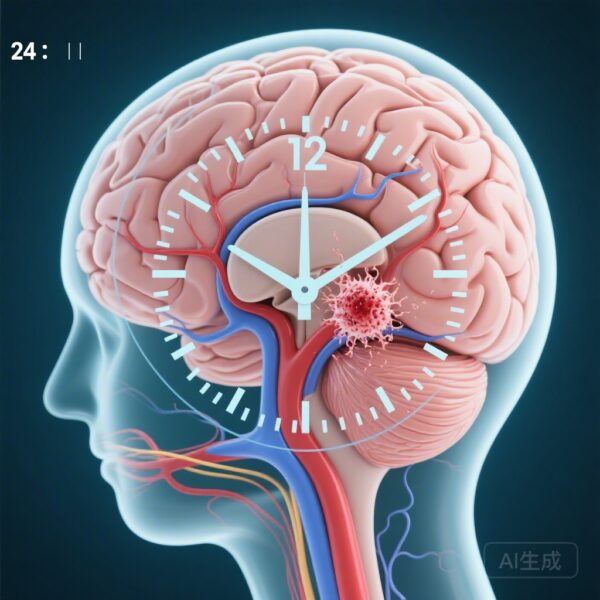
Recombinant Factor VIIa Fails to Improve Functional Outcomes in Hyperacute Intracerebral Haemorrhage Despite Reduced Bleeding: Results from the FASTEST Trial
Emergency Medicineintracerebral haemorrhageneurocritical care

Recombinant Factor VIIa Fails to Improve Functional Outcomes in Hyperacute Intracerebral Haemorrhage Despite Reduced Bleeding: Results from the FASTEST Trial

By MedXY|Feb 17, 2026

The FASTEST trial demonstrated that while recombinant factor VIIa administered within two hours of intracerebral haemorrhage onset significantly reduced hematoma growth, it failed to improve functional outcomes at 180 days and increased the

Tenecteplase Improves 90-Day Functional Outcomes in Basilar Artery Occlusion Within a 24-Hour Window: Results from TRACE-5
Neurologyischemic strokeTắc động mạch đáy

Tenecteplase Improves 90-Day Functional Outcomes in Basilar Artery Occlusion Within a 24-Hour Window: Results from TRACE-5

By MedXY|Feb 16, 2026

The TRACE-5 trial demonstrates that tenecteplase significantly improves functional outcomes for patients with basilar artery occlusion within 24 hours of onset, offering a safe and effective extension of the therapeutic window for this high

Delirium as a Sentinel Event: New UK Biobank Data Links Acute Brain Failure to Decades of Multisystem Vulnerability
Internal Medicineclinical outcomesdelirium

Delirium as a Sentinel Event: New UK Biobank Data Links Acute Brain Failure to Decades of Multisystem Vulnerability

By MedXY|Feb 15, 2026

A large-scale matched cohort study from the UK Biobank identifies in-hospital delirium as a sentinel marker for long-term multisystem vulnerability. Associated with increased risks of sepsis, AKI, and falls, delirium signals a profound phys

Neurofilament Light Chain: A High-Performance Biomarker for Differentiating bvFTD from Primary Psychiatric Disorders
Neurologybiomarkersfrontotemporal dementia

Neurofilament Light Chain: A High-Performance Biomarker for Differentiating bvFTD from Primary Psychiatric Disorders

By MedXY|Feb 14, 2026

This systematic review confirms that Neurofilament Light Chain (NfL) in blood and CSF effectively distinguishes behavioral variant frontotemporal dementia from psychiatric disorders, offering a powerful tool for early and accurate diagnosis

LOAD Polygenic Risk in Early-Onset Alzheimer’s: Insights into Synaptic Dysfunction and Amyloid Pathophysiology
Neurologybiomarkerspolygenic risk score

LOAD Polygenic Risk in Early-Onset Alzheimer’s: Insights into Synaptic Dysfunction and Amyloid Pathophysiology

By MedXY|Feb 14, 2026

A comprehensive study explores how polygenic risk scores for late-onset Alzheimer’s disease (LOAD) influence early-onset (EOAD) cases. While these scores do not independently predict EOAD onset or cognitive decline, they reveal significant

The Landscape of Late-Life Dementia: Why Mixed Neuropathologies Are the Rule, Not the Exception
NeurologyAlzheimer's diseasecognitive decline

The Landscape of Late-Life Dementia: Why Mixed Neuropathologies Are the Rule, Not the Exception

By MedXY|Feb 12, 2026

A large-scale longitudinal study reveals that over 80% of community-dwelling older adults harbor mixed neuropathologies, identifying five distinct profiles that dictate specific cognitive decline trajectories, with ADNC and LATE-NC clusters

Adversity Across the Lifespan: The Compounding Impact of Childhood and Adult Stress on Dementia and Stroke Risk
NeurologyAdverse Childhood ExperiencesDementia

Adversity Across the Lifespan: The Compounding Impact of Childhood and Adult Stress on Dementia and Stroke Risk

By MedXY|Feb 11, 2026

This population-based cohort study highlights how cumulative psychosocial stress across the life course significantly escalates the risk of neurovascular and neurodegenerative diseases, identifying depression as a critical target for interv

Long-Term Tofersen Therapy in SOD1-ALS: Early Initiation Preserves Function and Extends Survival
NeurologyAmyotrophic Lateral SclerosisAntisense oligonucleotide

Long-Term Tofersen Therapy in SOD1-ALS: Early Initiation Preserves Function and Extends Survival

By MedXY|Feb 11, 2026

The integrated analysis of the VALOR trial and its open-label extension reveals that early initiation of tofersen significantly slows functional decline, preserves respiratory capacity, and improves survival in patients with SOD1-ALS over a

Neural Connectivity Patterns Predict Acupuncture Response in Migraine: A Step Toward Personalized Pain Management
NeurologyacupuncturefMRI

Neural Connectivity Patterns Predict Acupuncture Response in Migraine: A Step Toward Personalized Pain Management

By MedXY|Feb 10, 2026

This randomized clinical trial demonstrates that real acupuncture significantly reduces migraine frequency and disability compared to sham acupuncture. Crucially, baseline brain connectivity patterns within the default mode and subcortical

Redefining CTE: New Autopsy Evidence Links Repetitive Head Impact to Extensive Spinal Cord Pathology
NeurologyCTEneurodegeneration

Redefining CTE: New Autopsy Evidence Links Repetitive Head Impact to Extensive Spinal Cord Pathology

By MedXY|Feb 10, 2026

A landmark autopsy study reveals that Chronic Traumatic Encephalopathy (CTE) involves extensive spinal cord pathology, including tau, TDP-43, and amyloid-β deposits. These findings suggest that repetitive head impacts trigger a widespread e

Moderate Caffeinated Coffee and Tea Intake Linked to 18% Lower Dementia Risk in Decades-Long Study
Neurologycaffeinecognitive health

Moderate Caffeinated Coffee and Tea Intake Linked to 18% Lower Dementia Risk in Decades-Long Study

By MedXY|Feb 10, 2026

A prospective study of over 130,000 adults reveals that consuming 2-3 cups of caffeinated coffee or 1-2 cups of tea daily significantly reduces dementia risk and cognitive decline, whereas decaffeinated coffee shows no protective effect.

The Mortality Gap in Neurodevelopmental Care: Why Young Adults with ASD, ID, and CP Face Higher Risks
Neurologymortality riskneurodevelopmental disorders

The Mortality Gap in Neurodevelopmental Care: Why Young Adults with ASD, ID, and CP Face Higher Risks

By MedXY|Feb 10, 2026

A landmark study using CDC ADDM Network data reveals significantly elevated mortality risks for young adults with autism, intellectual disability, and cerebral palsy, highlighting a critical need for improved transition-of-care strategies a

Cenobamate Outperforms Brivaracetam, Lacosamide, and Perampanel in Real-World Focal Epilepsy Management
Neurologyantiseizure medicationsCenobamate

Cenobamate Outperforms Brivaracetam, Lacosamide, and Perampanel in Real-World Focal Epilepsy Management

By MedXY|Feb 10, 2026

A large multicenter real-world study indicates that cenobamate provides superior effectiveness and seizure freedom rates compared to brivaracetam, lacosamide, and perampanel in adults with drug-resistant focal epilepsy, despite a higher inc

Expanding the Thrombolysis Window: Tenecteplase Improves Outcomes in Late-Window Non-Large Vessel Occlusion Stroke
Neurologyischemic strokeNeuroimaging

Expanding the Thrombolysis Window: Tenecteplase Improves Outcomes in Late-Window Non-Large Vessel Occlusion Stroke

By MedXY|Feb 8, 2026

The OPTION trial reveals that tenecteplase administered 4.5 to 24 hours post-stroke in patients with non-large vessel occlusion and salvageable tissue significantly improves functional recovery, although it carries a higher risk of symptoma

Restoring Movement: How Polylaminin is Revolutionizing Spinal Cord Injury Treatment
Neurologyneurologyregenerative medicine

Restoring Movement: How Polylaminin is Revolutionizing Spinal Cord Injury Treatment

By MedXY|Feb 7, 2026

Brazilian scientists have developed Polylaminin, a protein derived from human placenta that stimulates nerve regeneration. In early trials, six paralyzed patients regained the ability to walk, prompting official Phase I clinical trials to b

Biologically Informed p-tau217 Cutoffs: Refining Alzheimer’s Diagnosis Across Diverse Patient Profiles
NeurologyAlzheimer's diseasebiomarkers

Biologically Informed p-tau217 Cutoffs: Refining Alzheimer’s Diagnosis Across Diverse Patient Profiles

By MedXY|Feb 6, 2026

Standard single cutoffs for plasma p-tau217 are significantly confounded by kidney function, BMI, and anemia. A new study demonstrates that subgroup-specific or double-cutoff strategies markedly improve diagnostic accuracy and cost-effectiv

Higher Serum Klotho Levels May Protect Cognitive Function Against Age-Related Brain Atrophy
NeurologyAlzheimer diseaseneurodegeneration

Higher Serum Klotho Levels May Protect Cognitive Function Against Age-Related Brain Atrophy

By MedXY|Feb 6, 2026

Research indicates that circulating levels of the longevity protein klotho can moderate the relationship between cerebral atrophy and cognitive performance in older adults, suggesting a biological mechanism for cognitive resilience even in

Targeted Ipsilesional Training: A New Frontier for Enhancing Function in Severe Chronic Stroke
NeurologyIpsilesional Deficitsmotor recovery

Targeted Ipsilesional Training: A New Frontier for Enhancing Function in Severe Chronic Stroke

By MedXY|Feb 6, 2026

A randomized clinical trial reveals that targeted training of the ipsilesional arm significantly improves motor performance in chronic stroke patients with severe contralesional impairment, offering a sustained pathway to enhance functional

Apixaban Shows No Increased Risk of MRI-Detected Intracranial Hemorrhage Compared to Aspirin in Atrial Cardiopathy
NeurologyAtrial CardiopathyMRI

Apixaban Shows No Increased Risk of MRI-Detected Intracranial Hemorrhage Compared to Aspirin in Atrial Cardiopathy

By MedXY|Feb 5, 2026

An exploratory analysis from the ARCADIA-MRI substudy reveals that apixaban carries a similar risk of incident intracranial hemorrhages, microbleeds, and superficial siderosis compared to aspirin in patients with atrial cardiopathy and cryp

Prev
19 / 25
1…1718192021…25
Next
Ask MedXY AI

Most popular

Intimate Health
Five Benefits for Women Continuing Sexual Activity After Menopause
Intimate Health
Why Some Women Have a Strong Sex Drive—And Why Men Shouldn't Worry About It
Nursing & care
How often should a couple have sex?
Intimate Health
Classic Intimacy Recommendations: How to Help Women Reach Orgasm and Enjoy Mutual Pleasure
Intimate Health
What Makes a Woman "Physiologically Addicted" Is Never Money, But These Two Relationship Qualities

Browse by specialty

Open language-specific specialty feeds and department pages.

news6629 articlesCardiology1375 articlesClinical Updates1288 articlesOncology1139 articlesDiabetes & Endocrinology842 articlesNeurology820 articlesPublic Health595 articlesGastroenterology572 articles
Hematology-Oncology
487 articles
Pediatrics484 articles
Internal Medicine444 articles