We use cookies

Our website uses essential cookies and, with your consent, additional cookies to measure performance and improve our services. Cookie Policy.

You can change your choice at any time.

MMedXYNews
HomeVideos
MedXY AI/MedXY News/Tag: stroke
MedXY News
EnglishTag

stroke

Ask MedXY AI
type 2 diabetesclinical trialheart failureimmunotherapyobesitycardiovascular riskatrial fibrillationbiomarkerscritical careclinical trialsHypertensionartificial intelligenceCardiologyoncologypublic healthtype 1 diabetesdiabetesMortalityAlzheimer's diseasecardiovascular diseasebreast cancerepidemiology

Latest news

Tag

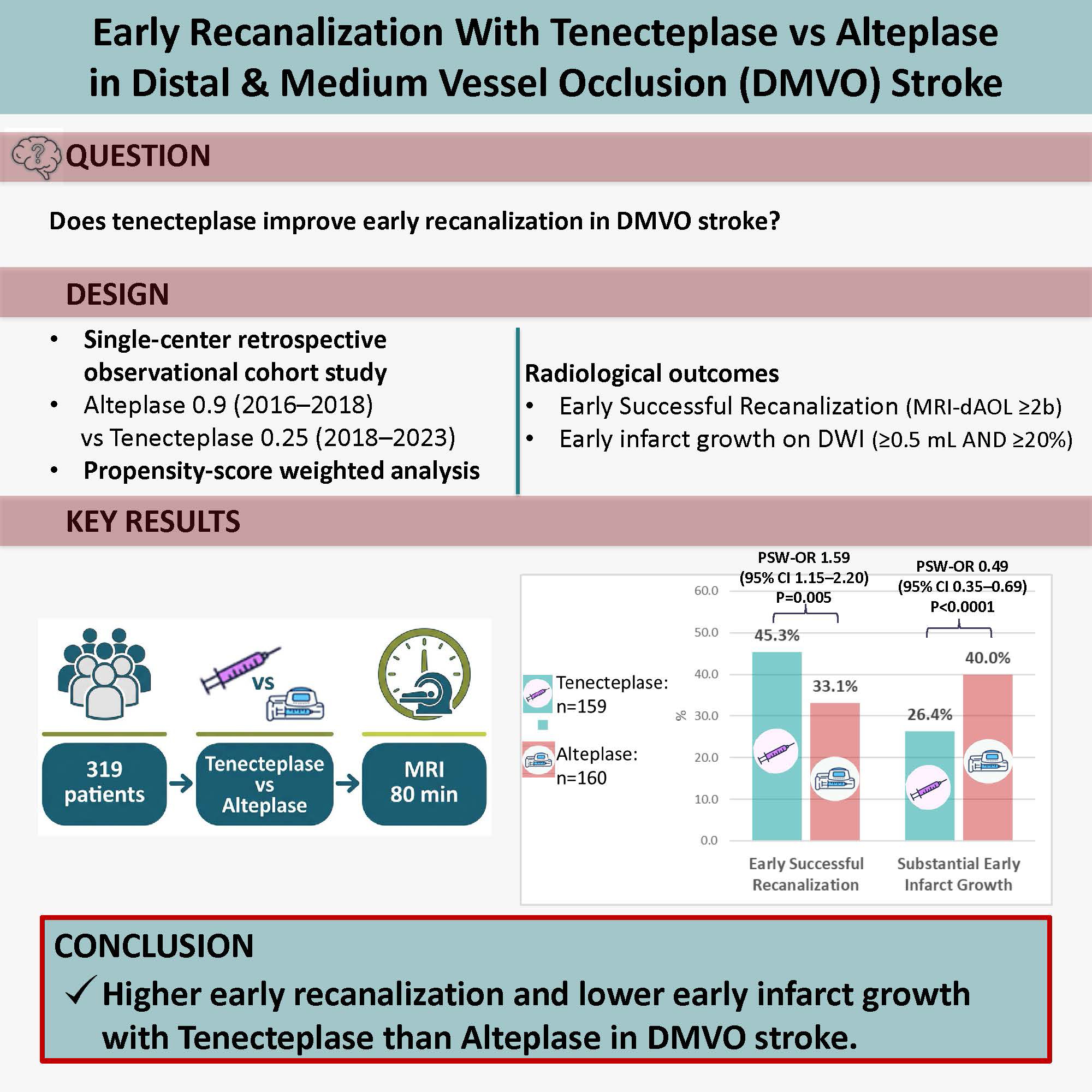
Early Recanalization in Distal and Medium Vessel Occlusion Strokes: Tenecteplase vs Alteplase
Neurologydistal vessel occlusionrecanalization

Early Recanalization in Distal and Medium Vessel Occlusion Strokes: Tenecteplase vs Alteplase

By MedXY|Sep 15, 2026

In patients with distal and medium vessel occlusion strokes, tenecteplase achieves higher early recanalization rates and reduces early infarct growth compared to alteplase, supporting its preferential use in this clinical setting.

Evaluating Tirofiban Plus Aspirin in Branch Atheromatous Disease Stroke: Insights from the STRATEGY Trial
NeurologystrokeBranch Atheromatous Disease
© 2026 MedXY
Contact usAbout usPrivacy PolicyMedXY story

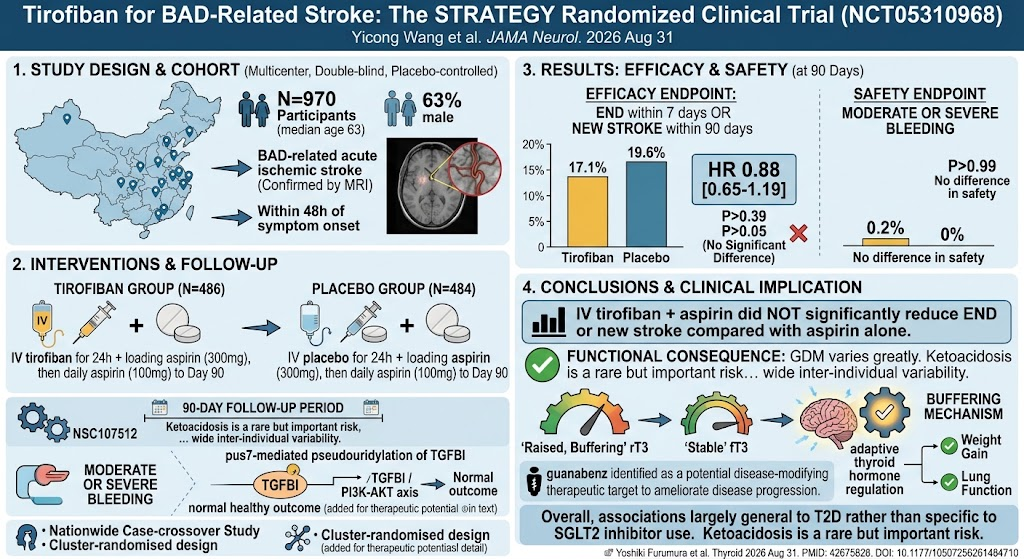
Evaluating Tirofiban Plus Aspirin in Branch Atheromatous Disease Stroke: Insights from the STRATEGY Trial

By MedXY|Sep 5, 2026

The STRATEGY trial assessed whether combining tirofiban with aspirin improves outcomes in branch atheromatous disease (BAD)-related stroke but found no significant benefit over aspirin alone in preventing neurological deterioration or recur

Higher Stroke and TIA Risk With Pulsed Field Ablation Compared to Radiofrequency Ablation in Atrial Fibrillation: Insights From a Large Prospective Registry
Cardiologyatrial fibrillationPulsed-field ablation

Higher Stroke and TIA Risk With Pulsed Field Ablation Compared to Radiofrequency Ablation in Atrial Fibrillation: Insights From a Large Prospective Registry

By MedXY|Aug 27, 2026

This prospective registry reveals a significantly increased risk of stroke or transient ischemic attack within 30 days after pulsed field ablation compared to radiofrequency ablation for atrial fibrillation, highlighting important safety co

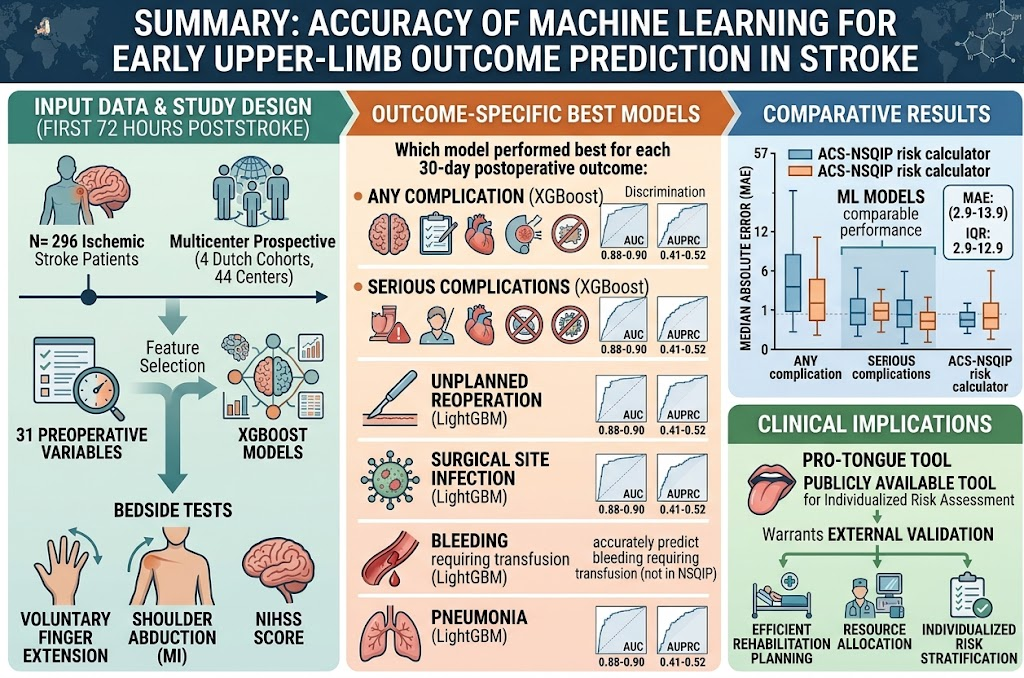
Early Prediction of Upper-Limb Recovery Poststroke Using Machine Learning: A Clinically Feasible Approach
AIstrokeRehabilitation Prognosis

Early Prediction of Upper-Limb Recovery Poststroke Using Machine Learning: A Clinically Feasible Approach

By MedXY|Aug 18, 2026

A machine learning model using simple clinical tests within 72 hours poststroke accurately predicts 6-month upper-limb motor outcomes, aiding rehabilitation planning.

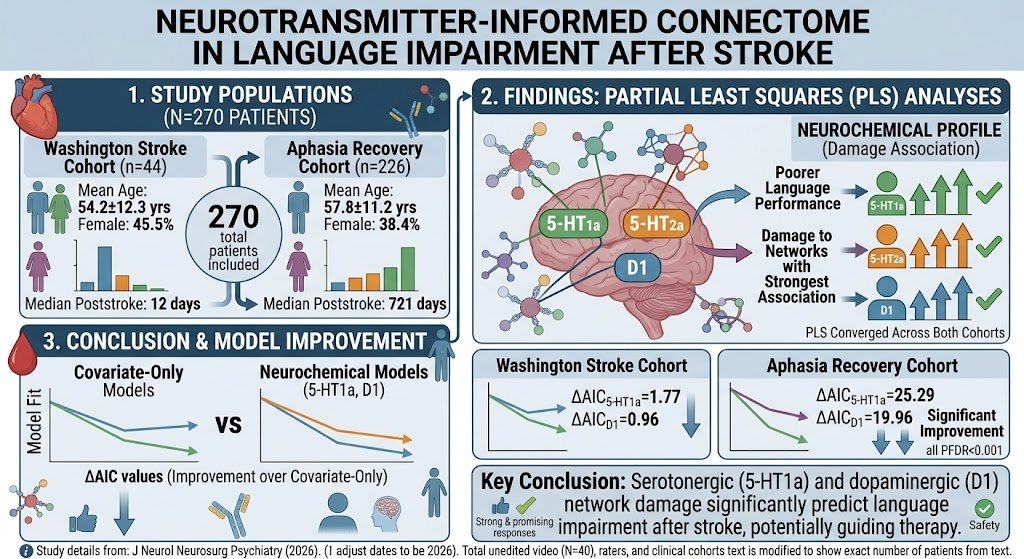
Neurotransmitter-Guided Connectome Disruption as a Key to Poststroke Language Impairment
NeurologyConnectomicsstroke

Neurotransmitter-Guided Connectome Disruption as a Key to Poststroke Language Impairment

By MedXY|Aug 15, 2026

Damage to serotonergic and dopaminergic neurotransmitter-linked networks predicts variability in acute and chronic poststroke language impairment, offering new insights beyond traditional lesion metrics.

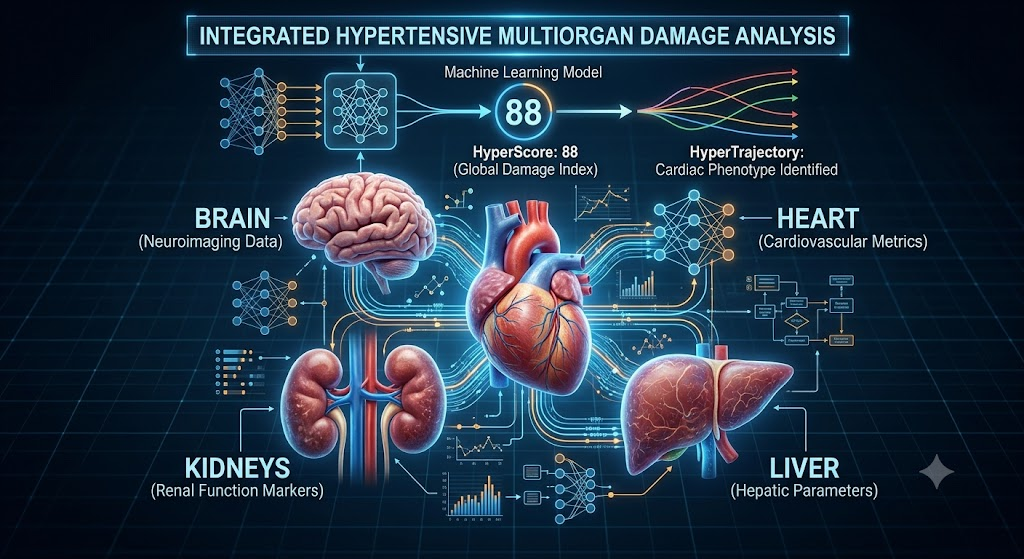
Revolutionizing Hypertension Management: Machine Learning to Decode Multiorgan Damage and New Disease Phenotypes
Cardiologymachine learningHypertension

Revolutionizing Hypertension Management: Machine Learning to Decode Multiorgan Damage and New Disease Phenotypes

By MedXY|Aug 8, 2026

Highlight This unprecedented large-scale multinational study developed a semisupervised contrastive machine learning framework that generates a global

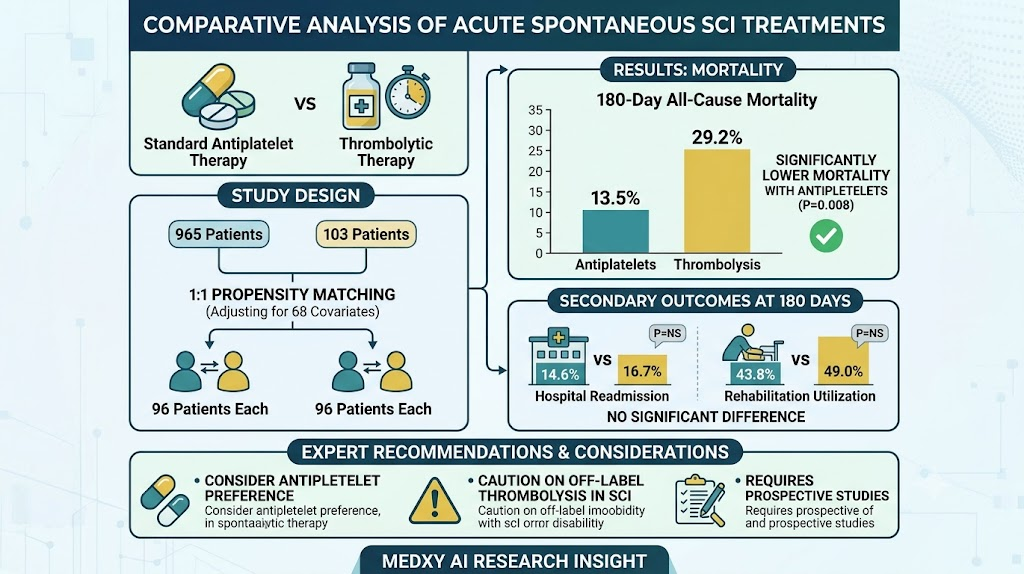
Reevaluating Acute Treatment Strategies for Spontaneous Spinal Cord Infarction: Insights from a Propensity Score-Matched Study
NeurologyThrombolysisstroke

Reevaluating Acute Treatment Strategies for Spontaneous Spinal Cord Infarction: Insights from a Propensity Score-Matched Study

By MedXY|Aug 18, 2026

This retrospective analysis reveals that standard antiplatelet therapy may reduce mortality compared to thrombolysis in acute spontaneous spinal cord infarction, highlighting the need for cautious therapeutic decisions pending stronger evid

Younger adults with intracerebral hemorrhage have better outcomes but distinct risk profile: INTERACT3 sub-analysis
NeurologyIntracerebral HemorrhageYoung Adults

Younger adults with intracerebral hemorrhage have better outcomes but distinct risk profile: INTERACT3 sub-analysis

By MedXY|Jul 26, 2026

A secondary analysis of the INTERACT3 trial shows that younger adults (≤50 years) with intracerebral hemorrhage have lower mortality and disability but differ in risk factors and may benefit more from bundled care.

MAD-MT Score: Enhancing Patient Selection for Mechanical Thrombectomy in Distal Vessel Occlusions
Neurologydistal vessel occlusionmechanical thrombectomy

MAD-MT Score: Enhancing Patient Selection for Mechanical Thrombectomy in Distal Vessel Occlusions

By MedXY|Jul 14, 2026

The MAD-MT score integrates clinical and procedural factors to optimize mechanical thrombectomy decisions in distal and medium vessel occlusion strokes, guiding tailored treatment and improving functional outcomes.

Sex Differences in Large Vessel Occlusion Screening and Thrombectomy Outcomes: Insights from a Population-Based Cohort Study in Ontario
NeurologyLarge Vessel OcclusionSex Differences

Sex Differences in Large Vessel Occlusion Screening and Thrombectomy Outcomes: Insights from a Population-Based Cohort Study in Ontario

By MedXY|Jul 13, 2026

This study reveals that female stroke patients are less frequently screened for large vessel occlusion (LVO) yet have a higher LVO prevalence and comparable thrombectomy use to males, with better long-term outcomes post-thrombectomy.

Impact of Cerebral Small Vessel Disease on Functional Decline: Insights from the Bleeding With Antithrombotic Therapy 2 Study and Related Evidence
CardiologyFunctional DeclineLiệu pháp chống huyết khối

Impact of Cerebral Small Vessel Disease on Functional Decline: Insights from the Bleeding With Antithrombotic Therapy 2 Study and Related Evidence

By MedXY|Jul 3, 2026

Cerebral small vessel disease (SVD) significantly contributes to functional decline independently of bleeding or ischemic events during antithrombotic therapy, underscoring the need for targeted management strategies to address SVD burden i

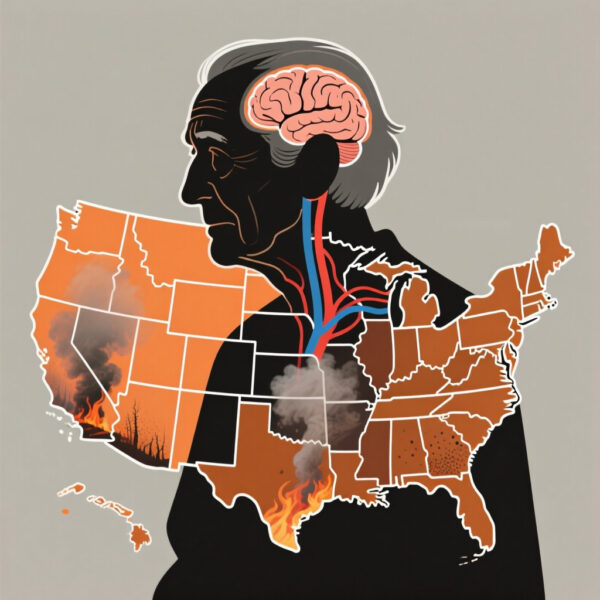
Long-Term Wildfire Smoke PM2.5 Exposure Is Linked to Higher Incident Stroke Risk in Older US Adults
Neurologykhói cháy rừngMedicare

Long-Term Wildfire Smoke PM2.5 Exposure Is Linked to Higher Incident Stroke Risk in Older US Adults

By MedXY|Jun 5, 2026

In a nationwide Medicare cohort, chronic wildfire smoke PM2.5 exposure was associated with a modest but significant increase in incident stroke, with stronger effects over longer exposure windows.

Long-Term Cognitive Recovery After Stroke: What the Oxford Cognitive Screen Reveals
NeurologycognitionOxford Cognitive Screen

Long-Term Cognitive Recovery After Stroke: What the Oxford Cognitive Screen Reveals

By MedXY|May 20, 2026

A long-term stroke study found that cognition improves most within 6 months, with memory and language recovering better than executive function. Early cognitive impairment was the strongest predictor of outcomes years later.

Stroke Disability and Mortality Post-ED Discharge for Dizziness: Rare but Clinically Significant
Emergency MedicinedisabilityDizziness

Stroke Disability and Mortality Post-ED Discharge for Dizziness: Rare but Clinically Significant

By MedXY|Apr 27, 2026

A retrospective cohort study reveals that stroke-related disability or mortality after ED discharge for dizziness is rare (0.04% incidence), with most lesions occurring in the anterior fossa. Findings underscore the need for targeted risk s

EVT Shows Superior Outcomes in Anterior Cerebral Artery Occlusion Stroke: Insights from the ORIENTAL-MeVO Registry
Neurologyanterior cerebral artery occlusionEndovascular Thrombectomy

EVT Shows Superior Outcomes in Anterior Cerebral Artery Occlusion Stroke: Insights from the ORIENTAL-MeVO Registry

By MedXY|Apr 25, 2026

Endovascular thrombectomy (EVT) significantly improves 90-day functional outcomes in acute anterior cerebral artery occlusion stroke compared to standard medical management, without increasing hemorrhage or mortality risks, per the ORIENTAL

Inflammatory Biomarkers in Cerebral Venous Thrombosis: Prognostic Insights from the CLOT-VENUS Substudy and Meta-Analyses
Clinical UpdatesCerebral Venous ThrombosisInflammatory Biomarkers

Inflammatory Biomarkers in Cerebral Venous Thrombosis: Prognostic Insights from the CLOT-VENUS Substudy and Meta-Analyses

By MedXY|Apr 24, 2026

High admission levels of NLR, PLR, MLR, and SII are independently associated with poor functional outcomes and mortality in acute cerebral venous thrombosis, offering a low-cost tool for early risk stratification.

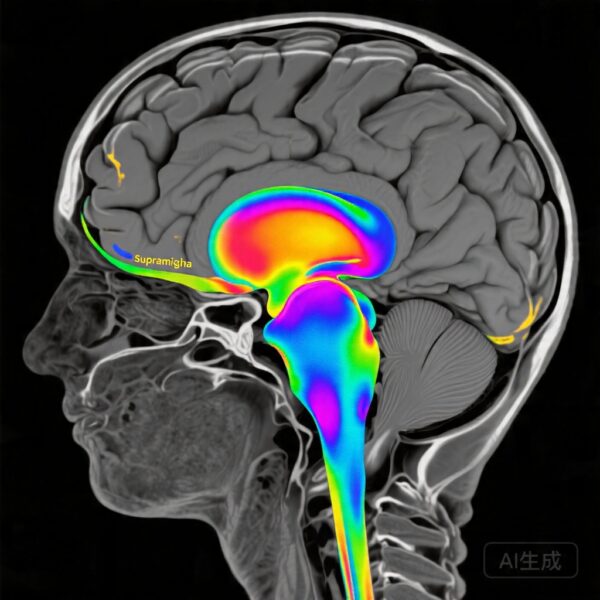
Real-Time fMRI Neurofeedback Shows Promise for Reading Rehabilitation in Post-Stroke Aphasia
NeurologyAphasiafMRI neurofeedback

Real-Time fMRI Neurofeedback Shows Promise for Reading Rehabilitation in Post-Stroke Aphasia

By MedXY|Apr 14, 2026

This feasibility RCT demonstrates that contingent fMRI neurofeedback targeting the left supramarginal gyrus can improve reading comprehension in stroke survivors with aphasia, outperforming both healthy controls and non-contingent neurofeed

Mobile Health Intervention Achieves 24% Better Blood Pressure Control in Stroke Survivors: PINGS Trial Results from Ghana
CardiologyBlood Pressure ControlHypertension

Mobile Health Intervention Achieves 24% Better Blood Pressure Control in Stroke Survivors: PINGS Trial Results from Ghana

By MedXY|Apr 13, 2026

The PINGS trial demonstrates that a 12-month nurse-led mobile health intervention significantly improves blood pressure control among Ghanaian stroke survivors, with 67% achieving target BP versus 43% in usual care. This pragmatic approach

Optimizing Prehospital Pathways: Impact of the Iranian Comprehensive Code Stroke Management Program (ICSM Phase III) on Thrombolysis Rates
Clinical UpdatesalteplaseEmergency Medical Services

Optimizing Prehospital Pathways: Impact of the Iranian Comprehensive Code Stroke Management Program (ICSM Phase III) on Thrombolysis Rates

By MedXY|Mar 11, 2026

This review analyzes the ICSM Phase III study, highlighting how a structured empowerment program and standardized protocols in EMS significantly reduced prehospital delays and tripled alteplase administration rates for acute ischemic stroke

Impact of the FKBP5 Gene on Stroke Recovery: A Comparative Study in Mice and Humans
NeurologyFKBP5genetics

Impact of the FKBP5 Gene on Stroke Recovery: A Comparative Study in Mice and Humans

By MedXY|Mar 10, 2026

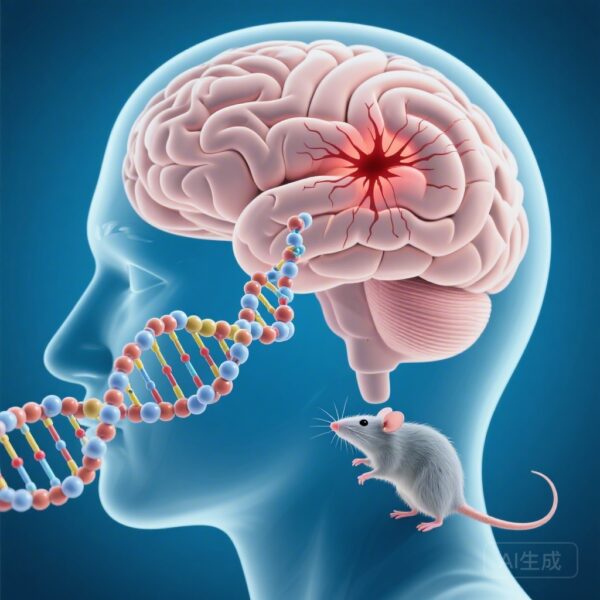
This translational study demonstrates that the FKBP5 protein, a regulator of the stress response, significantly influences stroke outcomes. Lower FKBP5 levels correlate with smaller brain lesions in mice, while high-expression genetic varia

1 / 4
1234
Next
Ask MedXY AI

Most popular

Intimate Health
Five Benefits for Women Continuing Sexual Activity After Menopause
Intimate Health
Why Some Women Have a Strong Sex Drive—And Why Men Shouldn't Worry About It
Nursing & care
How often should a couple have sex?
Intimate Health
Classic Intimacy Recommendations: How to Help Women Reach Orgasm and Enjoy Mutual Pleasure
Intimate Health
What Makes a Woman "Physiologically Addicted" Is Never Money, But These Two Relationship Qualities