Unraveling the Neurobiological Pathways Linking Childhood Trauma to Bipolar Disorder: Insights from the ENIGMA Consortium
Highlight
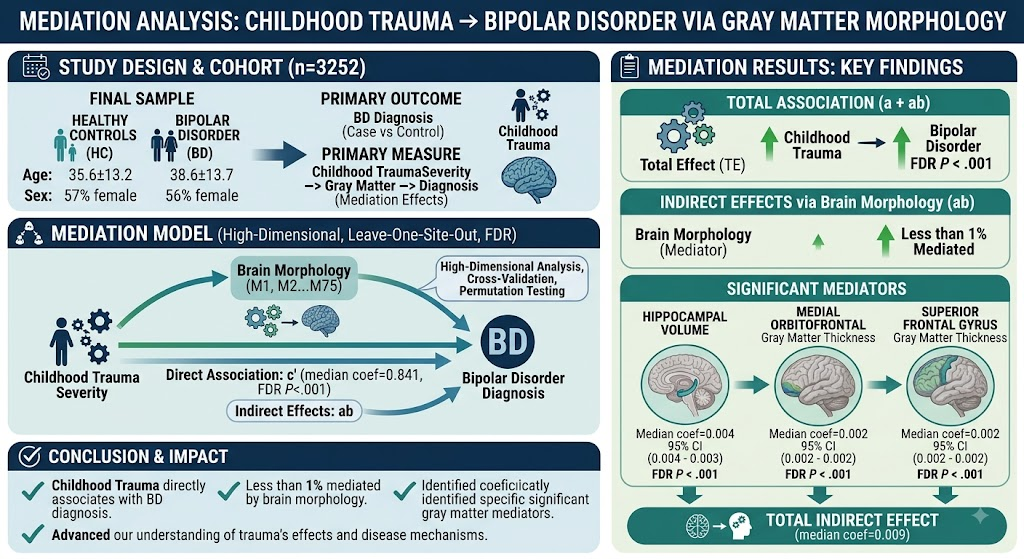
This large-scale international study by the ENIGMA Bipolar Disorder Working Group identifies that the increased likelihood of bipolar disorder following childhood trauma is partially mediated by specific brain morphological changes. Key brain regions implicated include reduced hippocampal volume and cortical thinning in the medial orbitofrontal and superior frontal gyri. Despite significant brain structure differences, these mediators account for less than 1% of the trauma–bipolar disorder relationship, indicating complex multifactorial pathways.
Study Background
Sign in free to continue reading
Create or use your MedXY account to unlock the complete article.
This article was created using several editorial tools, including AI, as part of the process. Human editors reviewed this content before publication.