Highlight
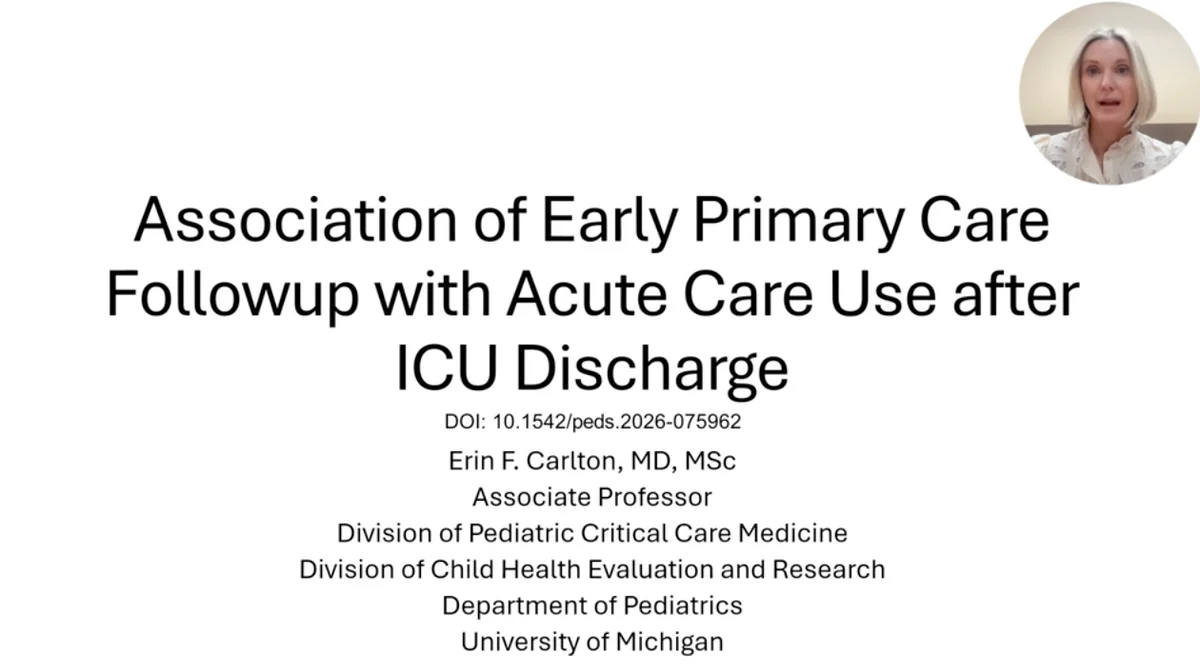
Early primary care follow-up within 7 days of pediatric ICU discharge is associated with decreased acute care use postdischarge.
This association is consistent across both publicly and privately insured children, with stronger effects observed in privately insured cohorts.
Subgroup analyses reveal greater benefit for older children and those diagnosed with sepsis.
Findings are reinforced by a secondary analysis spanning 2022 to 2023, supporting the robustness of the association.
Study Background
Survivors of pediatric intensive care unit (PICU) hospitalization often face considerable morbidity risks, including complications, secondary infections, and functional decline. These risks contribute to increased emergency department (ED) visits and rehospitalizations in the postdischarge period, imposing burdens on patients, families, and healthcare systems. Despite advancements in critical care, the transition from PICU to community-based care remains a vulnerable time. Coordination between hospital discharge and outpatient follow-up care may reduce acute care use and improve outcomes. However, data on the timing and impact of primary care follow-up visits after PICU discharge are limited, particularly across diverse insurance populations. This study assesses whether early primary care engagement, defined as a visit within 7 days postdischarge, is associated with reduced subsequent acute care utilization among children discharged from PICU care.
Study Design
This retrospective cohort study utilized claims data from both publicly and privately insured pediatric populations in the United States, covering hospitalizations from January 2016 through December 2019. The cohort included 180,516 PICU hospitalizations in total, with 158,544 publicly insured and 21,972 privately insured children. Subjects were matched 1:1 on demographic and clinical characteristics to balance confounding variables between those who received early primary care follow-up and those who did not. Early follow-up was operationalized as any primary care visit occurring within seven days after hospital discharge.
The primary endpoint was the incidence of acute care use, defined as emergency department visits or rehospitalizations occurring between days 8 and 90 following discharge from the PICU. Statistical analyses employed negative binomial regression models to estimate incidence rate ratios (IRRs) comparing children with and without early primary care follow-up, adjusting for covariates.
Key Findings
The analysis demonstrated that early primary care follow-up was significantly associated with reduced acute care utilization in the postdischarge period. Among publicly insured children, 35.4% experienced acute care use during days 8 to 90 postdischarge, compared to 23.5% in privately insured children. After adjustment, early follow-up was associated with a 7% reduction in acute care use in the public insurance group (IRR 0.93; 95% CI, 0.90–0.96; P < .001) and a 30% reduction among privately insured children (IRR 0.70; 95% CI, 0.63–0.77; P < .001).
Subgroup analyses showed that older children (age stratified) and children with a diagnosis of sepsis derived greater reductions in acute care use with early primary care follow-up. This finding suggests that certain vulnerable subpopulations benefit disproportionately from early outpatient engagement.
The authors conducted a secondary validation analysis using data from 2022 to 2023. Consistent with the primary analysis, early primary care follow-up remained associated with decreased acute care utilization, underscoring the reproducibility and durability of these findings across time and evolving care landscapes.
Expert Commentary
This study addresses a critical gap in pediatric post-ICU care management by quantifying the impact of timely primary care follow-up on subsequent acute healthcare utilization. The large sample size, inclusion of both public and private insurers, and robust matching strategies strengthen the credibility of the findings.
From a mechanistic perspective, early outpatient evaluation may facilitate prompt identification and management of complications such as infections, medication issues, or functional setbacks that would otherwise precipitate ED visits or rehospitalization. Primary care providers can also optimize care plans and support family education during this vulnerable transition period.
Despite the strengths, several limitations are worth noting. The observational nature precludes definitive causal inference, and residual confounding is possible despite matching. Claims data lack granular clinical details such as illness severity or social determinants, which may influence follow-up and outcomes. Additionally, barriers to early primary care access, including insurance coverage, transportation, or provider availability, were not assessed.
This study aligns with emerging recommendations emphasizing the importance of structured discharge planning and rapid outpatient follow-up after critical illness in children. Future randomized trials or implementation studies could clarify optimal timing, modalities (e.g., telehealth), and interventions to maximize post-PICU recovery.
Conclusion
Early primary care follow-up within seven days after PICU discharge is associated with significantly lower rates of acute care use, including ED visits and rehospitalizations, across diverse insurance groups. Targeted initiatives to promote timely outpatient follow-up may reduce healthcare utilization and improve long-term outcomes in pediatric critical illness survivors. Clinicians and healthcare systems should consider integrating early primary care engagement into discharge planning to enhance the transition from hospital to home.
Funding and Clinical Trials Registration
No specific funding sources or clinical trial registration were reported in the original study publication.
References
1. Carlton EF, Rahman M, Admon AJ, et al. Association of Early Primary Care Follow-Up With Acute Care Use After ICU Discharge. Pediatrics. 2026 Oct 14; PMID: 42869442. Available from: https://pubmed.ncbi.nlm.nih.gov/42869442/
2. Watson RS, et al. Post-Intensive Care Syndrome in Children: The Next Frontier. Pediatr Crit Care Med. 2017;18(5 Suppl 1):S112-S119. doi:10.1097/PCC.0000000000001216
3. Prescott HC, Chua KP. Hospital Discharge and Outpatient Follow-Up After Critical Illness: Challenges and Opportunities. Ann Am Thorac Soc. 2020;17(5):536-543. doi:10.1513/AnnalsATS.201911-859PS
4. Committee on Hospital Care, Child Health Patient Safety Work Group. Discharge Planning for Hospitalized Children. Pediatrics. 2018;142(6):e20183019. doi:10.1542/peds.2018-3019