Similar 1-Year Outcomes After First Acute Myocardial Infarction in Adults With Congenital Heart Disease
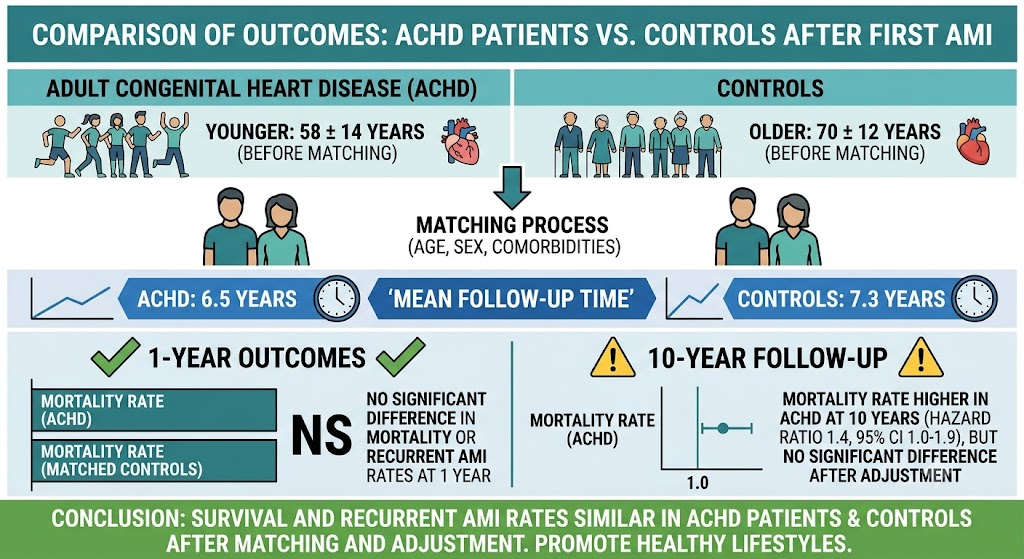
Adults with congenital heart disease (ACHD) and matched controls had similar 1-year mortality and recurrent acute myocardial infarction (AMI) rates after a first AMI.
Before matching, ACHD patients were younger than controls at the time of first AMI (mean age 58 vs 70 years).
A higher 10-year mortality rate in the ACHD group (hazard ratio 1.4, 95% CI 1.0-1.9) did not persist after adjustment.
The authors call for healthy lifestyles and proactive management of traditional cardiovascular risk factors in ACHD patients.
Study Snapshot
Design | Nationwide case-control study |
|---|---|
Study period | 2000-2022 |
Population | Adults with ACHD and controls who experienced a first acute myocardial infarction; 214 ACHD patients and 275,377 controls identified, with 213 ACHD patients matched to 2,092 controls |
Matching factors | Age, sex, hypertension, diabetes, hyperlipidaemia, and history of percutaneous coronary intervention or coronary artery bypass grafting |
Follow-up | Mean 6.5 years for ACHD patients and 7.3 years for controls |
Primary outcomes | All-cause mortality and recurrent acute myocardial infarction |
Main results | No significant difference in 1-year mortality or recurrent AMI; 10-year mortality HR 1.4 (95% CI 1.0-1.9), no longer significant after adjustment |
Limitations | Observational design; residual confounding possible; abstract-level data |
Sign in free to continue reading
Create or use your MedXY account to unlock the complete article.
This article was created using several editorial tools, including AI, as part of the process. Human editors reviewed this content before publication.