Nonopioid vs Opioid Pain Management After Laparoscopic Hysterectomy: A Noninferiority Randomized Trial
Highlight
This randomized controlled trial evaluates the efficacy and patient satisfaction of nonopioid versus routine opioid prescribing following laparoscopic hysterectomy for benign indications. The study found that a nonopioid regimen (acetaminophen and ibuprofen) is noninferior to conventional opioid-inclusive prescriptions in managing postoperative pain, significantly reducing opioid consumption without compromising patient satisfaction.
Study Background
Minimally invasive hysterectomy, including laparoscopic and robotic approaches, is commonly performed for benign gynecologic conditions. Postoperative pain management traditionally includes opioids; however, opioid overprescription contributes to the potential for dependence, adverse effects, and misuse. Optimizing analgesia while minimizing opioid exposure remains a critical unmet clinical need. This study addresses the question of whether opioids are necessary as routine postoperative medication following minimally invasive hysterectomy or if a standardized nonopioid regimen can provide adequate pain control and patient satisfaction.
Study Design
This was a noninferiority randomized controlled trial conducted at an academic medical center from January 2023 to January 2024. Adult patients aged 18 years or older undergoing laparoscopic or robotic hysterectomy for benign indications were randomized in a 1:1 ratio to receive either (1) a nonopioid postoperative regimen consisting of acetaminophen and ibuprofen or (2) a standard opioid regimen, which included the same nonopioid medications plus 12 tablets of 5-mg oxycodone. Participants in the nonopioid arm had the option to request opioids if their pain was insufficiently controlled.
The primary outcomes were patient-reported pain scores on postoperative days 1 and 7, measured using the 11-point Numeric Rating Scale (NRS-11). Secondary outcomes included overall satisfaction with pain control and actual opioid consumption. The study was powered with a sample size of 60 to establish noninferiority with a predefined margin of 1.5 points on the NRS-11 pain scale.
Key Findings
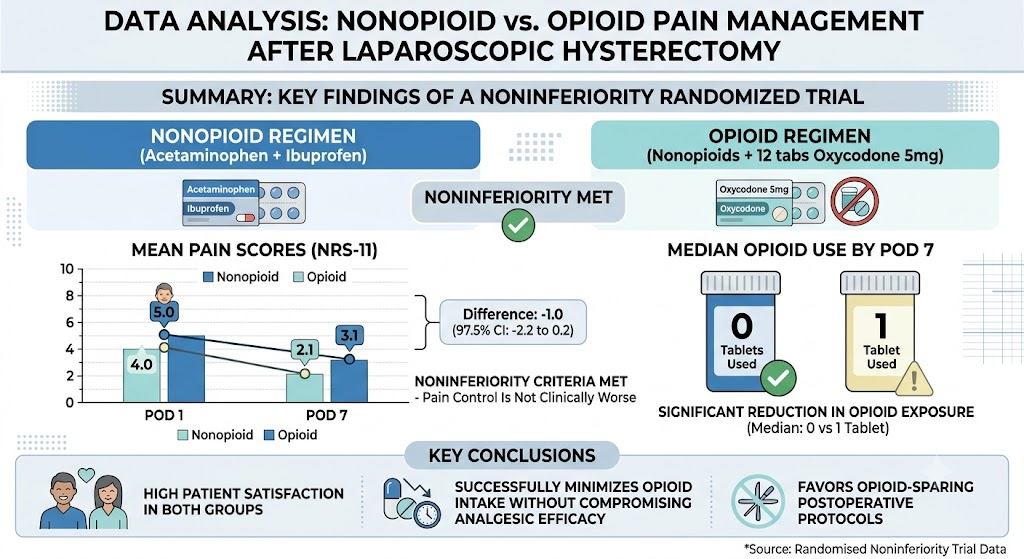
Out of 221 eligible patients screened, 71 consented and 64 completed the study (33 in the opioid group and 31 in the nonopioid group). On postoperative day 1, the mean pain score was 4.0 in the opioid group versus 5.0 in the nonopioid group, with a difference of -1.0 (97.5% confidence interval, -2.2 to 0.2). On postoperative day 7, mean pain scores were 2.1 and 3.1 in the opioid and nonopioid groups, respectively, with the same difference and confidence interval.
These pain scores met the criteria for noninferiority, indicating that pain control with the nonopioid regimen was not clinically worse than with routine opioid prescribing. Satisfaction with pain management was high in both groups, demonstrating good patient acceptance.
Importantly, opioid consumption by postoperative day 7 was markedly different; the median oxycodone use was 1 tablet in the opioid group and zero in the nonopioid group, reflecting a significant reduction in opioid exposure. This suggests the nonopioid protocol can successfully minimize opioid intake without compromising analgesic efficacy.
Expert Commentary
This trial reinforces the growing body of evidence supporting opioid-sparing postoperative pain protocols. Given the current opioid epidemic, reducing unnecessary opioid prescribing is an urgent public health priority. The study design benefits from a pragmatic approach allowing opioid rescue for those with insufficient analgesia, enhancing clinical applicability and patient safety.
Limitations include the single-center setting, relatively small sample size, and exclusion of patients undergoing hysterectomy for malignancy or other complex indications, which may limit generalizability. Future multi-institutional studies and longer-term follow-up could confirm these findings across diverse populations and assess potential impacts on opioid misuse risk.
Clinicians should consider integrating nonopioid multimodal analgesia protocols after minimally invasive hysterectomy, reserving opioids for breakthrough pain, which aligns with enhanced recovery after surgery (ERAS) principles. This approach can potentially improve postoperative outcomes while decreasing opioid-related harms.
Conclusion
The randomized trial demonstrates that a standardized nonopioid postoperative pain management regimen is noninferior to routine opioid prescribing in patients undergoing minimally invasive hysterectomy for benign conditions. It achieves effective pain control and high patient satisfaction while substantially reducing opioid consumption. These findings support implementation of opioid-sparing pain strategies in gynecologic surgery, contributing to better patient care and addressing opioid stewardship concerns.
Funding and Clinical Trials Registration
The study was conducted at an academic medical center with support not specified in the abstract. The clinical trial is registered at ClinicalTrials.gov under identifier NCT05548582.
References
Leaf MC, Wainger J, Frost A, Musselman K, Patzkowsky K, Simpson K, Wu H, Vaidya D, Ma J, AlAshqar A, Wang KC, Borahay MA. Evaluating Routine Opioid Compared With Nonopioid Prescribing After Laparoscopic Hysterectomy: A Randomized Controlled Trial. Obstet Gynecol. 2026 Jul 30; PMID: 42535875. https://pubmed.ncbi.nlm.nih.gov/42535875/
This article was created using several editorial tools, including AI, as part of the process. Human editors reviewed this content before publication.