Introduction
Idiosyncratic drug-induced liver injury (DILI) is a complex and rare adverse reaction to medications, herbal and dietary supplements (HDS), or other xenobiotics, often leading to significant morbidity and occasionally mortality. Because DILI encompasses unpredictable host responses rather than dose-dependent toxicity, its incidences and clinical manifestations are heterogeneous, posing diagnostic and therapeutic challenges. The Drug-Induced Liver Injury Network (DILIN) Prospective Registry, capturing high causality DILI cases in the United States since 2004, offers an invaluable longitudinal dataset to elucidate changing trends in DILI etiology, severity, and outcomes over a prolonged timeframe. This article summarizes findings from the 2004–2024 DILIN study, emphasizing temporal shifts and clinical implications for patient management and healthcare strategies.
Study Background and Disease Burden
DILI accounts for a minority of liver disease cases but remains a principal cause of acute liver failure and an important driver of drug withdrawal or restricted use. Its rarity and the wide diversity of implicated agents—ranging from conventional pharmaceuticals such as antibiotics and central nervous system (CNS) drugs to herbal supplements and modern immuno-oncology agents—complicate epidemiologic assessment. Moreover, populations at risk including older adults and those with preexisting chronic liver disease (CLD) face worse outcomes. As the therapeutic landscape evolves, especially with increased use of antineoplastic and immune checkpoint inhibitors, updated surveillance of DILI epidemiology is essential for clinical vigilance and risk mitigation.
Study Design and Methods
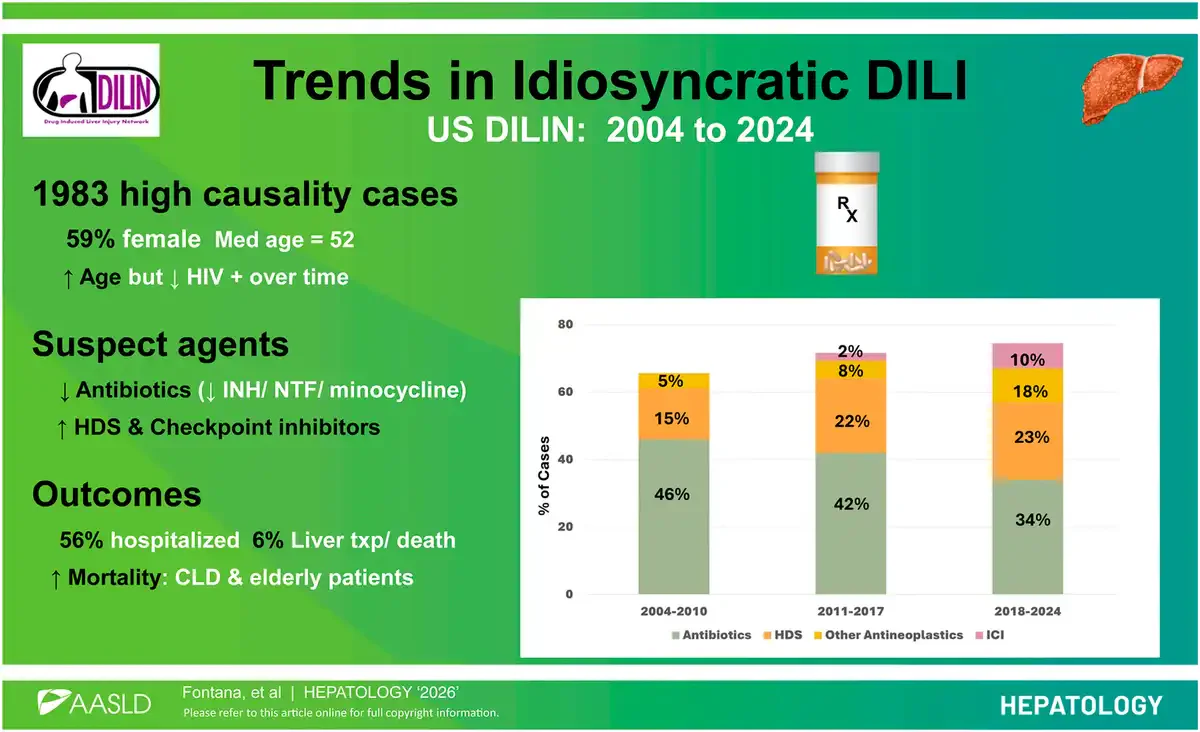
The DILIN Prospective Registry enrolled 1,983 consecutive patients with high causality adjudication for DILI from multiple U.S. centers between 2004 and 2024. Inclusion emphasized clinical presentation compatible with idiosyncratic DILI, followed clinically for at least six months to assess resolution or progression. Patient demographics, causative agents, injury patterns (hepatocellular, cholestatic, or mixed), laboratory parameters (including peak total bilirubin and INR), and clinical severity scoring were recorded. Subgroup analyses explored differences by drug class (antibiotics, CNS agents, herbal and dietary supplements, antineoplastics including checkpoint inhibitors), age groups (notably pediatric versus adult), sex, and baseline liver status (presence or absence of CLD). Outcome metrics included mortality (all-cause and liver-related) at six months.
Key Findings and Results
Demographic and Clinical Characteristics: The median age was 52 years, with a female predominance (59%). Hepatocellular injury accounted for 54% of cases, consistent with a typical pattern for idiosyncratic DILI.
Temporal Trends in Etiology: Antibiotics remained the leading implicated drug class overall (41%) but declined significantly over the 20-year span. Notably, the proportion of cases attributed to antimicrobials such as isoniazid and nitrofurantoin decreased. Similarly, cases linked to CNS agents also decreased.
Conversely, the proportion of DILI cases associated with herbal and dietary supplements surged over time, reflecting increased public use and possible regulatory gaps. Antineoplastic agents, including immune checkpoint inhibitors, demonstrated a rising contribution, highlighting new risks introduced by modern cancer therapies.
Severity and Biomarker Changes: Median peak total bilirubin, INR, and composite severity scores declined significantly over time, suggesting improved recognition, earlier diagnosis, or milder clinical presentations on average in recent years.
Clinical Outcomes by Subgroups:
Patients with preexisting chronic liver disease had significantly higher mortality rates compared to patients without CLD, underscoring their vulnerability.
Pediatric patients more often presented with hepatocellular injury but exhibited notably lower overall and liver-related mortality than adult patients.
Oncology patients sustaining DILI demonstrated a particularly poor prognosis, with a six-month mortality rate of approximately 30%. However, many deaths in this group were attributed to non-liver-related causes, reflecting underlying malignancy and treatment complications.
Expert Commentary
The DILIN prospective data offers critical insights into shifting patterns of DILI, mirroring broader changes in medication and supplement use. The decline in antibiotic-related DILI may relate to better stewardship and safer prescribing practices, although vigilance remains due to their historically high responsibility for liver injury. The marked rise in HDS-related DILI cases warrants focused regulatory scrutiny, public education, and enhanced pharmacovigilance, as these products often lack stringent safety data and quality control.
The growing impact of antineoplastic agents, especially immune checkpoint inhibitors, reflects their increasing utilization and unique immune-mediated hepatotoxicity profiles. Clinicians must anticipate DILI in oncology settings, balancing treatment benefits with risks, and integrating liver monitoring protocols.
Stratification by age and underlying liver disease highlights the need for tailored risk assessment and management. The high mortality in patients with CLD emphasizes that preexisting hepatic dysfunction compounds injury severity and complicates recovery. Pediatric populations appear resilient to fatal liver outcomes despite frequent hepatocellular injury presentations, possibly due to differing immune responses or comorbidities.
While the study benefits from its large, well-characterized cohort and longitudinal design, limitations include potential referral bias to specialized liver centers, incomplete capture of mild or subclinical cases, and evolving diagnostic criteria and causality assessment tools over time. Further research is required to elucidate mechanistic pathways of novel agents and to develop predictive biomarkers for early DILI detection.
Conclusion and Clinical Implications
Over the past two decades, the etiologic spectrum of idiosyncratic DILI in the United States has evolved substantially. Antibiotics have become less dominant, supplanted by increased cases linked to herbal and dietary supplements and antineoplastic therapies. Despite overall reductions in biochemical severity, vulnerable groups such as elderly patients, those with underlying chronic liver disease, and oncology patients experience increased mortality, underscoring the importance of individualized risk stratification.
These findings inform clinical practice by highlighting emerging DILI risks, guiding monitoring strategies, and fostering interdisciplinary collaboration, particularly with oncology and hepatology. Enhanced surveillance and regulatory measures for HDS products are critical to mitigate their growing contribution to liver injury. Ultimately, understanding evolving epidemiology supports safer medication uses and improves patient outcomes in the complex landscape of drug-induced liver injury.
Funding and Disclosures
This work was supported by the Drug-Induced Liver Injury Network (DILIN), funded by the National Institute of Diabetes and Digestive and Kidney Diseases (NIDDK) and other NIH components. The original study authors declared no conflicting interests affecting data interpretation.
References
Fontana RJ, Chalasani N, Hayashi PH, Navarro V, Stolz A, Watkins PB, Halegoua-DeMarzio D, Barnhart H, Broderick S, Hoofnagle JH; Drug-Induced Liver Injury Network. Trends in the etiologies and outcomes of idiosyncratic drug-induced liver injury in the United States: The DILIN prospective registry, 2004 to 2024. Hepatology. 2026 Oct 23. PMID: 42912720.
Additional relevant literature from Hepatology and Liver International journals supporting context were reviewed but not exhaustively cited in this summary.