Evaluating Low-Dose Colchicine for Preventing Vascular Events After Acute Intracerebral Hemorrhage: Insights from a Placebo-Controlled Pilot Trial
Study Background
Intracerebral hemorrhage (ICH) is a severe subtype of stroke characterized by bleeding into the brain parenchyma, associated with high mortality and morbidity. Survivors of ICH remain at substantial risk of major adverse cardiovascular events (MACE), including recurrent hemorrhagic and ischemic strokes, myocardial infarction, and systemic vascular events. Secondary inflammatory brain injury following ICH exacerbates neurological damage and worsens outcomes. Currently, there are limited therapeutic options proven to reduce these vascular risks or modulate post-hemorrhage inflammation effectively. Colchicine, an anti-inflammatory agent primarily used to treat gout and pericarditis, has emerged as a candidate drug to reduce cardiovascular risk by inhibiting inflammatory pathways involved in atherosclerosis and vascular injury. This study aimed to assess the feasibility of deploying low-dose colchicine in the acute ICH setting to mitigate both systemic vascular events and secondary inflammation.
Study Design
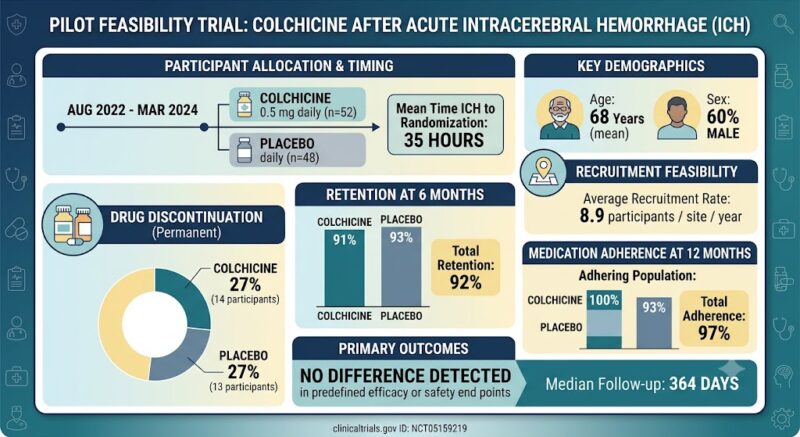
This was a multi-center, double-blind, placebo-controlled pilot randomized clinical trial conducted across 11 centers in Canada between August 2022 and March 2024. Adults presenting within 48 hours of acute ICH onset were screened for eligibility. Inclusion criteria required evidence of vascular neuroimaging abnormalities or established risk factors for atherosclerosis to enrich the population at risk for vascular events. Participants were randomized to receive oral colchicine 0.5 mg daily or matching placebo. The primary endpoint was feasibility, operationalized as recruitment rate per center per year. Secondary feasibility outcomes included retention rates at six months and medication adherence at 12 months. Exploratory efficacy and safety endpoints were assessed but not powered for definitive conclusions. All participants were followed until a common study termination date, with the median follow-up time of approximately one year.
Key Findings
A total of 100 participants were randomized (52 colchicine, 48 placebo). The cohort’s average age was 68 years, with 60% males, and median time to randomization was 35 hours post-ICH onset. The recruitment rate averaged 8.9 participants per site per year, indicating acceptable feasibility for a larger trial. Six-month retention was high at 92%, balanced between groups (91% colchicine vs 93% placebo).
Notably, permanent discontinuation of study drug occurred early and at comparable rates in both arms (27%), underscoring a challenge in treatment adherence in this population. Excluding those who died or discontinued early, adherence at 12 months was excellent at 97%, with 100% adherence in the colchicine group and 93% in placebo.
Exploratory analyses revealed no statistically significant differences between colchicine and placebo groups in vascular event rates or safety outcomes over the median 364-day follow-up. The study was not powered to evaluate efficacy definitively but highlighted critical safety and adherence profiles.
Expert Commentary
This pilot trial contributes important preliminary data supporting the operational feasibility of conducting colchicine intervention studies in the acute ICH population. Given colchicine’s mechanistic rationale—reducing neutrophil activation and downstream inflammatory cascades—it remains biologically plausible that it could mitigate recurrent vascular events and secondary injury after hemorrhage. However, the early rate of drug discontinuation poses a practical challenge that future larger studies must address, possibly through enhanced patient education, monitoring, or alternative dosing strategies.
The lack of observed efficacy signals may reflect the pilot nature, limited sample size, and the heterogeneity of the ICH population. Additionally, colchicine’s safety profile in the acute hemorrhagic setting requires further elucidation. Prior cardiovascular studies have shown colchicine to be generally safe, but rigorous assessment is crucial in hemorrhagic stroke contexts where bleeding risk is paramount.
Future investigations with adequately powered randomized controlled trials are warranted to definitively assess clinical benefits and risks. Incorporation of mechanistic biomarkers may also help identify responders and clarify biological effects post-ICH.
Conclusion
This multicenter, double-blind pilot trial demonstrates that low-dose colchicine administration after acute intracerebral hemorrhage is feasible with high retention and adherence among survivors. The findings underscore the need to anticipate and mitigate early treatment discontinuation in this vulnerable population. While efficacy and safety outcomes remain inconclusive at this juncture, the study lays a foundation for larger definitive trials to explore colchicine’s potential to prevent vascular events and reduce inflammatory sequelae after ICH. As secondary prevention in hemorrhagic stroke evolves, anti-inflammatory strategies like colchicine merit continued rigorous investigation.
Funding and Trial Registration
This study was conducted across Canadian research centers and was registered on ClinicalTrials.gov (NCT05159219). No specific funding sources were detailed in the published report.
References
1. Katsanos AH, Ng KKH, Field TS, et al. Colchicine for the Prevention of Vascular Events After an Acute Intracerebral Hemorrhage: A Placebo-Controlled Trial. Stroke. 2026 Aug 6; PMID: 42558067.
2. Tardif JC, Kouz S, Waters DD, et al. Efficacy and Safety of Low-Dose Colchicine after Myocardial Infarction. N Engl J Med. 2019;381(26):2497-2505.
3. Biffi A, Leasure A, Viswanathan A, et al. Inflammation and inflammatory biomarkers in intracerebral hemorrhage. J Stroke. 2012;14(2):114-122.
These references support the clinical context, background rationale, and safety considerations relevant to colchicine use post-ICH.
This article was created using several editorial tools, including AI, as part of the process. Human editors reviewed this content before publication.