We use cookies

Our website uses essential cookies and, with your consent, additional cookies to measure performance and improve our services. Cookie Policy.

You can change your choice at any time.

MMedXYNews
HomeVideos
MedXY AI/MedXY News/Tag: Intracerebral Hemorrhage
MedXY News
EnglishTag

Intracerebral Hemorrhage

Ask MedXY AI
type 2 diabetesclinical trialheart failureimmunotherapyobesitycardiovascular riskatrial fibrillationbiomarkerscritical careclinical trialsHypertensionartificial intelligenceCardiologyoncologypublic healthtype 1 diabetesdiabetesMortalityAlzheimer's diseasecardiovascular diseasebreast cancerepidemiology

Latest news

Tag

Cilostazol Therapy in Intracerebral Hemorrhage: Enhancing Dural Lymphatic Function for Neuroprotection
Clinical Updatesneuroprotectioncilostazol

Cilostazol Therapy in Intracerebral Hemorrhage: Enhancing Dural Lymphatic Function for Neuroprotection

By MedXY|Sep 6, 2026

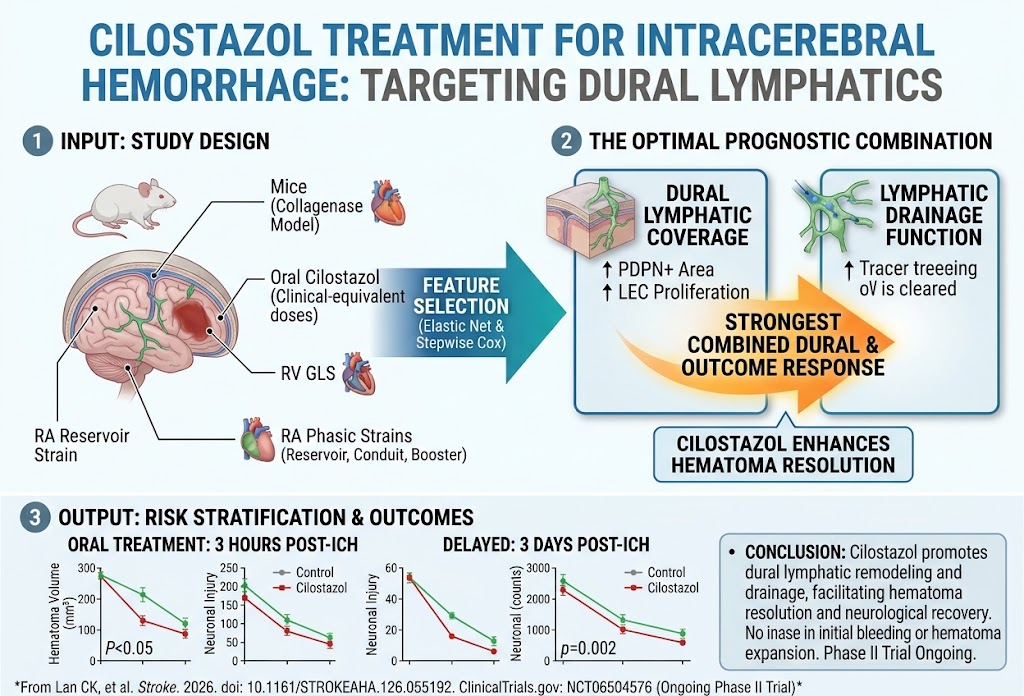
Cilostazol promotes dural lymphatic remodeling and hematoma clearance post-ICH without increasing bleeding risk, representing a promising therapeutic strategy to improve neurological outcomes.
DWI-Positive Lesions in Acute Intracerebral Hemorrhage: Insights into Cerebral Small Vessel Disease and Prognosis
Neurologyfunctional outcomeDiffusion-weighted imaging

DWI-Positive Lesions in Acute Intracerebral Hemorrhage: Insights into Cerebral Small Vessel Disease and Prognosis

By MedXY|Aug 15, 2026

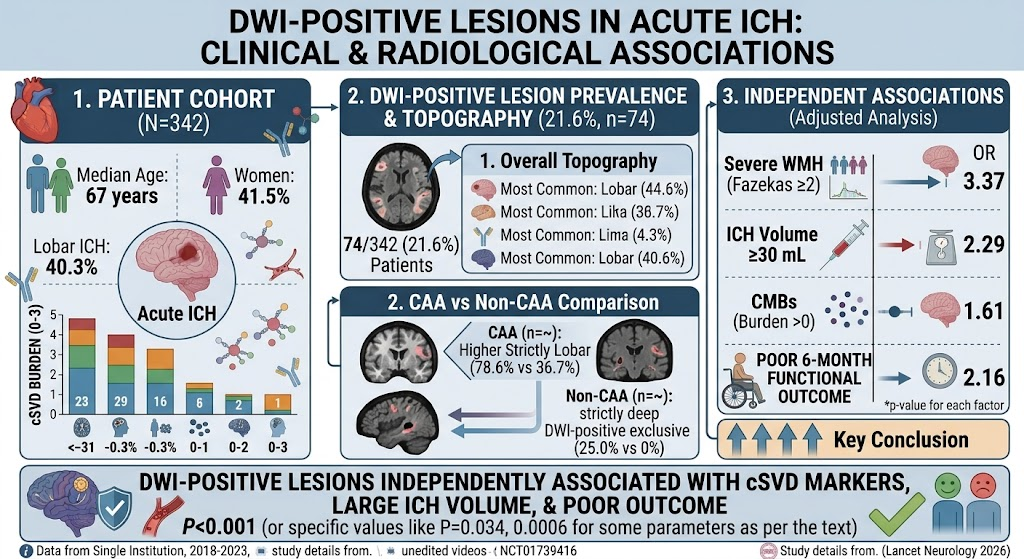
DWI-positive lesions in acute intracerebral hemorrhage patients correlate with cerebral small vessel disease markers and predict poorer 6-month outcomes, with lesion distribution varying by small vessel disease subtype.

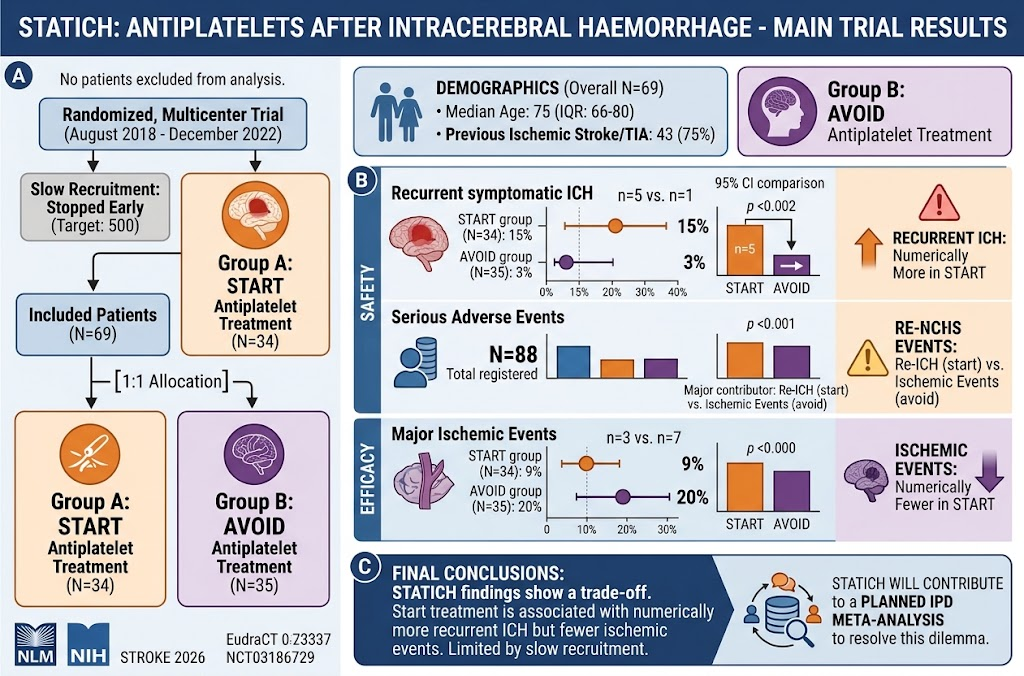
Balancing Risks: Antiplatelet Therapy After Intracerebral Haemorrhage in the STATICH Trial
Internal Medicinestroke preventionAntiplatelet Therapy

Balancing Risks: Antiplatelet Therapy After Intracerebral Haemorrhage in the STATICH Trial

By MedXY|Aug 18, 2026

The STATICH trial assessed safety and efficacy of antiplatelet therapy after intracerebral hemorrhage, revealing increased hemorrhagic risk but fewer ischemic events among treated patients, highlighting ongoing clinical dilemmas.

Evaluating Low-Dose Colchicine for Preventing Vascular Events After Acute Intracerebral Hemorrhage: Insights from a Placebo-Controlled Pilot Trial
Cardiologyvascular events preventionrandomized clinical trial

Evaluating Low-Dose Colchicine for Preventing Vascular Events After Acute Intracerebral Hemorrhage: Insights from a Placebo-Controlled Pilot Trial

By MedXY|Aug 9, 2026

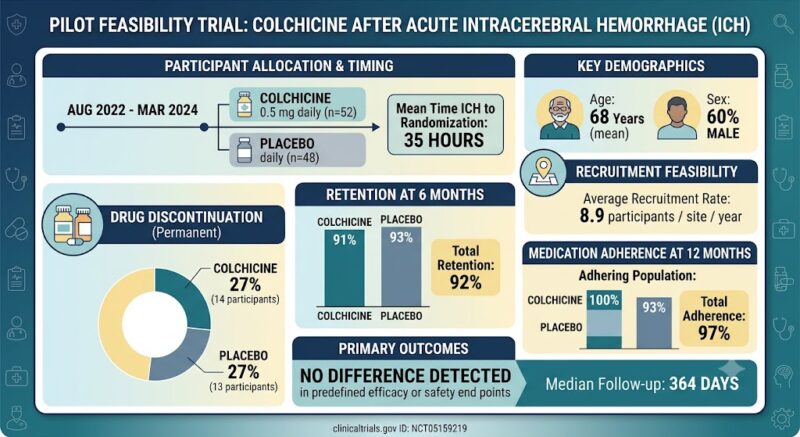
This pilot randomized trial demonstrates the feasibility of using low-dose colchicine after acute intracerebral hemorrhage to prevent vascular events, highlighting considerations for future larger studies regarding recruitment, adherence, a

Younger adults with intracerebral hemorrhage have better outcomes but distinct risk profile: INTERACT3 sub-analysis
NeurologyIntracerebral HemorrhageYoung Adults

Younger adults with intracerebral hemorrhage have better outcomes but distinct risk profile: INTERACT3 sub-analysis

By MedXY|Jul 26, 2026

A secondary analysis of the INTERACT3 trial shows that younger adults (≤50 years) with intracerebral hemorrhage have lower mortality and disability but differ in risk factors and may benefit more from bundled care.

Accelerating Care in Intracerebral Hemorrhage: The Impact of Mobile Stroke Units
Emergency Medicineantihypertensive therapyĐơn Vị Cấp Cứu Đột Quỵ Di Động

Accelerating Care in Intracerebral Hemorrhage: The Impact of Mobile Stroke Units

By MedXY|Jul 5, 2026

Mobile Stroke Units enable faster diagnosis and initiation of antihypertensive treatment in intracerebral hemorrhage, significantly reducing time to care compared with conventional EMS transportation.

Beyond the Target: Why SBP Trajectories Predict Functional Recovery in Acute Intracerebral Hemorrhage
NeurologyBlood Pressure Managementclinical trials

Beyond the Target: Why SBP Trajectories Predict Functional Recovery in Acute Intracerebral Hemorrhage

By MedXY|Mar 20, 2026

A pooled analysis of 11,269 patients from the INTERACT and ATACH-II trials reveals that 24-hour systolic blood pressure trajectories, rather than just single targets, significantly influence functional outcomes after intracerebral hemorrhag

Perihematomal Edema Dynamics and Functional Outcomes in Spontaneous Intracerebral Hemorrhage: Insights from a Global IPD Meta-Analysis
Clinical UpdatesIntracerebral Hemorrhageneurocritical care

Perihematomal Edema Dynamics and Functional Outcomes in Spontaneous Intracerebral Hemorrhage: Insights from a Global IPD Meta-Analysis

By MedXY|Mar 10, 2026

This article synthesizes evidence from a large-scale individual participant data meta-analysis, demonstrating that early perihematomal edema growth (at 24 and 72 hours) is an independent predictor of death and disability after intracerebral

Beyond the Futility Threshold: Deferoxamine May Accelerate Recovery and Benefit Specific Subgroups in Intracerebral Hemorrhage
Neurologyclinical trialsIntracerebral Hemorrhage

Beyond the Futility Threshold: Deferoxamine May Accelerate Recovery and Benefit Specific Subgroups in Intracerebral Hemorrhage

By MedXY|Jan 17, 2026

While the primary i-DEF trial results suggested futility for deferoxamine in unselected intracerebral hemorrhage patients, recent post hoc analyses reveal significant benefits in early neurological improvement, long-term recovery trajectori

Decompressive Craniectomy Benefits Persist Across Deep Intracerebral Hemorrhage Locations: A SWITCH Trial Analysis
Critical CareIntracerebral Hemorrhagestroke

Decompressive Craniectomy Benefits Persist Across Deep Intracerebral Hemorrhage Locations: A SWITCH Trial Analysis

By MedXY|Jan 17, 2026

A post hoc analysis of the SWITCH trial demonstrates that the clinical benefits of decompressive craniectomy in reducing death and severe disability are consistent across different anatomical locations of deep supratentorial intracerebral h

The Earlier, the Better: INTERACT Pooled Analysis Confirms 3-Hour Golden Window for Intensive Blood Pressure Lowering in Acute ICH
Emergency MedicineHypertensionIntracerebral Hemorrhage

The Earlier, the Better: INTERACT Pooled Analysis Confirms 3-Hour Golden Window for Intensive Blood Pressure Lowering in Acute ICH

By MedXY|Dec 23, 2025

A pooled analysis of over 11,000 patients from the INTERACT trials demonstrates that intensive blood pressure reduction significantly improves functional recovery in acute intracerebral hemorrhage, with the most robust benefits observed whe

NLRP3 Inflammasome and Gut Microbiota-Brain Axis: Emerging Insights into White Matter Injury After Intracerebral Hemorrhage
Clinical UpdatesIntracerebral HemorrhageNLRP3 inflammasome

NLRP3 Inflammasome and Gut Microbiota-Brain Axis: Emerging Insights into White Matter Injury After Intracerebral Hemorrhage

By MedXY|Sep 30, 2025

This article explores how gut microbiota dysbiosis and NLRP3 inflammasome activation contribute to secondary white matter injury post-intracerebral hemorrhage, outlining mechanisms and potential therapeutic strategies.

Minimally Invasive Surgery versus Medical Management for Supratentorial Intracerebral Hemorrhage: Insights from the MIND Trial
Clinical UpdatesIntracerebral Hemorrhagemedical management

Minimally Invasive Surgery versus Medical Management for Supratentorial Intracerebral Hemorrhage: Insights from the MIND Trial

By MedXY|Oct 9, 2025

The MIND trial compared minimally invasive surgery using the Artemis device to standard medical management for supratentorial intracerebral hemorrhage, finding no significant improvement in 180-day functional outcomes or 30-day mortality wi

Minimally Invasive Surgery vs Medical Management in Supratentorial Intracerebral Hemorrhage: Insights from the MIND Randomized Trial
General SurgeryIntracerebral Hemorrhagemedical management

Minimally Invasive Surgery vs Medical Management in Supratentorial Intracerebral Hemorrhage: Insights from the MIND Randomized Trial

By MedXY|Oct 9, 2025

The MIND trial found no significant functional benefit or mortality reduction with minimally invasive surgery compared to medical management alone in supratentorial intracerebral hemorrhage patients at 180 days.

Dissecting the Care Bundle: Mediation Analysis of Key Components Driving Improved Outcomes in INTERACT3 for Acute Intracerebral Hemorrhage
Clinical UpdatesBlood Pressure ControlIntracerebral Hemorrhage

Dissecting the Care Bundle: Mediation Analysis of Key Components Driving Improved Outcomes in INTERACT3 for Acute Intracerebral Hemorrhage

By MedXY|Oct 9, 2025

Mediation analysis of INTERACT3 reveals that systolic blood pressure and blood glucose control are primary drivers of functional recovery benefits in acute intracerebral hemorrhage care bundles.

Ask MedXY AI

Most popular

Intimate Health
Five Benefits for Women Continuing Sexual Activity After Menopause
Intimate Health
Why Some Women Have a Strong Sex Drive—And Why Men Shouldn't Worry About It
Nursing & care
How often should a couple have sex?
Intimate Health
Classic Intimacy Recommendations: How to Help Women Reach Orgasm and Enjoy Mutual Pleasure
Intimate Health
What Makes a Woman "Physiologically Addicted" Is Never Money, But These Two Relationship Qualities
© 2026 MedXY
Contact usAbout usPrivacy PolicyMedXY story