MMedXYNews
Ask AIHomeVideos
MedXY AI/MedXY News/Section: Critical Care
Critical Care

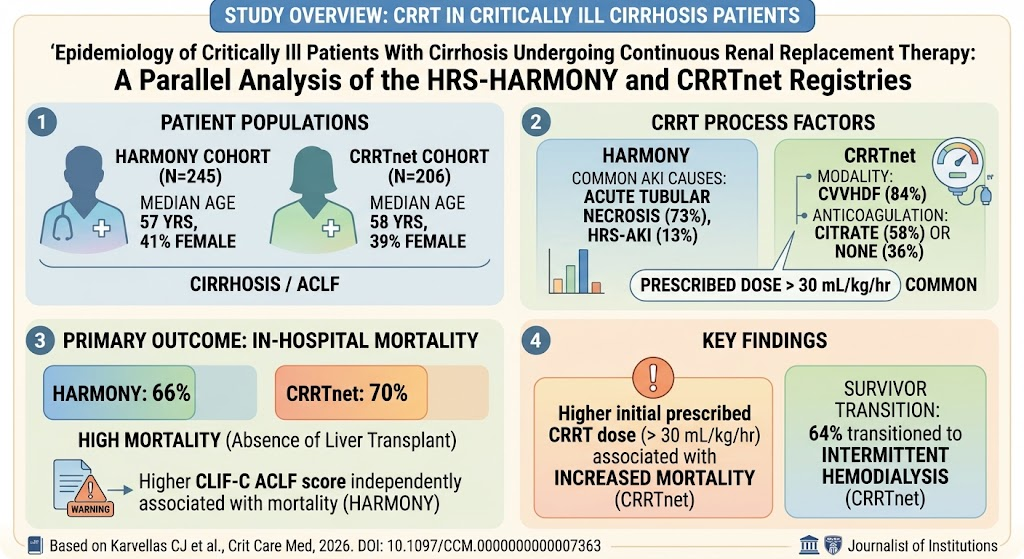
Epidemiology and Outcomes of CRRT in Critically Ill Cirrhosis Patients: Insights from the HRS-HARMONY and CRRTnet Registries

MedXY Editorial TeamSep 24, 2026
cirrhosiscritical carecontinuous renal replacement therapyacute kidney injury

Highlight

  • Critically ill patients with cirrhosis and acute-on-chronic liver failure (ACLF) exhibit high in-hospital mortality when treated with continuous renal replacement therapy (CRRT).
  • Higher prescribed CRRT dose (>30 mL/kg/hr) is independently associated with increased mortality, suggesting careful dosing optimization is necessary.
  • Regional citrate anticoagulation is commonly utilized despite historical concerns about citrate toxicity in cirrhotic patients.
  • Most ICU survivors transition from CRRT to intermittent hemodialysis prior to hospital discharge, indicating the trajectory of renal recovery and dialysis management in this population.

Study Background

MedXY registered readers

Sign in free to continue reading

Create or use your MedXY account to unlock the complete article.

This article was created using several editorial tools, including AI, as part of the process. Human editors reviewed this content before publication.
Related articles

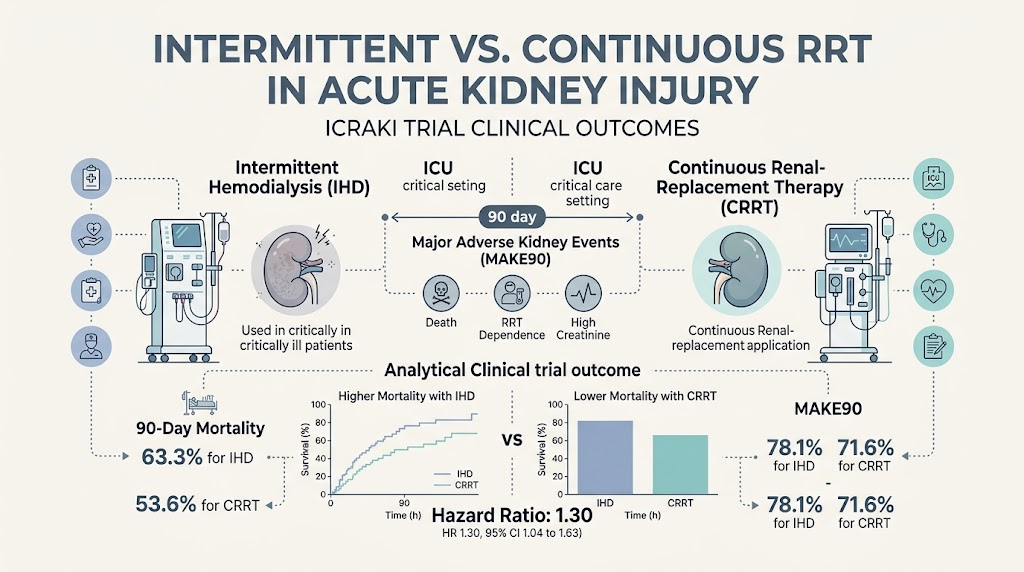
Intermittent vs Continuous Renal-Replacement Therapy in Acute Kidney Injury: Insights from a Multicenter Trial

Critical CareOct 25, 2026

Navigating Uncertainty: The Future Impact of Artificial Intelligence in Critical Care through Ten Paradigms

Critical CareNov 5, 2026

Evaluating Cluster vs. Individual Randomization in Acute Care Trials: Insights from a Meta-Epidemiological Study

Critical CareNov 4, 2026
Loading comments...

Most read

  1. 01Intimate Health

    Five Benefits for Women Continuing Sexual Activity After Menopause

  2. 02Intimate Health

    Why Some Women Have a Strong Sex Drive—And Why Men Shouldn't Worry About It

  3. 03Nursing & care

    How often should a couple have sex?

  4. 04Cardiology

    Precision Medicine for Long QT Syndrome Type 2: Lumacaftor Corrects Trafficking Defects and Shortens QT Interval

  5. 05General Surgery

    Optimizing Postoperative Opioid Prescriptions After Intra-Abdominal Cancer Surgery: Comparing the 5x-Multiplier and 3-Tier Models

Go deeper with MedXY AI

Explore the evidence behind the news.

Ask AI
MedXY briefing

Stay informed

Medical news and research updates, delivered to your inbox.

© 2026 MedXY
Contact usAbout usPrivacy PolicyMedXY story