Comorbid Insomnia Amplifies Blood Pressure Reduction with CPAP Therapy in Obstructive Sleep Apnea Patients
Highlight
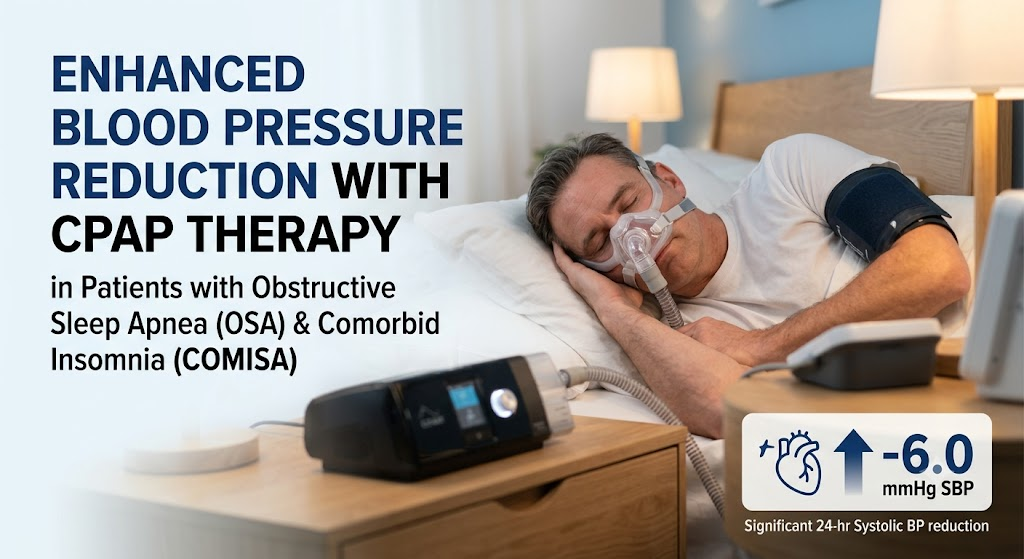
This prospective cohort study reveals that patients with obstructive sleep apnea (OSA) who also suffer from comorbid insomnia (COMISA) experience a more pronounced reduction in 24-hour systolic blood pressure (SBP) after four weeks of CPAP therapy compared to those with OSA alone. Insomnia symptoms independently predict achieving clinically meaningful blood pressure control, suggesting a distinct clinical phenotype with enhanced cardiovascular responsiveness to treatment.
Study Background
Obstructive sleep apnea (OSA), characterized by recurrent upper airway collapse during sleep, affects a substantial portion of the adult population, frequently contributing to cardiovascular morbidity, notably hypertension. The coexistence of insomnia—a chronic condition marked by difficulties initiating or maintaining sleep—is common in patients with OSA, leading to a complex clinical phenotype termed COMISA (comorbid insomnia and sleep apnea). Previous research has suggested this overlap is associated with poorer blood pressure control and adverse cardiovascular outcomes. However, it remains unclear how comorbid insomnia impacts the blood pressure response to the first-line intervention for OSA, continuous positive airway pressure (CPAP) therapy. Optimizing cardiovascular risk management in this subgroup is an important unmet medical need.
Study Design and Methods
The study was a prospective cohort investigation involving 71 adults diagnosed with OSA alongside elevated blood pressure. Participants were stratified into two groups: those meeting DSM-5 criteria for insomnia, categorized as COMISA (n=22), and those with OSA alone without insomnia symptoms (n=49). All subjects underwent an auto-titrating CPAP therapy regimen for four weeks. The primary outcome was achieving a clinically meaningful reduction in 24-hour systolic blood pressure, defined as a decrease of at least 5 mmHg. Secondary outcomes encompassed absolute changes in 24-hour, daytime, and nocturnal systolic and diastolic blood pressures. Blood pressure measurements were conducted using ambulatory 24-hour monitoring to ensure precision. Multivariate analyses adjusted for potential confounders were applied to assess associations between insomnia symptoms and blood pressure changes.
Key Findings
After four weeks of CPAP therapy, the COMISA group demonstrated a significantly greater mean reduction in 24-hour systolic blood pressure compared to the OSA-alone group (average reduction of -6.0 ± 8.2 mmHg versus -0.3 ± 6.5 mmHg; p=0.002). This beneficial effect extended consistently through daytime and nocturnal blood pressure readings, suggesting a sustained blood pressure-lowering impact across circadian phases. Insomnia symptoms were independently associated with achieving the primary outcome of a ≥5 mmHg reduction in 24-hour systolic BP, with an adjusted odds ratio of 5.62 (95% confidence interval 1.50–21.15), underscoring insomnia as a strong predictor.
However, associations between insomnia and continuous secondary endpoints such as absolute 24-hour, daytime, and nocturnal systolic and diastolic blood pressure reductions did not remain statistically significant after Bonferroni correction for multiple comparisons (α=0.017). This suggests the primary clinically meaningful blood pressure reduction outcome offers the most robust evidence of the benefit conferred by comorbid insomnia status.
Expert Commentary
The findings identify COMISA as a distinct clinical phenotype in which CPAP therapy yields enhanced antihypertensive benefits. Biologically, this may relate to the compounded effects of sleep fragmentation, sympathetic activation, and inflammation that insomnia contributes to OSA pathophysiology, rendering CPAP more effective by mitigating multiple detrimental mechanisms simultaneously. Previous research has often highlighted poorer cardiovascular outcomes in COMISA, but this study suggests that appropriate intervention addressing both sleep disorders can lead to superior blood pressure improvements.
Notably, the study’s short-term follow-up of four weeks limits insights on long-term cardiovascular outcomes, and the relatively small sample size warrants caution in generalization. Furthermore, comprehensive strategies to improve CPAP adherence in the COMISA population are critical, as insomnia symptoms often interfere with CPAP tolerance and usage. Future research should explore tailored behavioral or pharmacologic approaches targeting insomnia within OSA management paradigms.
Conclusion
This prospective cohort study demonstrates that comorbid insomnia in OSA patients is associated with significantly enhanced 24-hour systolic blood pressure reduction following short-term CPAP therapy. Insomnia symptoms serve as an independent predictor of achieving clinically meaningful blood pressure control. These findings highlight the importance of recognizing and treating insomnia alongside OSA to optimize cardiovascular outcomes. Clinicians should prioritize integrated sleep disorder management and promote CPAP adherence strategies tailored for the COMISA phenotype to maximize therapeutic benefit in hypertensive patients with sleep-disordered breathing.
Funding and Clinical Trial Registration
This study was registered in the Chinese Clinical Trial Registry (ChiCTR2300067728). Funding sources were not specified in the original report.
References
1. Li S, Jiao Y, Zhou Z, et al. Comorbid Insomnia is Associated with Enhanced Blood Pressure Reduction with CPAP Therapy in Patients with Obstructive Sleep Apnea: A Prospective Cohort Study. Chest. 2026;PMID: 42537786.
2. Kapur VK, Auckley DH, Chowdhuri S, et al. Clinical Practice Guideline for Diagnostic Testing for Adult Obstructive Sleep Apnea: An American Academy of Sleep Medicine Clinical Practice Guideline. J Clin Sleep Med. 2017;13(3):479-504.
3. Sateia MJ. International Classification of Sleep Disorders-third edition: highlights and modifications. Chest. 2014 Nov;146(5):1387-1394.
4. Dimitriou V, Bairaktari E, Daridou J, et al. Impact of Comorbid Insomnia on Cardiac Autonomic Function in Patients with Obstructive Sleep Apnea: A Systematic Review. Sleep Med Clin. 2021;16(2):221-230.
5. Javaheri S, Dempsey JA. Sleep Apnea and Cardiovascular Disease: An American Heart Association/American College of Cardiology Foundation Scientific Statement. Circulation. 2010;122(4):361-380.
This article was created using several editorial tools, including AI, as part of the process. Human editors reviewed this content before publication.