Highlight
• Transseptal TMVR with the SAPIEN M3 system achieves high procedural success in symptomatic patients with mitral annular calcification (MAC) unsuitable for surgery.
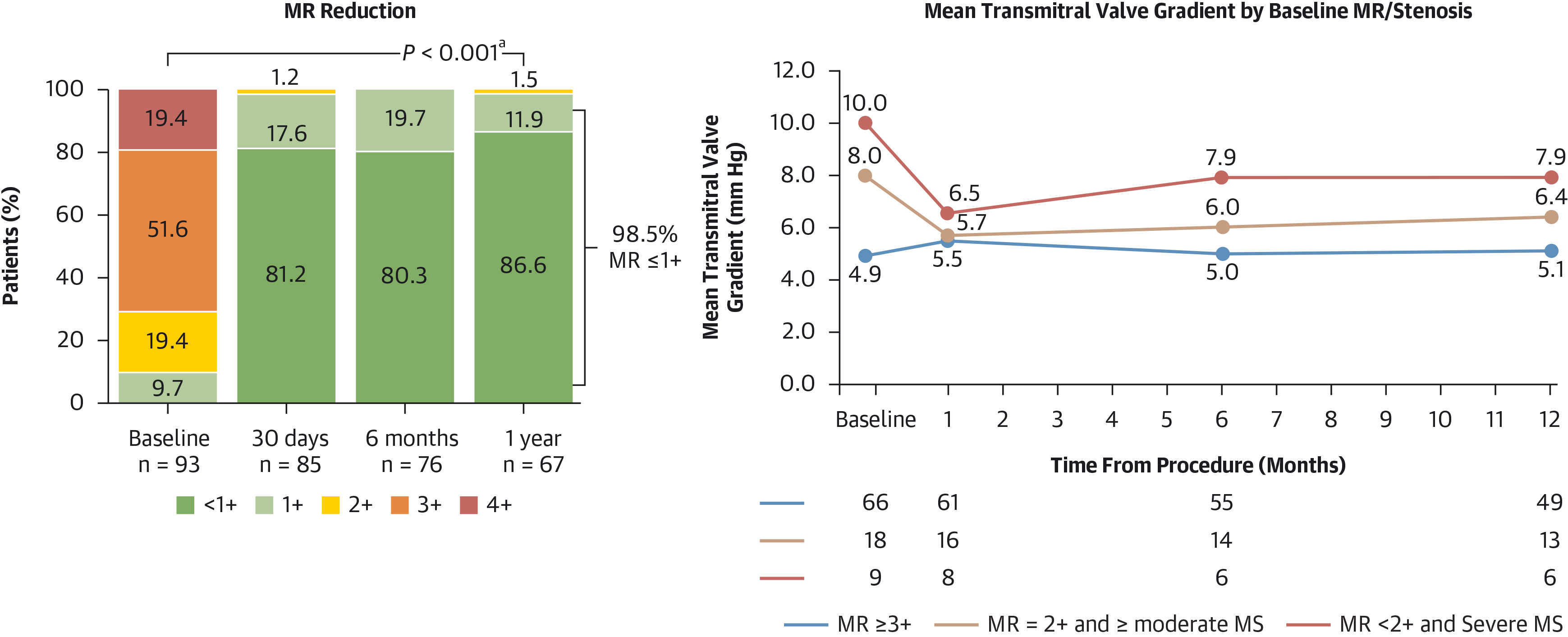
• One-year follow-up demonstrates 98.5% of patients maintain mild or less mitral regurgitation.
• Significant improvements in NYHA functional class, quality of life (Kansas City Cardiomyopathy Questionnaire), and 6-minute walk distance are sustained.
• The procedure has a notable but manageable complication profile, including stroke, LVOT obstruction, valve thrombosis, and valve reintervention.
Study Background
Mitral annular calcification (MAC) complicates mitral valve function by stiffening the annulus and impacting leaflet mobility, often resulting in mitral regurgitation (MR), stenosis, or mixed mitral valve dysfunction (MVD). Elderly patients with MAC frequently exhibit multiple comorbidities and complex cardiac anatomy, complicating estimates of surgical risk. Conventional surgical mitral valve replacement or repair can be associated with prohibitively high morbidity and mortality due to calcific involvement of the annulus and adjacent structures, as well as frailty. While transcatheter mitral valve repair techniques have advanced, many patients with MAC-related MVD remain unsuitable for repair therapies due to anatomical limitations. Hence, there is a pressing need for alternative, less invasive treatment options that can safely and effectively improve symptoms and outcomes in this challenging population.
Study Design
The ENCIRCLE MAC Registry is a prospective, multi-center, single-arm study designed to evaluate transseptal transcatheter mitral valve replacement (TMVR) using the SAPIEN M3 system in symptomatic patients with MAC-related mitral valve dysfunction. Included patients had moderate to severe MR, severe mitral stenosis, or combined moderate MR and mitral stenosis and were deemed unsuitable for surgical valve replacement or transcatheter mitral repair. Patients with high surgical risk profiles and complex annular anatomy were screened; of 364 patients screened, TMVR was attempted in 100 with successful valve implantation in 93. The primary composite endpoint combined all-cause mortality and heart failure hospitalization (HFH) at 1 year post-procedure.
Key Findings
The mean patient age was 76.1 ± 9.2 years, with 51.0% male and 73.0% in NYHA class III or IV, demonstrating a severely symptomatic cohort. The mean Society of Thoracic Surgeons (STS) Predicted Risk of Mortality score for mitral valve replacement was elevated at 8.4% ± 4.9%, indicating high surgical risk.
At 1-year follow-up, the Kaplan-Meier cumulative estimate for the primary endpoint of all-cause mortality or heart failure hospitalization was 33.6% (95% CI: 25.0%-44.1%). Specifically, all-cause mortality was 21.1%, and HFH occurred in 19.4% of patients. Procedural and post-procedural complications included disabling stroke in 5.1%, clinically significant left ventricular outflow tract (LVOT) obstruction in 4.8%, valve thrombosis in 2.3%, hemolysis necessitating transfusion or valve reintervention in 9.2%, and mitral valve re-intervention in 11.4% of patients.
Importantly, functional outcomes demonstrated marked improvement. By 1 year, 98.5% of patients had MR graded ≤1+, representing sustained effective reduction in mitral regurgitation. NYHA functional class showed significant amelioration with most patients moving towards class I or II. Patient-centered measures such as the Kansas City Cardiomyopathy Questionnaire Overall Summary score and 6-minute walk distance also exhibited meaningful and sustainable gains through the follow-up period, indicating improvements in symptoms and quality of life.
Expert Commentary
The ENCIRCLE MAC Registry results represent a significant step forward in addressing the unmet need for a less invasive, effective treatment for patients with MAC-related mitral valve disease who are poor candidates for conventional surgery or repair. The transseptal approach with the SAPIEN M3 system leverages anatomical access advantages, reducing procedural complexity and potentially lowering risk. The durable MR reduction and clinical benefit observed align with the anticipated hemodynamic improvements after mitral valve replacement. Nevertheless, the reported adverse event rates, including stroke and LVOT obstruction, underscore the importance of meticulous patient selection, procedural planning, and operator expertise.
Limitations include the single-arm design without a randomized comparator and the relatively high complication rate, which may limit generalizability to less experienced centers. Further studies with larger cohorts and longer follow-up, as well as comparative trials against other treatment modalities, are warranted to better understand the clinical positioning of transseptal TMVR in MAC.
Conclusion
For carefully selected, severely symptomatic patients with MAC-related mitral valve dysfunction who are unsuitable for surgery or repair, transseptal TMVR using the SAPIEN M3 system offers a viable therapeutic pathway. The procedure provides sustained reduction of mitral regurgitation, improved functional status, and enhanced quality of life at 1 year. While procedural risks remain, this intervention expands treatment options for a traditionally high-risk and underserved population in structural heart disease.
References
Guerrero ME, Daniels DV, Whisenant B, et al. Transseptal Transcatheter Mitral Valve Replacement for Mitral Annular Calcification: ENCIRCLE MAC Registry 1-Year Outcomes. J Am Coll Cardiol. 2026; doi:10.1016/j.jacc.2026.09.016. PMID: 42873164.
Wang DD, Eng M, Jilaihawi H, et al. Transcatheter mitral valve replacement in patients with severe mitral annular calcification: a systematic review. J Am Coll Cardiol Intv. 2021;14(11):1203-1214.
Nishimura RA, et al. 2020 ACC/AHA Guideline for the Management of Patients with Valvular Heart Disease. Circulation. 2021; 143(5):e72–e227.