We use cookies

Our website uses essential cookies and, with your consent, additional cookies to measure performance and improve our services. Cookie Policy.

You can change your choice at any time.

MMedXYNews
HomeVideos
MedXY AI/MedXY News/Section: Critical Care

The Microbiome in Critical Illness: Transforming ICU Care Through Microbial Insights
MedXY Editorial Team•Aug 28, 2026•Critical Care
critical illnessGastrointestinal Microbiotamicrobiomeintensive care

Introduction

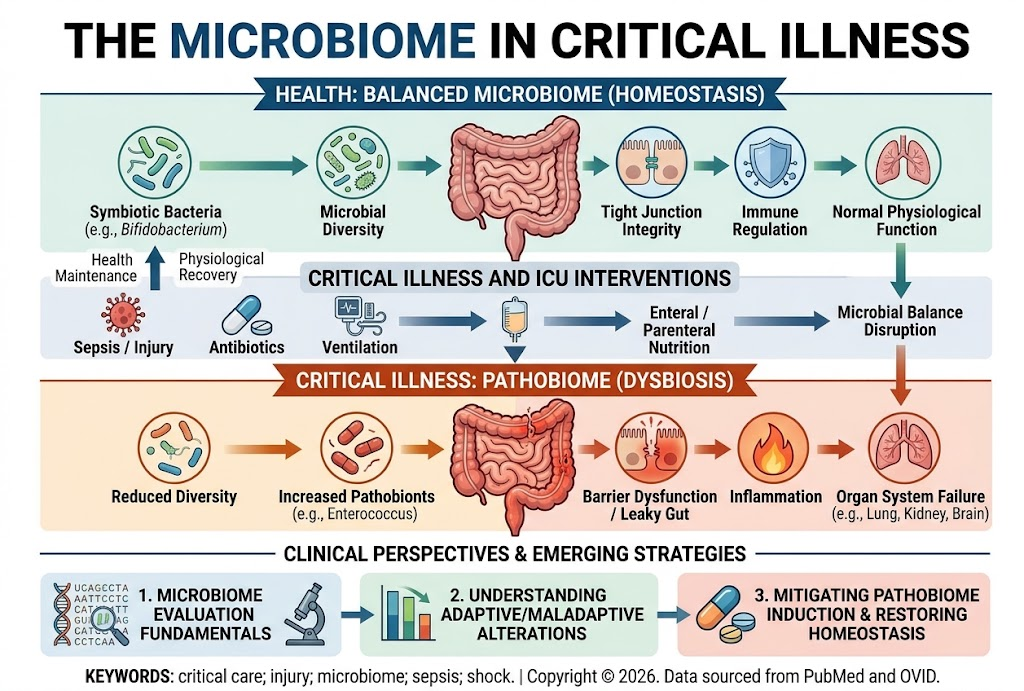
Critical illness profoundly challenges human physiology and requires complex interventions often delivered in intensive care units (ICUs). An emerging frontier in critical care medicine is the human microbiome—the collective community of microorganisms inhabiting distinct body sites, especially the gastrointestinal tract. This review summarizes current knowledge on how the microbiome impacts critically ill and injured patients, the mechanisms underlying microbial disruption, and clinical strategies to mitigate these effects to optimize outcomes.

Understanding the Human Microbiome

MedXY registered readers

Sign in free to continue reading

Create or use your MedXY account to unlock the complete article.

This article was created using several editorial tools, including AI, as part of the process. Human editors reviewed this content before publication.

Related articles

Open language-specific specialty feeds and department pages.

Decoding Pseudomonas aeruginosa Subtypes: Implications for Clinical Variability in BronchiectasisDistinct Pseudomonas aeruginosa abundance and interaction patterns in bronchiectasis patients reveal heterogeneity influencing clinical outcomes and treatment responses, offering new avenues for personalized management.Sep 18, 2026Therapeutic Hypothermia at 35°C vs. Controlled Normothermia in ICU Heatstroke: Insights from a Pilot RCTA pilot randomized trial comparing targeted temperature management at 35°C versus normothermia in intubated heatstroke patients showed no survival or neurological benefit from hypothermia but increased gastrointestinal injury and arrhythmiaSep 3, 2026Post-ICU Frailty in Older Adults Following Septic Shock: Key Predictors and Clinical ImplicationsThis study identifies baseline frailty, organ dysfunction severity, and corticosteroid use as independent predictors of severe post-intensive care frailty in older septic shock survivors, highlighting critical factors for targeted post-ICUAug 26, 2026
Loading comments...
MedXY briefing

Get the free newsletter

Evidence-led clinical news, trends, and analysis—delivered to your inbox.

Ask MedXY AI

Most popular

Intimate Health
Five Benefits for Women Continuing Sexual Activity After Menopause
Intimate Health
Why Some Women Have a Strong Sex Drive—And Why Men Shouldn't Worry About It
Nursing & care
How often should a couple have sex?
Intimate Health
Classic Intimacy Recommendations: How to Help Women Reach Orgasm and Enjoy Mutual Pleasure
Intimate Health
What Makes a Woman "Physiologically Addicted" Is Never Money, But These Two Relationship Qualities
© 2026 MedXY
Contact usAbout usPrivacy PolicyMedXY story
Psychoactive Medication Prescribing After Critical Illness in American Adults Not Justified by a Documented Supporting Diagnosis
Nearly half of psychoactive medications newly prescribed after ICU stays in American adults lack documented diagnostic justification, persisting for up to two years post-hospitalization.
Aug 15, 2026
Impact of Texas Abortion Ban on Critical Illness in Hospitalized Pregnant Women: A Retrospective Cohort AnalysisThe Texas Senate Bill 8 abortion ban is linked to an increased rate of critical illness, sepsis, and infections among hospitalized pregnant women with high-risk features, highlighting significant implications for maternal healthcare in restAug 18, 2026
Bridging Periodontitis and Clonal Hematopoiesis: Implications for Solid Tumor Metastasis, Clinical Trial Design, and Microbiome DynamicsThis review synthesizes evidence linking periodontitis-induced inflammation with clonal hematopoiesis, exploring implications for tumor metastasis, trial methodology, and microbiome-host crosstalk.Jul 24, 2026