We use cookies

Our website uses essential cookies and, with your consent, additional cookies to measure performance and improve our services. Cookie Policy.

You can change your choice at any time.

MMedXYNews
HomeVideos
MedXY AI/MedXY News/Tag: atrial fibrillation
MedXY News
EnglishTag

atrial fibrillation

Ask MedXY AI
type 2 diabetesclinical trialheart failureimmunotherapyobesitycardiovascular riskatrial fibrillationbiomarkerscritical careclinical trialsHypertensionartificial intelligenceCardiologyoncologypublic healthtype 1 diabetesdiabetesMortalityAlzheimer's diseasecardiovascular diseasebreast cancerepidemiology

Latest news

Tag

Arrhythmia Burden and Clinical Responses Under Continuous Monitoring in Heart Failure: Observations From the ALLEVIATE-HF Trial
Cardiologyarrhythmiaatrial fibrillation

Arrhythmia Burden and Clinical Responses Under Continuous Monitoring in Heart Failure: Observations From the ALLEVIATE-HF Trial

By MedXY|Jun 10, 2026

Continuous ICM monitoring in heart failure uncovered a high arrhythmia burden, including atrial fibrillation, bradyarrhythmia, and VT/VF, which was linked to more interventions, hospitalizations, and heart failure events.


Arrhythmia Burden and Clinical Responses Under Continuous Monitoring in Heart Failure: Findings from the ALLEVIATE-HF Trial
Cardiologyarrhythmiaatrial fibrillation

Arrhythmia Burden and Clinical Responses Under Continuous Monitoring in Heart Failure: Findings from the ALLEVIATE-HF Trial

By MedXY|Jun 10, 2026

Continuous implantable monitoring in heart failure revealed a high burden of arrhythmias, strongly linked to hospitalizations and treatment changes, but not reduced by protocol-directed congestion management.

Precardioversion Heart Rhythm Monitoring Using Smartphone Photoplethysmography: The SMARTBEATS Randomized Clinical Trial
Cardiologyatrial fibrillationcardioversion

Precardioversion Heart Rhythm Monitoring Using Smartphone Photoplethysmography: The SMARTBEATS Randomized Clinical Trial

By MedXY|Jun 5, 2026

Smartphone photoplethysmography before planned cardioversion reduced same-day cancellations in patients with atrial fibrillation or flutter by detecting spontaneous return to sinus rhythm early.

Thyroid Dysfunction Is a Cardiovascular Risk Multiplier, but Treatment Benefits Depend on Phenotype, Severity, and Age
Cardiologyatrial fibrillationcardiovascular disease

Thyroid Dysfunction Is a Cardiovascular Risk Multiplier, but Treatment Benefits Depend on Phenotype, Severity, and Age

By MedXY|Jun 3, 2026

Thyroid dysfunction reshapes lipid metabolism, vascular tone, cardiac performance, and rhythm. Cardiovascular risk is clearest at the extremes of thyroid status, while treatment decisions in subclinical disease should remain individualized.

Arrhythmia Burden and Clinical Responses Under Continuous Monitoring in Heart Failure: Observations From the ALLEVIATE-HF Trial
Cardiologyarrhythmiaatrial fibrillation

Arrhythmia Burden and Clinical Responses Under Continuous Monitoring in Heart Failure: Observations From the ALLEVIATE-HF Trial

By MedXY|Jun 3, 2026

Continuous ICM monitoring in heart failure found a high burden of atrial fibrillation, bradyarrhythmia, and VT/VF. Arrhythmias were linked to more interventions and higher hospitalization risk, but the congestion-management strategy did not

Routine Surgical Left Atrial Appendage Occlusion Did Not Improve 1-Year Outcomes in Valvular Surgery Patients Without Atrial Fibrillation: Insights From the OPINION Trial
Cardiologyatrial fibrillationLeft Atrial Appendage Occlusion

Routine Surgical Left Atrial Appendage Occlusion Did Not Improve 1-Year Outcomes in Valvular Surgery Patients Without Atrial Fibrillation: Insights From the OPINION Trial

By MedXY|May 28, 2026

In OPINION, prophylactic left atrial appendage occlusion during valve surgery did not significantly lower stroke, TIA, or cardiovascular death at 1 year in patients without pre-operative atrial fibrillation.

Beyond Neuronal Injury: Serum Neurofilament Light Chain as a Prognostic Biomarker for Cardiovascular Outcomes in Atrial Fibrillation
Cardiologyatrial fibrillationbiomarkers

Beyond Neuronal Injury: Serum Neurofilament Light Chain as a Prognostic Biomarker for Cardiovascular Outcomes in Atrial Fibrillation

By MedXY|May 18, 2026

This review analyzes the landmark SWISS-AF study, demonstrating that serum neurofilament light chain (sNfL), traditionally a marker of neuronal damage, is a potent independent predictor of major vascular events, heart failure, and mortality

Subclinical Hyperthyroidism Carries Measurable Risks of Atrial Fibrillation, Heart Failure, and Death in Primary Care
Cardiologyall-cause mortalityatrial fibrillation

Subclinical Hyperthyroidism Carries Measurable Risks of Atrial Fibrillation, Heart Failure, and Death in Primary Care

By MedXY|May 10, 2026

A large Dutch primary care cohort links subclinical hyperthyroidism to higher risks of atrial fibrillation, heart failure, and all-cause mortality, with particularly notable relative risks in younger adults and in patients with more strongl

Late-Life Stroke in ARIC Was More Often Embolic, and Atrial Disease Explained Much of the Risk
Cardiologyatrial fibrillationischemic stroke

Late-Life Stroke in ARIC Was More Often Embolic, and Atrial Disease Explained Much of the Risk

By MedXY|May 1, 2026

In ARIC, ischemic stroke at age 80 years or older was more often embolic than thrombotic. Atrial fibrillation and left atrial disease explained much of the age effect, and adding embolic factors improved prediction.

Standard-Dose DOACs Outperform Warfarin More Strongly in Asian Than Non-Asian Patients With Atrial Fibrillation
CardiologyAsian patientsatrial fibrillation

Standard-Dose DOACs Outperform Warfarin More Strongly in Asian Than Non-Asian Patients With Atrial Fibrillation

By MedXY|Apr 30, 2026

In a patient-level meta-analysis of 10,212 Asian and 61,471 non-Asian AF patients, standard-dose DOACs outperformed warfarin more strongly in Asians, with less stroke, major bleeding, and net clinical harm. Standard-dose therapy was favored

Pre-Treatment Fibrin Clot Lysis Time Predicts Bleeding Risk in Atrial Fibrillation Patients on Oral Anticoagulants
Cardiologyatrial fibrillationbleeding risk

Pre-Treatment Fibrin Clot Lysis Time Predicts Bleeding Risk in Atrial Fibrillation Patients on Oral Anticoagulants

By MedXY|Apr 28, 2026

Shorter pre-treatment fibrin clot lysis time independently predicts higher bleeding risk in AF patients on oral anticoagulation, as evidenced by the ARISTOTLE trial.

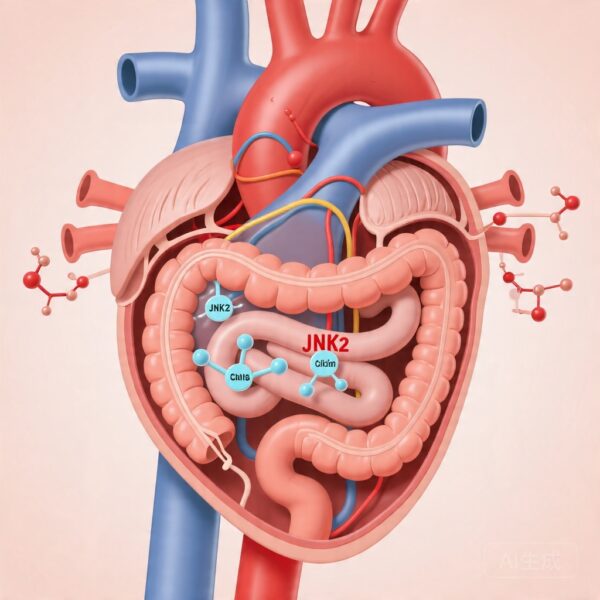
Unraveling the Gut-Heart Connection: How Leaky Gut Fuels Atrial Fibrillation in Aging
Cardiologyagingatrial fibrillation

Unraveling the Gut-Heart Connection: How Leaky Gut Fuels Atrial Fibrillation in Aging

By MedXY|Apr 22, 2026

Researchers identify JNK2 as a key mediator in gut-heart crosstalk, linking intestinal permeability to atrial fibrillation pathogenesis through inflammatory stress signals, offering new therapeutic targets.

AI-Enhanced ECG Screening Pinpoints Atrial Fibrillation Risk in Older Adults: Key Insights from VITAL-AF Trial
Cardiologyartificial intelligenceatrial fibrillation

AI-Enhanced ECG Screening Pinpoints Atrial Fibrillation Risk in Older Adults: Key Insights from VITAL-AF Trial

By MedXY|Apr 15, 2026

A VITAL-AF trial analysis reveals that combining ECG-based artificial intelligence with clinical risk scores significantly improves atrial fibrillation screening efficiency. The study demonstrates that high-risk individuals benefit most fro

Timing of Atrial Fibrillation Diagnosis Does Not Alter Early Anticoagulation Benefits in Stroke Patients: Insights from the OPTIMAS Trial
Cardiologyanticoagulationatrial fibrillation

Timing of Atrial Fibrillation Diagnosis Does Not Alter Early Anticoagulation Benefits in Stroke Patients: Insights from the OPTIMAS Trial

By MedXY|Apr 5, 2026

Subgroup analysis of the OPTIMAS trial reveals that neither the timing of atrial fibrillation diagnosis nor AF subtype modifies the treatment effect of early versus delayed direct oral anticoagulant initiation in acute ischemic stroke. Pers

Memantine for Premature Atrial Contractions: A Phase 2 Randomized Clinical Trial
Cardiologyatrial fibrillationCardiac Glutamatergic System

Memantine for Premature Atrial Contractions: A Phase 2 Randomized Clinical Trial

By MedXY|Mar 20, 2026

This phase 2 trial demonstrates that memantine, an NMDA receptor antagonist, significantly reduces premature atrial contractions (PACs) and nonsustained atrial tachycardia burden, suggesting the cardiac glutamatergic system as a novel thera

Abelacimab Shows Superior Safety Over Rivaroxaban for Older Adults with Atrial Fibrillation
CardiologyAbelacimabatrial fibrillation

Abelacimab Shows Superior Safety Over Rivaroxaban for Older Adults with Atrial Fibrillation

By MedXY|Mar 12, 2026

A phase 2b study demonstrates that the Factor XI inhibitor abelacimab significantly reduces bleeding risk compared to rivaroxaban in older atrial fibrillation patients, offering a safer alternative for stroke prevention in high-risk populat

Beyond the Binary: The Evolving Consensus on the Spectrum of Primary Aldosteronism and Cardiovascular Risk
Cardiologyatrial fibrillationcardiovascular disease

Beyond the Binary: The Evolving Consensus on the Spectrum of Primary Aldosteronism and Cardiovascular Risk

By MedXY|Mar 7, 2026

Recent data from the ARIC study and emerging expert consensus are redefining primary aldosteronism. Rather than a rare, all-or-nothing condition, it is now viewed as a broad spectrum where even subclinical elevations significantly increase

Rethinking Rhythm Control for Secondary Stroke Prevention: Insights from the STABLED Randomized Clinical Trial
Clinical Updatesatrial fibrillationcatheter ablation

Rethinking Rhythm Control for Secondary Stroke Prevention: Insights from the STABLED Randomized Clinical Trial

By MedXY|Mar 6, 2026

This review analyzes the STABLED trial findings alongside major AFib rhythm control studies, evaluating the efficacy and safety of catheter ablation added to DOAC therapy for secondary stroke prevention.

High-Repetition-Frequency Nanosecond Pulsed Field Ablation for Paroxysmal Atrial Fibrillation: 12-Month Outcomes From the SCENA-AF Trial
Cardiologyatrial fibrillationPulsed-field ablation

High-Repetition-Frequency Nanosecond Pulsed Field Ablation for Paroxysmal Atrial Fibrillation: 12-Month Outcomes From the SCENA-AF Trial

By MedXY|Mar 3, 2026

The SCENA-AF trial highlights the efficacy of nanosecond pulsed field ablation (nsPFA) for treating paroxysmal atrial fibrillation, achieving an 88.49% success rate at 12 months with minimal complications and a significant shift toward loca

SGLT2 Inhibition and Atrial Fibrillation Recurrence Post-Ablation: Insights from the DARE-AF Randomized Clinical Trial
Cardiologyatrial fibrillationcatheter ablation

SGLT2 Inhibition and Atrial Fibrillation Recurrence Post-Ablation: Insights from the DARE-AF Randomized Clinical Trial

By MedXY|Mar 3, 2026

The DARE-AF trial demonstrates that 10 mg of dapagliflozin for three months does not significantly reduce early arrhythmia recurrence or AF burden following catheter ablation in patients without existing indications for SGLT2 inhibitors.

Prev
2 / 6
1234…6
Next
Ask MedXY AI

Most popular

Intimate Health
Five Benefits for Women Continuing Sexual Activity After Menopause
Intimate Health
Why Some Women Have a Strong Sex Drive—And Why Men Shouldn't Worry About It
Nursing & care
How often should a couple have sex?
Intimate Health
Classic Intimacy Recommendations: How to Help Women Reach Orgasm and Enjoy Mutual Pleasure
Intimate Health
What Makes a Woman "Physiologically Addicted" Is Never Money, But These Two Relationship Qualities
© 2026 MedXY
Contact usAbout usPrivacy PolicyMedXY story