Pruritus in Primary Sclerosing Cholangitis: Prevalence, Persistence, and Association with Disease Severity
Highlight
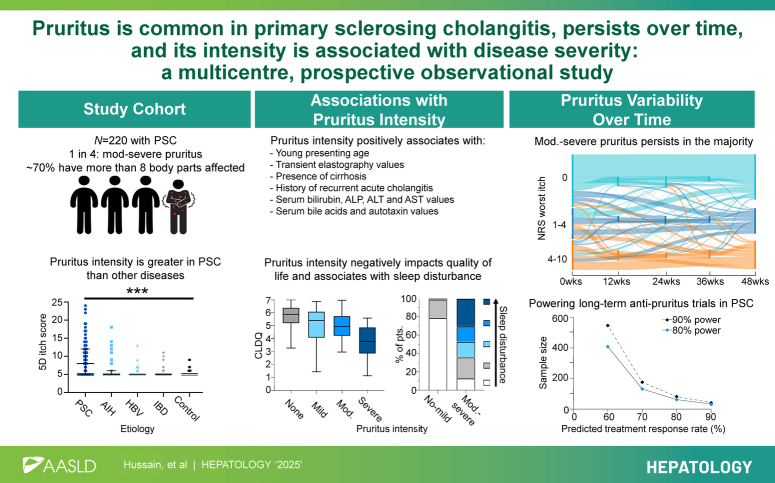
Pruritus, or itching, is a common and persistent symptom in patients with primary sclerosing cholangitis (PSC), affecting about 25% of patients at moderate to severe intensity. The intensity of itching is positively associated with markers of advanced liver disease, including cirrhosis and elevated serum bile markers. This symptom substantially reduces health-related quality of life (HRQoL). Notably, pruritus intensity remains stable over time in a majority of affected patients, although spontaneous improvements occur in some cases, suggesting variable natural history and the need for targeted therapy.
Study Background
Primary sclerosing cholangitis (PSC) is a chronic cholestatic liver disease characterized by inflammation and fibrosis of the bile ducts, leading to progressive liver damage, cirrhosis, and potentially liver failure. It is considered an orphan disease with limited effective treatments and variable progression rates. A major clinical challenge in PSC is controlling symptoms that affect daily living, particularly pruritus, which can be debilitating. Despite its frequency, the epidemiology, longitudinal course, and clinical correlates of pruritus in PSC have not been well defined in prospective cohorts. Understanding these facets is critical for guiding symptom-based therapeutic interventions and clinical trial design.
Study Design
This was a prospective, multicenter observational cohort study (ISRCTN:15518794) involving 220 patients with PSC across multiple centers. Participants were assessed face-to-face every 12 weeks, up to approximately 48 weeks, for the presence and severity of pruritus using both the itch numerical rating scale (NRS) and the multidimensional 5D-itch tool. Secondary assessments included liver disease severity markers—clinical, biochemical, radiological—and patient-reported outcomes relating to health-related quality of life, via EQ-5D-5L and the chronic liver disease questionnaire (CLDQ).
Key Findings
Among the 220 participants, 116 (53%) reported pruritus, with 56 (25%) experiencing moderate to severe itch defined as NRS worst itch score ≥4. Patients with pruritus presented with significantly higher median 5D-itch scores if they had advanced liver disease features such as cirrhosis (median 11.0 versus 8.0, p<0.01), elevated liver stiffness on transient elastography (>8.0 kPa; median 9.5 versus 5.0, p<0.01), and a history of ascending cholangitis (median 11.0 versus 7.0, p<0.01).
There were positive correlations between pruritus severity by the 5D-itch tool and biochemical markers including serum bilirubin, alkaline phosphatase (ALP), alanine aminotransferase (ALT), and aspartate aminotransferase (AST), underscoring the link between cholestatic liver injury and pruritus. Conversely, greater pruritus was strongly associated with lower HRQoL scores in both EQ-5D-5L and CLDQ instruments.
Longitudinal analysis over 48 weeks showed that 61.5% of patients with moderate to severe itch (NRS ≥4) had persistent pruritus intensity. However, 46.2% experienced a spontaneous clinically significant reduction in itch intensity (≥2 points on NRS) without initiation of new anti-pruritic treatments, indicating variable symptom trajectory over time.
Expert Commentary
This study robustly characterizes the prevalence and persistence of pruritus in PSC and establishes its association with established markers of disease severity. The findings reinforce pruritus as a hallmark symptom of advanced cholestasis and underscore its negative impact on patient quality of life. Importantly, the prospective, longitudinal design reveals that while pruritus often persists, spontaneous improvements can occur, highlighting the dynamic nature of symptom expression.
Clinicians should be alert to pruritus as a marker warranting careful disease assessment and symptom management. Existing anti-pruritic options in PSC remain limited and variably effective, emphasizing urgent need for therapeutic development. This cohort provides a valuable natural history reference for designing future interventional trials targeting pruritus in PSC, informing patient selection, symptom endpoints, and expected effect sizes.
Limitations include the observational design precluding causal inference and absence of mechanistic biomarker assessments to clarify itch pathophysiology. Additionally, symptom measures were patient-reported and may have subjective biases. Future studies could integrate mechanistic and therapeutic investigations to address underlying mechanisms and optimize management.
Conclusion
Pruritus affects a significant proportion of patients with primary sclerosing cholangitis, correlates with advanced liver disease, and imposes substantial detriment to quality of life. Its persistence over time in most patients, combined with variable longitudinal changes, presents both clinical challenges and opportunities for targeted intervention. This large, prospective multidimensional assessment provides a critical foundation to guide clinical care and future research on symptom-targeted therapies in PSC.
Funding and Clinical Trials Registration
The study was conducted under trial registration ISRCTN:15518794. Funding and specific sponsor details are not explicitly provided in the cited abstract. Further information should be referenced from the original publication in Hepatology.
References
- Hussain N, Motta RV, Gungabissoon U, et al. Pruritus is common in primary sclerosing cholangitis, persists over time, and its intensity is associated with disease severity: a multicentre, prospective observational study. Hepatology. 2025;84(2):353-366. doi:10.1002/hep.31529. PMID: 41348952.
- Gow PJ, Chapman RW. Primary sclerosing cholangitis: a review of pathogenesis, diagnosis and management. Gastroenterol Clin North Am. 2008;37(1):47-63.
- Trauner M, Fickert P, Stättermayer AF. Mechanisms of pruritus in cholestasis. J Hepatol. 2012;57(1):239-240.
This article was created using several editorial tools, including AI, as part of the process. Human editors reviewed this content before publication.