We use cookies

Our website uses essential cookies and, with your consent, additional cookies to measure performance and improve our services. Cookie Policy.

You can change your choice at any time.

MMedXYNews
HomeVideos
MedXY AI/MedXY News/Section: Diabetes & Endocrinology

Impact of Neighborhood Socioeconomic Deprivation on Diabetic Retinopathy Screening Adherence in Medicare Beneficiaries
MedXY Editorial Team•Sep 1, 2026•Diabetes & Endocrinology
Area Deprivation Indexretinopathy đái tháo đườngScreening adherencesocioeconomic factors

Highlight

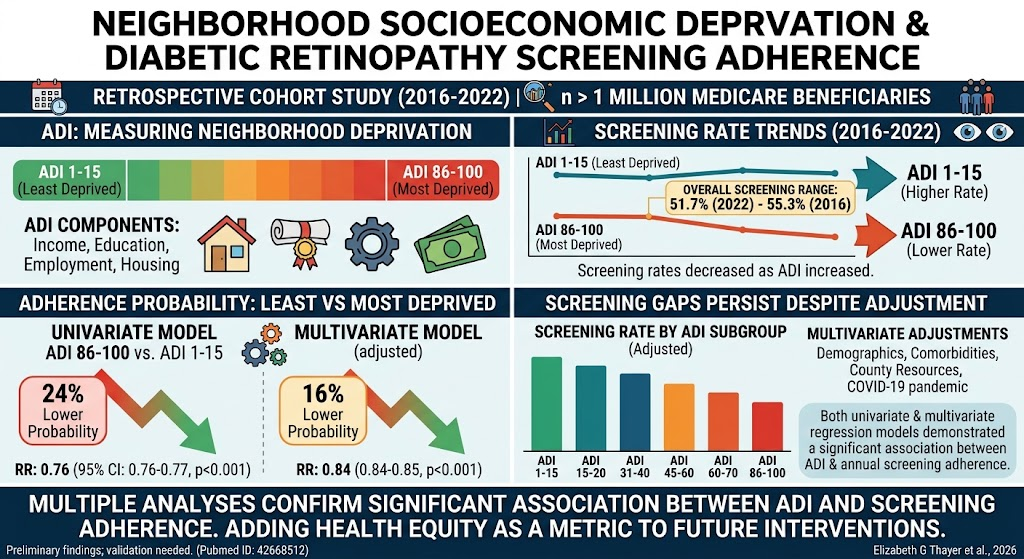
  • Higher neighborhood socioeconomic deprivation correlates with lower adherence to annual diabetic retinopathy screening guidelines.
  • Medicare beneficiaries living in the most deprived areas had up to 24% lower screening rates than those in the least deprived areas.
  • The association remains significant after adjusting for demographics, comorbidities, the COVID-19 pandemic, and local healthcare resources.
  • Findings underscore the importance of targeted interventions to improve screening adherence in socioeconomically disadvantaged communities.

Study Background

MedXY registered readers

Sign in free to continue reading

Create or use your MedXY account to unlock the complete article.

This article was created using several editorial tools, including AI, as part of the process. Human editors reviewed this content before publication.

Related articles

Open language-specific specialty feeds and department pages.

Fenofibrate Use and Reduced Risk of Sight-Threatening Diabetic Retinopathy in Type 2 Diabetes: Insights from UK Real-World DataFenofibrate use in type 2 diabetes patients is associated with a significant reduction in the risk of sight-threatening diabetic retinopathy compared to statins, based on UK primary care data over 12 years.Sep 18, 2026Common Anti-Inflammatory Drugs Linked to Lower Risk of Vision-Threatening Diabetic Retinopathy in Type 2 DiabetesA large retrospective cohort study suggests that cetirizine, ibuprofen, and prednisone use in adults with type 2 diabetes is associated with significantly reduced incidence of diabetic macular edema and proliferative diabetic retinopathy, hSep 15, 2026Area Deprivation Index and Cochlear Implant Candidacy: Socioeconomic Impact on Access and OutcomesNeighborhood deprivation measured by ADI correlates with poorer pre-implant speech recognition and quality of life but does not impact post-implantation benefits, highlighting socioeconomic disparities in cochlear implant access rather thanSep 1, 2026
Loading comments...
MedXY briefing

Get the free newsletter

Evidence-led clinical news, trends, and analysis—delivered to your inbox.

Ask MedXY AI

Most popular

Intimate Health
Five Benefits for Women Continuing Sexual Activity After Menopause
Intimate Health
Why Some Women Have a Strong Sex Drive—And Why Men Shouldn't Worry About It
Nursing & care
How often should a couple have sex?
Intimate Health
Classic Intimacy Recommendations: How to Help Women Reach Orgasm and Enjoy Mutual Pleasure
Intimate Health
What Makes a Woman "Physiologically Addicted" Is Never Money, But These Two Relationship Qualities
© 2026 MedXY
Contact usAbout usPrivacy PolicyMedXY story
Neighborhood Disadvantage and Mortality Risk After Major Hepatectomy: Insights from the Area Deprivation Index
This study links higher neighborhood deprivation with increased 90-day mortality following major hepatectomy, highlighting social determinants as vital preoperative risk factors.
Aug 31, 2026
Gene-Lifestyle Synergy in Diabetic Retinopathy DevelopmentThis study reveals how genetic risk for diabetic retinopathy can be significantly mitigated by healthy lifestyle choices, emphasizing universal behavioral interventions for prevention.Aug 23, 2026
Baseline Deep Capillary Plexus Ischemia as a Superior Predictor of Early Diabetic Retinopathy Complications Relative to Foveal Avascular Zone EnlargementDeep capillary plexus ischemia quantified by geometric perfusion deficit predicts earlier and higher risk of diabetic retinopathy complications than foveal avascular zone enlargement, underscoring GPDd’s clinical utility as a biomarkeAug 17, 2026