Home Dialysis Underuse: Historical Policy Barriers and Enduring Disparities
Highlights
Home dialysis offers similar survival to in-center hemodialysis at lower cost but remains underused in the United States.
The Medicare ESRD program (1972) was followed by a sharp decline in home dialysis, from 43% to 20% within four years.
Financial disincentives, changing patient demographics, and the rise of for-profit centers drove the decline.
Low-income and marginalized patients were disproportionately affected by debates over who could safely perform home dialysis.
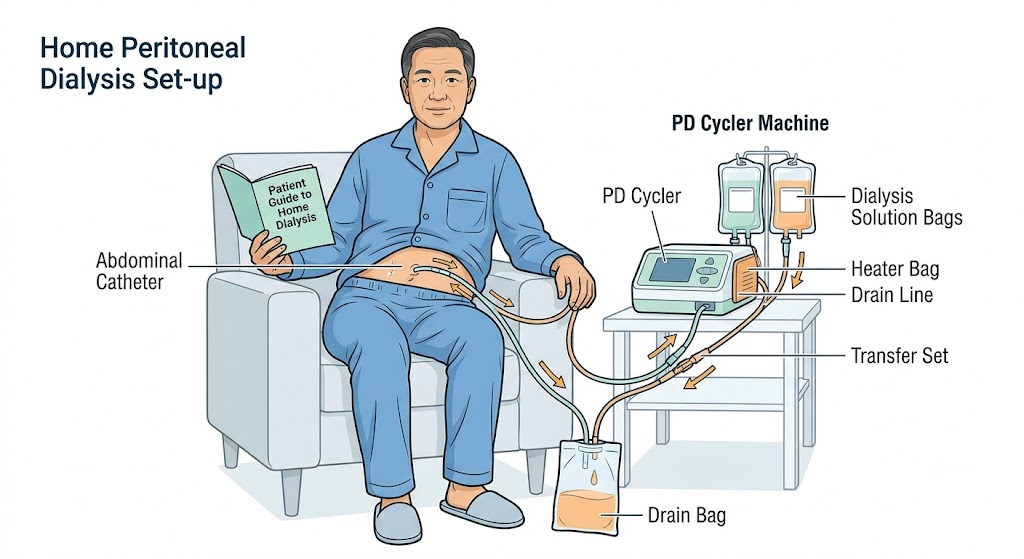
Home dialysis (peritoneal dialysis and home hemodialysis) offers flexibility and independence with comparable outcomes to in-center hemodialysis.
Underuse is rooted in historical financial and policy barriers, not clinical inferiority.
For-profit dialysis centers created powerful incentives against home dialysis in the 1970s.
Even after financial incentives for home dialysis were introduced in 1978 and 1983, use remained low due to socioeconomic barriers.
Background
For patients with end-stage renal disease (ESRD), dialysis is a life-sustaining treatment. Home dialysis — encompassing both peritoneal dialysis and home hemodialysis — offers greater flexibility, independence, and often a better quality of life compared with in-center hemodialysis (ICHD). Survival outcomes are similar, and home dialysis is generally less expensive for payers. Despite these advantages, home dialysis remains significantly underused in the United States, particularly among patients with low socioeconomic status. A recent historical analysis published in Annals of Internal Medicine traces the roots of this underuse to policy decisions and political dynamics dating back to the 1960s, revealing enduring barriers that continue to shape dialysis care today.
Key Advances
The Medicare ESRD Program and the Decline of Home Dialysis
The enactment of the Medicare End-Stage Renal Disease (ESRD) program in 1972 was a monumental victory for patients and the growing dialysis industry. However, its implementation had an unintended consequence: in the first four years, the rate of home dialysis among ESRD patients plummeted from 43% to 20%. According to the analysis, which drew on hundreds of archival records from dialysis organizations, for-profit companies, patient advocacy networks, and congressional hearings, this decline was driven by a combination of financial disincentives for home dialysis, a changing patient demographic, and the increased availability of ICHD at for-profit centers.
Financial Incentives and For-Profit Centers
As the ESRD program expenses skyrocketed in the mid-1970s, the government turned to home dialysis as a cost-saving measure. Yet low-income, marginalized patients soon found themselves at the center of a contentious debate between dialysis companies, nonprofit organizations, and government officials over who was capable of performing home dialysis. These debates raised fundamental questions about the ethics of for-profit medicine, patient representation in policymaking, and the potential for discrimination in incentive models.
Policy Responses and Persistent Gaps
Despite the implementation of financial incentives for home dialysis in 1978 and 1983, home dialysis remained underused. The analysis suggests that these policy measures failed to address deeper socioeconomic barriers, such as inadequate patient education, lack of home support, and limited access to nephrology care among disadvantaged populations. The persistence of these gaps points to a systemic failure to align financial incentives with patient needs and equity goals.
Expert Commentary
The historical perspective offered by Killingsworth and Golestaneh highlights how policy decisions can inadvertently entrench disparities in dialysis care. The shift away from home dialysis in the 1970s was not driven by evidence of inferior outcomes but by financial and political forces. Even today, home dialysis rates in the US lag behind many other developed countries. The authors argue that addressing the legacy of these barriers requires not only financial reforms but also a commitment to patient-centered care and equitable access to treatment options. The analysis underscores the importance of including patient voices in policymaking and ensuring that incentive structures do not discriminate against vulnerable populations.
Clinical and Translational Implications
For clinicians, the findings reinforce the importance of discussing home dialysis options with all eligible patients, especially those from marginalized communities. For policymakers, the historical record serves as a cautionary tale: financial incentives alone are insufficient if they do not address systemic barriers such as lack of infrastructure, education, and support for home dialysis. Efforts to increase home dialysis utilization must be paired with investments in training, remote monitoring, and social support services. The COVID-19 pandemic has renewed interest in home therapies, but without structural changes, the gains may be temporary.
Conclusion
The history of home dialysis in the United States reveals a pattern of underuse rooted in political and financial decisions rather than clinical outcomes. The Medicare ESRD program, while life-saving, inadvertently promoted in-center hemodialysis over home dialysis. Subsequent policy attempts to reverse this trend had limited impact because they did not address socioeconomic barriers. As the dialysis population grows and becomes more diverse, understanding this history is essential to designing equitable and effective policies that truly expand access to home dialysis.
References
Killingsworth LB, Golestaneh L. Dialysis and the Politics of Self-care: The Enduring Effects of Barriers Imposed on Home Dialysis. Annals of Internal Medicine. Published online July 21, 2026. PMID: 42475689.
This article was created using several editorial tools, including AI, as part of the process. Human editors reviewed this content before publication.