Background
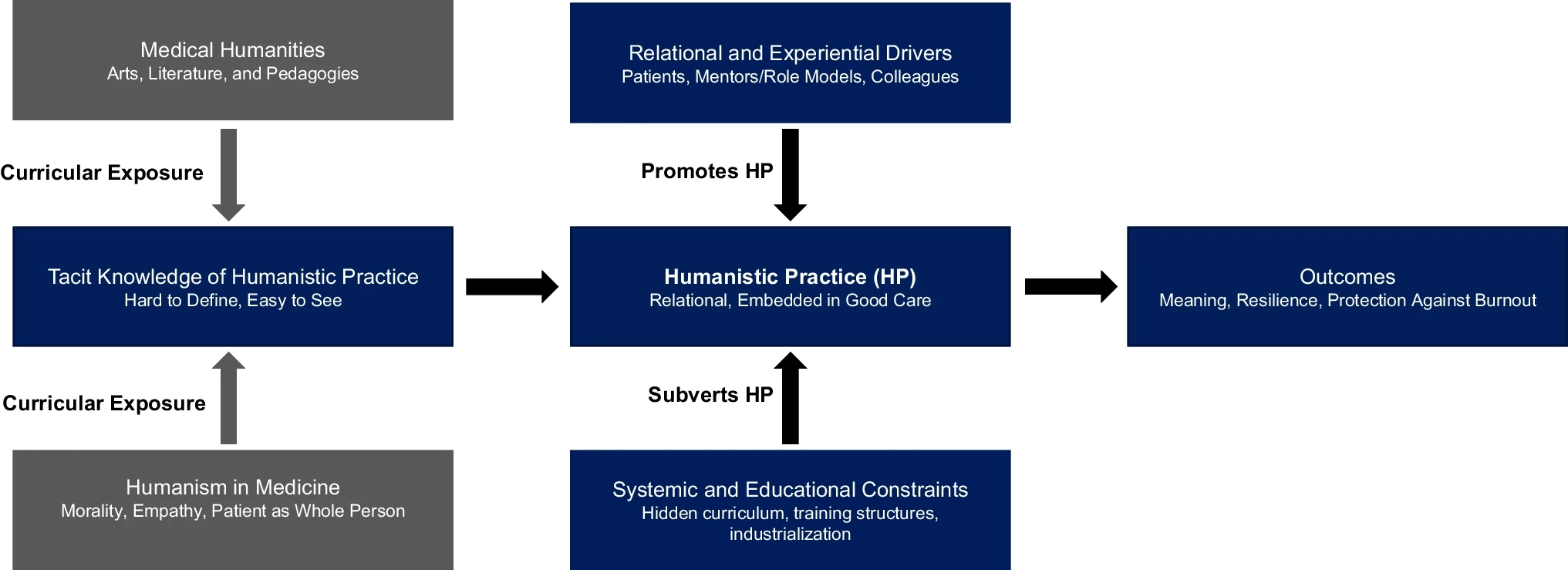
Formal medical education increasingly highlights the importance of humanistic practice (HP) — a care approach emphasizing empathy, patient-centered relationships, and moral integrity alongside clinical competence. Despite this curricular focus, the lived experiences of clinicians practicing humanistic care under modern healthcare demands remain underexplored. With rising pressures on physicians to maximize efficiency, standardization, and revenue generation, tensions arise that may erode the development and sustainment of HP. This knowledge gap impedes efforts to effectively nurture humanism during medical training and practice. The study by Volpe et al. addresses this critical issue by qualitatively investigating how practicing physicians conceptualize and develop HP amid contemporary healthcare realities, with implications for undergraduate medical education.
Study Design and Methods
This study employed a qualitative design using semi-structured focus groups to capture authentic physician perspectives. Twenty-six practicing U.S. physicians across multiple specialties and spanning a wide range of experience (0 to 53 years in practice, mean ~18) participated. They were recruited through professional listservs, investigator networks, and snowball sampling and grouped into four virtual focus groups, each lasting approximately 90 minutes. Open-ended questions explored their understanding of HP, the factors that promote or hinder its practice, and reflections on their medical training’s influence on HP development. Transcripts were iteratively analyzed through thematic coding complemented by reflexive discussion among investigators to identify core patterns and themes.
Key Findings
Five major themes emerged from participant narratives:
1. Defining Humanistic Practice as Relational and Integral to Competent Care: Physicians overwhelmingly viewed HP as inseparable from competent clinical care, framing it primarily through authentic relationships within the clinical encounter. Humanism was described not as an abstract ideal but as embodied through meaningful patient-physician connections.
2. Humanistic Relationships Foster Clinician Resilience: Relationships with patients, mentors, and inspiring role models not only cultivated HP but also provided emotional sustenance and resilience, helping physicians cope with the stresses of clinical practice.
3. Ambiguity in Defining and Measuring Humanism: Participants acknowledged conceptual ambiguities around HP, reflecting the subjective and multifaceted nature of humanism, which complicates formal assessment and curricular integration.
4. Systemic and Cultural Barriers to Humanistic Practice: Clinicians reported significant tensions between HP and healthcare system priorities focused on efficiency metrics, standardization, commercialization, and relative value units (RVUs). Such system-driven demands often conflicted with the time and relational attention needed to practice humanism.
5. The Influential Role of Medical Training Culture: Many described medical education as undermining their inherent humanistic tendencies, with some characterizing their formative training as “damaging” to their native humanism. The hidden curriculum, hierarchical culture, and pedagogical approaches often de-emphasized empathy and relational skills.
Expert Commentary
The findings resonate with a growing literature on physician burnout and moral distress associated with systemic pressures that marginalize patient-centered values. This study triangulates qualitative insights reinforcing that fostering HP requires more than curricular content; it demands cultural transformation both within medical education and healthcare institutions. The relational aspects that sustain HP also serve as buffers against burnout, suggesting dual benefits of supporting humanism. However, the study’s qualitative nature and modest sample size may limit generalizability. Future work should integrate quantitative measures and explore interventions targeting system-level impediments and educational reforms.
Conclusion
Physicians deeply value humanistic practice as a core component of professional identity and quality care, yet face pervasive systemic and cultural challenges that threaten its cultivation and sustainability. Ensuring that medical education prepares future clinicians not only with humanistic knowledge but also with skills to navigate and creatively respond to an industrialized healthcare environment is imperative. Addressing these issues comprehensively holds promise for preserving medicine as a profoundly human endeavor capable of resilience amidst evolving practice realities.
Reference
Volpe RL, Haidet P, Thompson BM, Dalke KB. Relationships, Resilience, and Relative Value Units: A Qualitative Study of the Promotion and Erosion of Humanistic Practice. J Gen Intern Med. 2026 Oct 20. doi: 10.1007/s11606-026-10719-6. Epub ahead of print. PMID: 42902119.