Highlight
Medicare introduced Advanced Primary Care Management (APCM) codes in January 2025 to enhance reimbursement for comprehensive primary care.
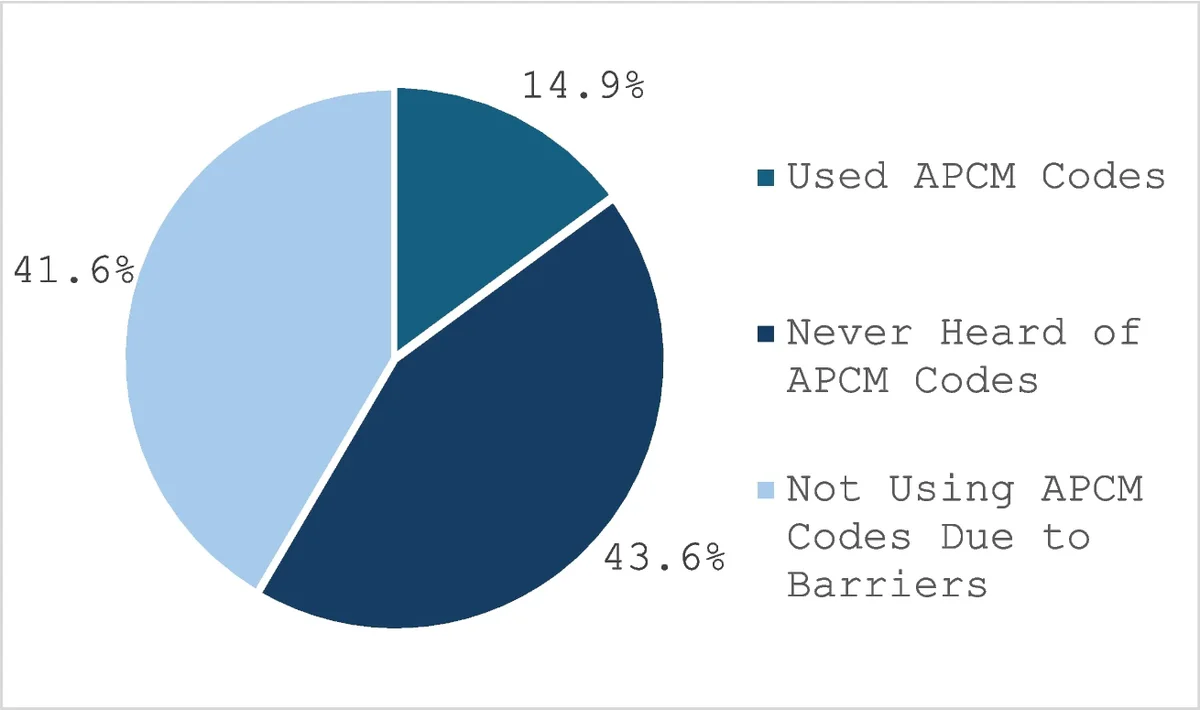
Only 14.9% of surveyed US primary care clinicians reported using APCM codes within the first year.
Major barriers to uptake included lack of knowledge about documentation, electronic health record (EHR) system limitations, and administrative burden.
Targeted educational and system-level interventions present opportunities to improve appropriate billing and support primary care practices financially.
Study Background
Primary care serves as the cornerstone of effective health systems by providing comprehensive, coordinated, and continuous care. Despite its foundational role, primary care has historically been undervalued in fee-for-service payment models, contributing to lower reimbursement rates compared to specialty care. To redress this imbalance and acknowledge the complexity of advanced primary care work, the Centers for Medicare & Medicaid Services (CMS) introduced the Advanced Primary Care Management (APCM) fee codes in January 2025. These codes are designed to better remunerate primary care clinicians for delivering comprehensive, proactive, and patient-centered care to Medicare beneficiaries.
The APCM codes represent one of the most significant Medicare reforms targeting primary care in recent years. The highest tier APCM billing code potentially offers an additional $1,200 or more annually per Medicare beneficiary to practices that meet defined criteria, reflecting the actual workload and clinical value primary care providers deliver. Such incentive could support improved care coordination, chronic disease management, and preventive services that are often undercompensated.
However, the success of this policy depends on whether primary care clinicians adopt these new billing codes. Prior research on adoption of newer Medicare codes suggests that administrative burden, lack of clinician familiarity, inadequate electronic health record integration, and workflow disruption frequently contribute to low uptake. Understanding the extent of APCM code adoption and identifying barriers are essential for refining policy implementation and ensuring that financial incentives reach their intended targets.
Study Design
This investigation employed a cross-sectional survey design administered in December 2025, approximately one year after APCM codes were introduced. The sample consisted of 404 US primary care clinicians actively engaged in patient care, surveyed via convenience sampling. Participants self-reported their use of APCM codes and described barriers to use if they were non-users.
The primary outcome was the proportion of clinicians reporting use of any APCM code. Secondary outcomes included reasons for non-use, which were categorized as unawareness of APCM codes or specific administrative barriers such as documentation requirements, electronic health record challenges, and administrative workload.
Key Findings
Among the 404 respondents, only 60 clinicians (14.9%) reported billing Medicare using APCM codes during the first year of availability. A substantial proportion—176 respondents (43.6%)—were non-users who indicated they had never heard of the APCM codes. Another 168 clinicians (41.6%) were aware of APCM codes but cited specific barriers preventing use.
Among these 168 clinicians indicating barriers, the most commonly reported challenges were as follows:
Uncertainty about documentation requirements (53.0%)
Electronic health record (EHR) system limitations or difficulties (38.1%)
Perceived excessive administrative burden or workflow disruption (33.3%)
These findings highlight that more than 85% of responding primary care clinicians had not incorporated APCM billing in their practice within a year, primarily due to lack of awareness or manageable administrative barriers rather than clinical appropriateness or patient-related factors.
Expert Commentary
From a clinical and policy perspective, these findings are instructive. The relatively low uptake of APCM codes contrasts starkly with their substantial financial incentives, suggesting missed opportunities to support primary care practices serving Medicare beneficiaries. The barriers identified—especially related to documentation clarity and EHR usability—are consistent with longstanding challenges in administrative aspects of primary care billing.
To enhance uptake, multi-level interventions are warranted. Educational campaigns led by Medicare, professional societies like the American Academy of Family Physicians, and healthcare organizations could improve clinician knowledge about APCM codes and simplify documentation processes. Simultaneously, collaboration with EHR vendors to optimize billing workflows and integrate APCM code functionalities could alleviate technical barriers. Streamlining administrative requirements and deploying practice coaching or billing assistance may further reduce workflow burden.
It should also be acknowledged that this study utilized a convenience sample, which might not be fully representative of all US primary care clinicians. Additionally, self-reported data may be limited by recall bias or social desirability. Longitudinal follow-up is necessary to assess whether educational and system changes impact uptake over time.
Conclusion
The introduction of Medicare APCM billing codes represents a promising advance to enhance the valuation of comprehensive primary care. However, the first-year uptake among US primary care clinicians remains modest, impeded largely by administrative and informational barriers rather than clinical constraints.
These findings illuminate a significant opportunity for Medicare policymakers, professional societies, and healthcare delivery systems to develop targeted strategies that facilitate clinician education, optimize electronic health record integration, and reduce administrative complexity. Such steps are critical to translate payment reforms into improved primary care practice sustainability and patient care outcomes.
Reference
Grumbach K, Duffy CMC, Gonzalez M, Stange KC, Greiner A, Etz RS. Primary Care Clinician Uptake of Medicare Advanced Primary Care Management Billing Codes. J Gen Intern Med. 2026 Oct 22. doi: 10.1007/s11606-026-10949-8. Epub ahead of print. PMID: 42918932.