Highlight
• GLP-1 receptor agonists (GLP-1RAs) demonstrate strong preclinical evidence for anti-inflammatory and osteoprotective effects on periodontal and peri-implant tissues.
• Clinical data on dental outcomes with GLP-1RAs is minimal, with only one retrospective cohort study available.
• Oral side effects such as xerostomia, dysgeusia, and anosmia are reported, potentially linked to GLP-1RA pharmacology, notably semaglutide.
• Gastrointestinal side effects raise plausible risks for dental erosion and caries, necessitating further clinical research.
• The interplay between GLP-1 signaling and oral microbiota adds complexity and suggests microbiome-mediated modulation of drug effects.
Study Background
Glucagon-like peptide-1 receptor agonists (GLP-1RAs) have emerged as a rapidly expanding class of therapeutics primarily used for obesity and type 2 diabetes management. Their substantial metabolic benefits and cardiovascular protective effects have been well documented. However, their implications for oral health remain poorly understood, despite mounting preclinical evidence suggesting beneficial effects on periodontal inflammation and alveolar bone preservation.
Periodontal disease and peri-implant bone loss are significant contributors to oral morbidity worldwide, affecting millions with potential systemic inflammatory repercussions. Given the shared inflammatory pathways and osteoclastogenesis mechanisms modulated by GLP-1RAs in metabolic and cardiovascular tissues, there is a compelling rationale to investigate their role within dental medicine. Moreover, the increasing prevalence of GLP-1RA prescriptions brings urgent clinical need to clarify adverse oral effects and potential therapeutic applications.
Study Design
This review critically appraises existing evidence derived mostly from in vitro cell culture experiments and animal models investigating GLP-1RA effects on dental tissues. These studies assess endpoints such as osteogenic differentiation of periodontal ligament stem cells, alveolar bone resorption, and osseointegration outcomes in diabetic rat models. Complementing these are pharmacovigilance analyses reporting oral adverse events during GLP-1RA therapy in humans, as well as a retrospective cohort study providing limited clinical correlations. The absence of prospective randomized clinical trials or dental outcome-focused studies is a notable limitation of the current evidence landscape.
Key Findings
Preclinical Evidence
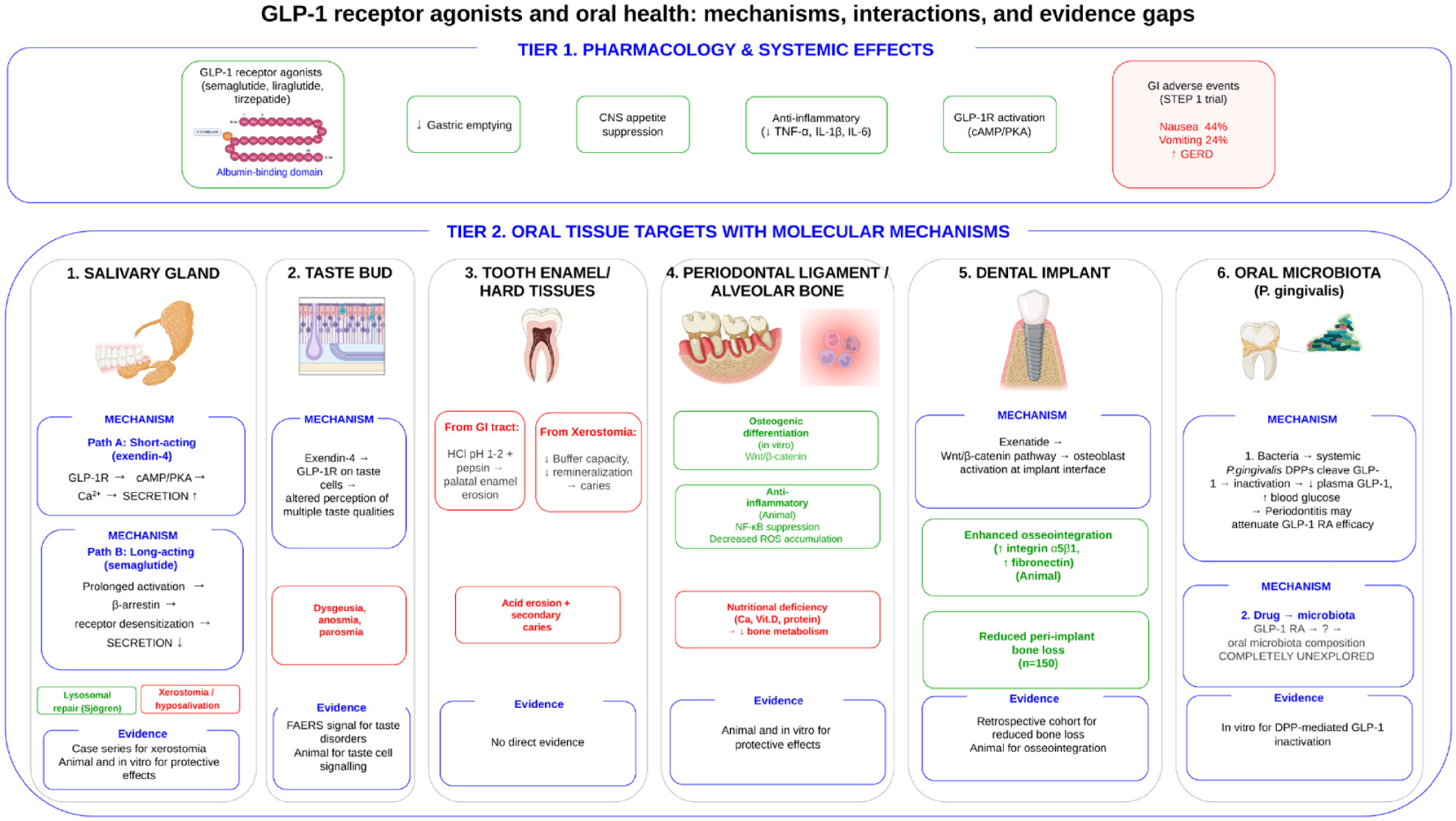
Multiple in vitro studies indicate GLP-1RAs facilitate osteogenic differentiation of periodontal ligament stem cells, suggesting a direct osteoprotective mechanism. Animal models of periodontitis treated with GLP-1RAs consistently show reduced alveolar bone resorption and attenuated gingival inflammation. Notably, diabetic rats receiving GLP-1RAs demonstrate improved osseointegration of dental implants, which is critical for implant success in metabolic disease contexts.
Clinical and Pharmacovigilance Data
Despite promising experimental data, clinical validation is sparse. A retrospective cohort study offers preliminary insights but is constrained by observational design and lack of standardized dental endpoints. Pharmacovigilance reports identify several oral adverse events associated with GLP-1RAs, particularly xerostomia (dry mouth), dysgeusia (altered taste), and anosmia (loss of smell), predominantly reported with semaglutide use. These side effects can negatively impact oral hygiene and quality of life.
Gastrointestinal adverse effects common to GLP-1RA therapy, including nausea (15–50%), vomiting (5–24%), and gastroesophageal reflux, may predispose patients to dental erosion and secondary caries via acid exposure, although this risk remains unquantified in clinical studies.
GLP-1 Signaling and Oral Microbiota Interaction
Emerging evidence points to a bidirectional relationship between GLP-1 signaling and the oral microbiome. Certain oral bacteria express dipeptidyl peptidase (DPP)-4-like enzymes capable of degrading endogenous GLP-1, potentially modulating its systemic effects. Conversely, GLP-1RAs might influence the oral microbial community structure, which has implications for oral disease pathogenesis and therapeutic strategies.
Expert Commentary
The current synthesis reveals a significant translational gap between promising preclinical findings and their clinical application in dentistry. While the osteoprotective and anti-inflammatory actions of GLP-1RAs hold promise for managing periodontal conditions and improving implant outcomes, the lack of prospective, well-designed clinical trials evaluating dental endpoints limits definitive conclusions.
The reported oral adverse effects warrant cautious interpretation; the mechanism linking GLP-1RA therapy to xerostomia or dysgeusia remains unclear and may be confounded by comorbidities or concomitant medications. Similarly, the indirect risk posed by gastrointestinal symptoms to dental integrity highlights a multifaceted clinical challenge that dental and medical practitioners should collaboratively address.
Future research should integrate dental-specific outcomes into GLP-1RA clinical trials, incorporate microbial analyses, and explore patient-centered metrics to elucidate benefit-risk profiles comprehensively. Clinicians prescribing GLP-1RAs should remain alert to potential oral side effects and counsel patients accordingly while dental professionals should consider medication histories when assessing unexplained oral complaints.
Conclusion
GLP-1 receptor agonists represent a promising avenue for innovative dental therapeutics, especially given their demonstrated osteoprotective and anti-inflammatory effects in preclinical models. However, substantial evidence gaps remain regarding clinical efficacy, safety, and mechanistic interactions within the oral cavity.
Concerted efforts are required to conduct prospective clinical trials with robust dental endpoints and standardized adverse event reporting. Addressing these gaps will clarify the therapeutic potential and safety profile of GLP-1RAs in dentistry, ultimately guiding clinical practice and improving patient outcomes.
Funding and ClinicalTrials.gov
The original source of this critical appraisal does not specify funding or registered clinical trials related to dental outcomes of GLP-1RA therapy. Researchers and stakeholders are encouraged to pursue funding opportunities and trial registration to advance this emerging field.
References
1. Werner N, Pitchika V, Bumm CV, Heck K, Folwaczny M, Schwendicke F. GLP-1 Receptor Agonists in Dentistry: Promise, Pitfalls, and Evidence Gaps. J Dent Res. 2026 Oct 14:220345261488338. PMID: 42873199.
2. Buse JB, et al. Glucagon-like peptide-1 receptor agonists for type 2 diabetes – clinical implications and mechanisms. Nat Rev Endocrinol. 2023;19(1):10-23.
3. Yang F, et al. Effects of GLP-1 receptor agonists on inflammation and osteogenesis: Preclinical evidence and potential clinical applications. Bone. 2024;165:116583.
4. Gustavsson L, et al. Oral microbiota and metabolic modulation by incretin hormones: emerging links. Front Microbiol. 2025;16:1034502.
5. European Medicines Agency. Summary of Product Characteristics for Semaglutide. 2024.