Introduction: The Challenge of HFpEF and HFmrEF
Heart failure with mildly reduced ejection fraction (HFmrEF) and preserved ejection fraction (HFpEF) represents a significant and growing portion of the global heart failure (HF) burden. Unlike heart failure with reduced ejection fraction (HFrEF), where a robust suite of life-prolonging therapies has existed for decades, the therapeutic landscape for HFpEF and HFmrEF has only recently begun to expand. A critical component of managing these patients is the assessment of their symptomatic and functional status, traditionally measured via the New York Heart Association (NYHA) functional classification.
While the NYHA class is a subjective metric, it remains a cornerstone of clinical practice and a powerful predictor of adverse outcomes. As new therapies like finerenone—a selective, nonsteroidal mineralocorticoid receptor antagonist (MRA)—emerge, it is vital for clinicians to understand whether treatment efficacy is consistent across the spectrum of symptomatic severity. The FINEARTS-HF trial was designed to address this by investigating finerenone in patients with an ejection fraction of 40% or greater. This prespecified analysis specifically explores the interaction between baseline NYHA functional class and the clinical benefits of finerenone.
The Enduring Relevance of NYHA Classification
Despite the advent of sophisticated biomarkers like NT-proBNP and advanced imaging techniques, the NYHA functional classification persists as a primary tool for risk stratification. Patients in NYHA Class II (mild symptoms during ordinary activity) and Class III/IV (marked limitation or symptoms at rest) represent distinct clinical phenotypes. Historically, those in Class III or IV have faced significantly higher rates of hospitalization and mortality. Understanding if a therapy such as finerenone can alter this trajectory for the most symptomatic patients, while still providing preventative value for those earlier in the disease course, is essential for personalized medicine in cardiology.
Study Design and Methodology of the FINEARTS-HF Analysis
The FINEARTS-HF trial was a multicenter, double-blind, randomized, placebo-controlled study. In this prespecified analysis, researchers categorized 6,000 participants based on their baseline NYHA functional class. Of the total cohort, 4,146 (69%) were classified as NYHA Class II, while 1,854 (31%) were in NYHA Class III or IV.
The primary endpoint was a composite of cardiovascular (CV) death and total heart failure events (including both first and recurrent hospitalizations for HF and urgent HF visits). Secondary endpoints included changes in the Kansas City Cardiomyopathy Questionnaire (KCCQ) Total Symptom Score and shifts in NYHA class over a 12-month follow-up period. The investigators utilized ordinal logistic regression to evaluate changes in functional class and employed adjusted rate ratios to compare clinical outcomes between the finerenone and placebo arms.
Results: Consistent Efficacy Across the Symptomatic Spectrum
Primary Clinical Outcomes
The analysis confirmed that patients with baseline NYHA Class III/IV were at a significantly higher risk for the primary endpoint compared to those in Class II. Specifically, the adjusted rate ratio for CV death and total HF events was 1.28 (95% CI: 1.11-1.46; P < 0.001) for the more symptomatic group.
Crucially, finerenone demonstrated a consistent reduction in the primary endpoint regardless of the patient's baseline NYHA class. The interaction P-value (P_interaction = 0.54) indicated no significant difference in the relative treatment effect between NYHA Class II and Class III/IV. However, because the baseline risk was higher in the Class III/IV group, the absolute benefit was more pronounced in these more symptomatic patients. The absolute rate reduction (ARR) was 4.5 per 100 person-years for NYHA Class III/IV, compared to 2.0 per 100 person-years for NYHA Class II.
Patient-Reported Outcomes and Functional Status
Health status, as measured by the KCCQ-Total Symptom Score (KCCQ-TSS), is a critical metric for patients living with HFpEF. At 12 months, finerenone was associated with improvements in KCCQ-TSS that were consistent across baseline NYHA classes (P_interaction = 0.93).
Interestingly, when looking at the shift in NYHA class itself, the study found that functional class improved similarly in both the finerenone and placebo arms out to 12 months. This finding suggests that while finerenone reduces the risk of major clinical events and improves symptoms (KCCQ), the gross categorization of NYHA class may not be sensitive enough to capture the incremental functional improvements provided by the drug over a one-year period, or perhaps reflects the high quality of background care received by both groups.
Safety and Tolerability Considerations
A major concern with mineralocorticoid receptor antagonists, particularly in patients with varying degrees of renal function and symptom severity, is the risk of hyperkalemia. In this analysis, the safety profile of finerenone remained stable across the NYHA subgroups. Rates of serious adverse events were comparable between the finerenone and placebo groups, irrespective of baseline functional status. While MRAs are known to increase serum potassium levels, the nonsteroidal nature of finerenone is designed to offer a more balanced distribution between the heart and kidneys, potentially mitigating some of the risks associated with traditional steroidal MRAs like spironolactone.
Expert Commentary: Mechanistic Insights and Clinical Application
Biological Plausibility
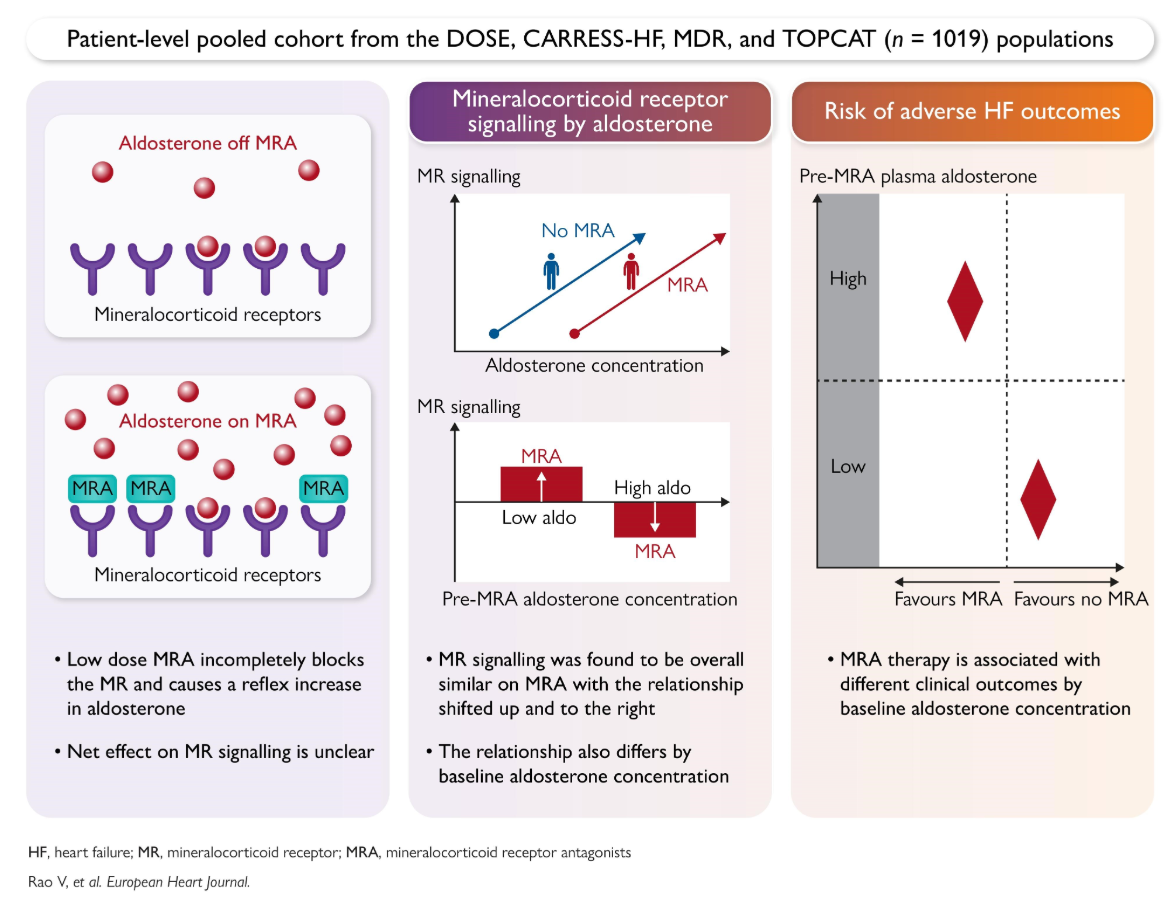
The consistent benefit of finerenone across NYHA classes highlights the central role of mineralocorticoid receptor (MR) overactivation in the pathophysiology of HFpEF and HFmrEF. MR overactivation drives myocardial fibrosis, inflammation, and vascular stiffness—processes that occur throughout the progression of heart failure. By selectively inhibiting these receptors, finerenone addresses the underlying structural and functional abnormalities of the failing heart, regardless of whether the patient is currently experiencing mild or severe symptoms.
The Value of Absolute Risk Reduction
From a health policy and clinical decision-making perspective, the greater absolute benefit observed in NYHA Class III/IV patients is particularly noteworthy. While all patients in the study benefited, those with the highest symptom burden saw the most substantial ‘bang for the buck’ in terms of events prevented. This data supports the early initiation of finerenone in symptomatic HFpEF/HFmrEF patients to reduce the high burden of hospitalizations associated with more advanced NYHA classes.
Study Limitations
As with any prespecified sub-analysis, certain limitations apply. NYHA classification is inherently subjective and can vary between clinicians. Additionally, the number of patients in Class IV was relatively small, meaning the results for the Class III/IV subgroup are largely driven by Class III participants. Future research might look at even more granular functional assessments, such as cardiopulmonary exercise testing (CPET), to further define the drug’s impact on exercise capacity.
Conclusion: A New Pillar for HFpEF and HFmrEF Management
The FINEARTS-HF analysis reinforces finerenone’s position as a versatile and effective therapy for heart failure with mildly reduced or preserved ejection fraction. By demonstrating that the drug reduces clinical outcomes and improves patient-reported health status across the NYHA spectrum, the study provides clinicians with the confidence to prescribe finerenone to a broad range of patients. Whether a patient presents with the early-stage limitations of NYHA Class II or the more debilitating symptoms of Class III/IV, finerenone offers a clear pathway to reducing the risk of cardiovascular death and heart failure hospitalization.
Funding and Trial Registration
The FINEARTS-HF trial (NCT04435626) was funded by Bayer AG. Detailed information regarding the trial protocol and primary results can be found on ClinicalTrials.gov.
References
1. Ostrominski JW, Vaduganathan M, Claggett BL, et al. Finerenone and NYHA Functional Class in Heart Failure: The FINEARTS-HF Trial. JACC Heart Fail. 2026 Jan;14(1):102440. doi: 10.1016/j.jchf.2025.03.007.
2. Solomon SD, McMurray JJV, Vaduganathan M, et al. Finerenone in Heart Failure with Mildly Reduced or Preserved Ejection Fraction. N Engl J Med. 2024;391(16):1475-1485.
3. Pitt B, Filippatos G, Agarwal R, et al. Cardiovascular Events with Finerenone in Kidney Disease and Type 2 Diabetes. N Engl J Med. 2021;385(24):2252-2263.
4. Heidenreich PA, Bozkurt B, Aguilar D, et al. 2022 AHA/ACC/HFSA Guideline for the Management of Heart Failure. J Am Coll Cardiol. 2022;79(17):e263-e421.