MMedXYNews
Ask AIHomeVideos
MedXY AI/MedXY News/Section: Critical Care
Critical Care

Evolving Trends in Late-Onset Sepsis Among Very Preterm Infants: Insights From a 14-Year Population-Based Study

MedXY Editorial TeamSep 4, 2026
neonatal infectionspathogen trendsvery preterm infantslate-onset sepsis

Highlight

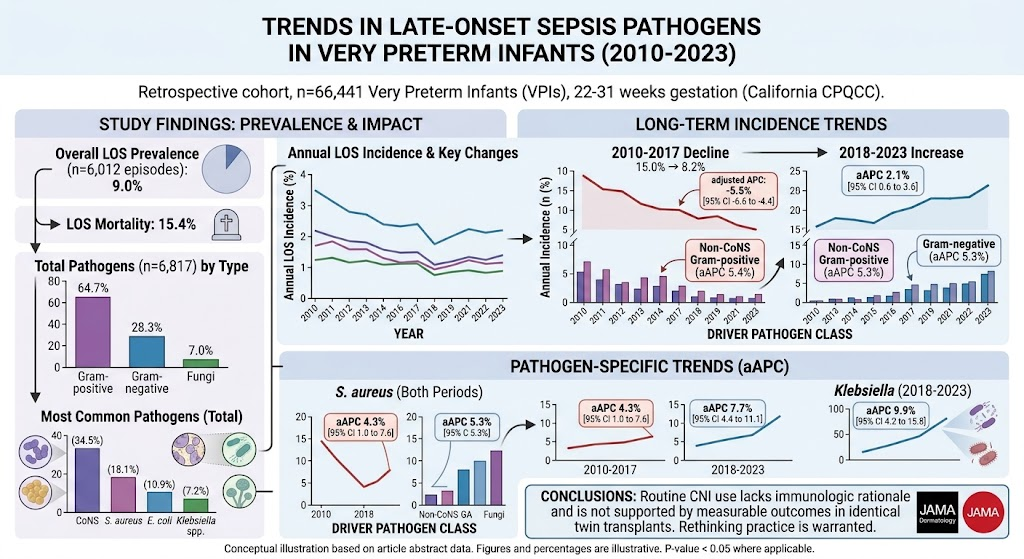
  • Late-onset sepsis (LOS) incidence in very preterm infants (VPIs) decreased significantly from 2010 to 2017 but has increased from 2018 to 2023.
  • The rising trend from 2018 onward is mainly driven by non-coagulase-negative staphylococci (non-CoNS) gram-positive bacteria and gram-negative bacteria, particularly Staphylococcus aureus and Klebsiella species.
  • Coagulase-negative staphylococci remain the most frequent pathogens overall, but their incidence has not driven recent increases.
  • LOS remains associated with high mortality (15.4%) in VPIs, emphasizing the ongoing need for targeted surveillance and prevention strategies.

Study Background

MedXY registered readers

Sign in free to continue reading

Create or use your MedXY account to unlock the complete article.

This article was created using several editorial tools, including AI, as part of the process. Human editors reviewed this content before publication.
Related articles

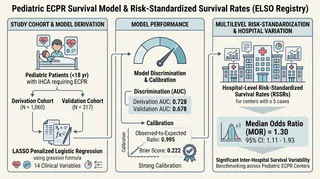
Analyzing Variability in Pediatric ECPR Survival After In-Hospital Cardiac Arrest: Development and Validation of a Risk-Standardized Survival Model

Critical CareNov 5, 2026

Navigating Uncertainty: The Future Impact of Artificial Intelligence in Critical Care through Ten Paradigms

Critical CareNov 5, 2026

Evaluating Cluster vs. Individual Randomization in Acute Care Trials: Insights from a Meta-Epidemiological Study

Critical CareNov 4, 2026
Loading comments...

Most read

  1. 01Intimate Health

    Five Benefits for Women Continuing Sexual Activity After Menopause

  2. 02Intimate Health

    Why Some Women Have a Strong Sex Drive—And Why Men Shouldn't Worry About It

  3. 03Nursing & care

    How often should a couple have sex?

  4. 04Cardiology

    Precision Medicine for Long QT Syndrome Type 2: Lumacaftor Corrects Trafficking Defects and Shortens QT Interval

  5. 05General Surgery

    Optimizing Postoperative Opioid Prescriptions After Intra-Abdominal Cancer Surgery: Comparing the 5x-Multiplier and 3-Tier Models

Go deeper with MedXY AI

Explore the evidence behind the news.

Ask AI
MedXY briefing

Stay informed

Medical news and research updates, delivered to your inbox.

© 2026 MedXY
Contact usAbout usPrivacy PolicyMedXY story