Extra-Endocrine Features in Infancy as Early Clues to Multiple Endocrine Neoplasia Type 2B: A Case Series from Bambino Gesù Children’s Hospital
Patient Information
This case series describes five pediatric patients diagnosed with Multiple Endocrine Neoplasia type 2B (MEN2B) managed at Bambino Gesù Children’s Hospital. All patients carried the RET proto-oncogene mutation M918T, known as the highest-risk variant for aggressive MEN2B phenotypes. Among the cases, four were confirmed de novo mutations, while one was maternally inherited. Patients presented in infancy or early childhood, with notable extra-endocrine features prompting genetic evaluations. The cohort included both sexes, typically under five years of age at initial presentation.
Diagnosis
The diagnosis of MEN2B was established based on clinical features combined with molecular confirmation of the RET M918T mutation. Prior to the typical endocrine manifestations, including medullary thyroid carcinoma (MTC) and pheochromocytoma, affected children exhibited early extra-endocrine signs. These included:
– Chronic constipation refractory to standard treatment
– Congenital clubfoot deformity
– Alacrimia (absence or reduced tear production)
These findings triggered targeted genetic testing, which led to early diagnostic confirmation. Comprehensive endocrinological assessment subsequently revealed medullary thyroid carcinoma or elevated calcitonin levels suggestive of early tumor development in most cases.
Differential Diagnosis
Potential alternative diagnoses considered and excluded included:
– Isolated congenital clubfoot without syndromic association
– Familial or idiopathic chronic constipation
– Alacrimia secondary to congenital lacrimal gland disorders or neurologic syndromes
– Other hereditary cancer syndromes such as MEN2A, familial medullary thyroid carcinoma without extra-endocrine features
The concurrence of multiple extra-endocrine signs alongside confirmatory RET mutation testing distinguished MEN2B from these conditions.
Treatment and Management
Upon diagnosis, the therapeutic approach included:
– Prophylactic or early total thyroidectomy to prevent or limit MTC progression, timed based on age and biochemical markers
– Surgical correction of musculoskeletal manifestations when indicated (e.g., clubfoot)
– Supportive management of alacrimia to prevent ocular surface damage (lubricating eye drops)
– Regular follow-up with biochemical tumor marker monitoring (calcitonin and carcinoembryonic antigen)
The presence of early extra-endocrine manifestations allowed for timely surgical intervention before metastatic disease onset, improving prognosis.
Outcome and Prognosis
All patients benefited from early genetic diagnosis guided by extra-endocrine clues, resulting in thyroidectomy at early stages of medullary carcinoma or preclinical disease. Early intervention aided in avoiding advanced cancer complications and reducing mortality risk. Long-term follow-up is essential for monitoring for pheochromocytomas and other MEN2B-related manifestations. Prognosis correlates positively with the early detection facilitated by recognition of extra-endocrine features.
Discussion
Multiple Endocrine Neoplasia type 2B (MEN2B) is an autosomal-dominant cancer predisposition syndrome caused by activating mutations in the RET proto-oncogene, most commonly the M918T mutation. MEN2B is characterized by aggressive medullary thyroid carcinoma and pheochromocytoma, but also distinctive extra-endocrine features including marfanoid habitus, mucosal neuromas, and autonomic dysfunction presenting in infancy. Early recognition of these signs is pivotal because the prognosis largely depends on the stage at which MTC is diagnosed.
This case series elucidates that subtle extra-endocrine features in infancy and early childhood—such as persistent constipation, congenital clubfoot, and alacrimia—can serve as important early clinical clues. Such manifestations are often overlooked or misattributed to isolated conditions, resulting in delayed diagnosis. Retrospective analysis of these cases demonstrates that awareness and suspicion of MEN2B in the presence of these features can prompt early genetic testing, enabling preemptive thyroidectomy before malignant progression.
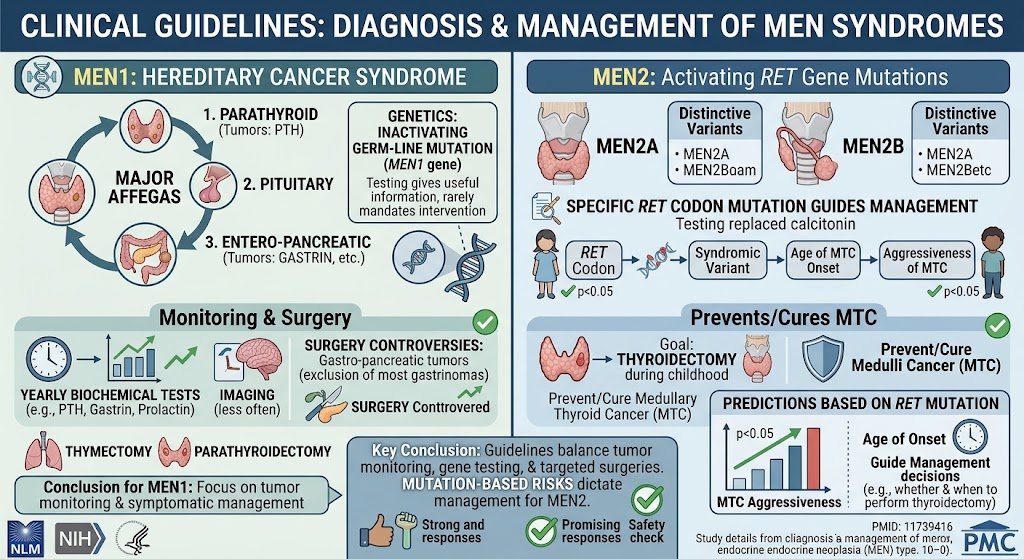
Current clinical guidelines emphasize genetic testing in children at risk for MEN2 syndromes; however, many cases are de novo mutations without family history and may only become clinically evident after MTC develops. Incorporating vigilance toward extra-endocrine manifestations in pediatric practice may bridge this gap, facilitating earlier diagnosis and improved outcomes.
Future efforts should focus on educating clinicians, especially pediatricians, neonatologists, and orthopedic specialists, about the early phenotypic spectrum of MEN2B. Multidisciplinary care involving endocrinologists, surgeons, geneticists, and ophthalmologists is crucial for optimal management.
This case series supports the concept that extra-endocrine manifestations are not merely ancillary but serve as sentinel signs in the natural history of MEN2B, underscoring their diagnostic value. Early identification and intervention enhance survival and reduce morbidity in this aggressive cancer syndrome.
References
1. Brandi ML, Gagel RF, Angeli A, et al. Guidelines for diagnosis and therapy of MEN type 1 and MEN type 2. J Clin Endocrinol Metab. 2001;86(12):5658-5671.
2. Wells SA Jr, Asa SL, Dralle H, et al. Revised American Thyroid Association guidelines for the management of medullary thyroid carcinoma. Thyroid. 2015 Jun;25(6):567-610.
3. Mirra G, Deodati A, Grossi A, et al. Extra-endocrine features in infancy as early clues to MEN2B. Pediatrics. 2026; doi:10.1542/peds.2025-075459. PMID: 42580739.
4. Mulligan LM. RET revisited: expanding the oncogenic portfolio. Nat Rev Cancer. 2014 May;14(5):307-19.
—
This report emphasizes the significance of early non-endocrine pediatric symptoms as red flags for MEN2B and advocates for a multidisciplinary approach to timely diagnosis and management.
This article was created using several editorial tools, including AI, as part of the process. Human editors reviewed this content before publication.