Dulaglutide Versus Insulin in Adolescents With Thalassaemia-Induced Diabetes: Improving Glycaemic Control and Metabolic Health in a High-Risk Population
Highlight
- Dulaglutide significantly improved glycaemic variability and overall glucose control compared to insulin in adolescents with transfusion-dependent β-thalassaemia (TDT)-induced diabetes.
- Treatment with dulaglutide enhanced pancreatic beta-cell function, evidenced by increased fasting C-peptide, and reduced serum ferritin, suggesting a beneficial impact on iron overload.
- Dulaglutide favorably modulated lipid profiles, reducing total cholesterol, which may confer cardiovascular risk reduction beyond glycaemic control.
- No serious adverse events or hypoglycaemic episodes were reported, supporting the safety of dulaglutide in this vulnerable population.
Study Background
Transfusion-dependent β-thalassaemia (TDT) poses a significant global health challenge, particularly in regions with high disease prevalence such as Egypt. Chronic iron overload resulting from regular blood transfusions leads to multiorgan damage, with diabetes and cardiovascular diseases (CVDs) representing major morbidity and mortality factors. The pathogenesis of diabetes in TDT involves pancreatic iron deposition causing beta-cell dysfunction and insulin resistance. Conventional management with insulin often struggles to achieve stable glycaemic control in these patients.
Glucagon-like peptide-1 receptor agonists (GLP-1 RAs) like dulaglutide have emerged as novel antidiabetic agents with benefits extending to cardiovascular protection. Although dulaglutide is approved for paediatric type 2 diabetes and adult CVD risk reduction, its role in thalassaemia-related diabetes remains unexplored. The DIADEMA trial was designed to address this gap by comparing dulaglutide to basal-bolus insulin therapy in adolescents with TDT-induced diabetes uncontrolled on metformin.
Study Design
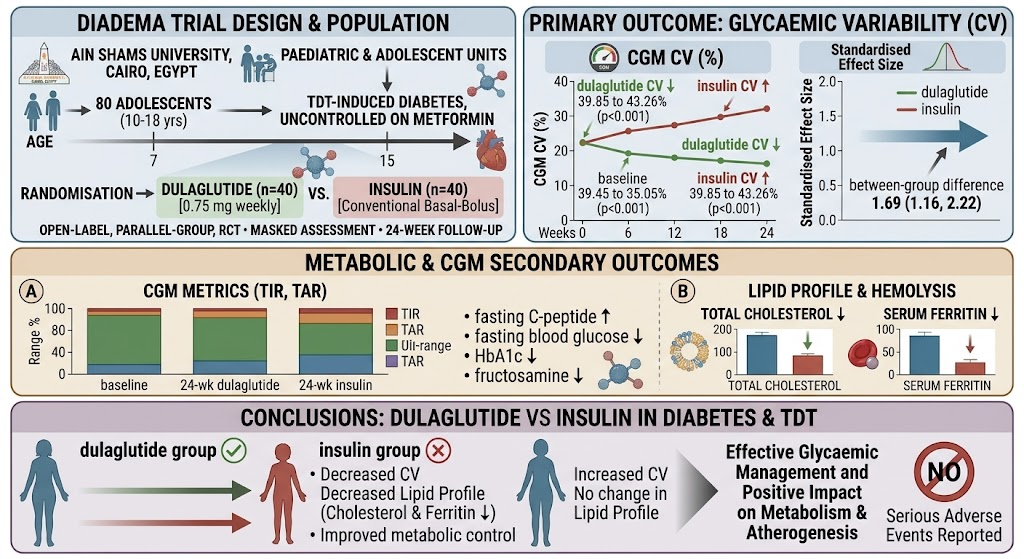
DIADEMA was an open-label, parallel-group, randomised controlled trial conducted at Ain Shams University, Cairo. Eighty adolescents aged 10-18 years with TDT-induced diabetes inadequately controlled on metformin were enrolled. Participants were randomised into two arms:
- Dulaglutide group: administered 0.75 mg subcutaneous injections once weekly.
- Insulin group: conventional basal-bolus insulin regimen.
Primary endpoint was the change in coefficient of variation (CV) of glucose levels—a measure of glycaemic variability—over 24 weeks. Secondary endpoints included fasting blood glucose, HbA1c, fructosamine, fasting C-peptide (reflecting beta-cell function), continuous glucose monitoring (CGM) derived metrics (time in range, time above range), serum ferritin (iron overload marker), lipid profile, and safety outcomes. Outcome assessors were blinded to treatment allocation.
Key Findings
Baseline characteristics between groups were comparable (p>0.05), ensuring robust internal validity. After 24 weeks, dulaglutide yielded significant improvements in multiple metabolic parameters:
- Glycaemic Variability: CV decreased from 39.45% ± 3.97% to 35.05% ± 4.30% (p<0.001), while insulin treatment paradoxically increased CV from 39.85% ± 4.99% to 43.26% ± 5.75% (p<0.001).
- Glucose Control: Time in range improved significantly with dulaglutide; fasting blood glucose, HbA1c, and fructosamine levels decreased compared to insulin.
- Pancreatic Reserve: Fasting C-peptide levels increased with dulaglutide, suggesting preservation or enhancement of beta-cell function.
- Iron Overload: Serum ferritin levels declined significantly in the dulaglutide group, potentially reflecting reduced iron toxicity or improved iron metabolism.
- Lipid Profile: Total cholesterol decreased significantly with dulaglutide, indicating a possible reduction in atherogenic risk.
- Safety: No serious adverse events or episodes of hypoglycaemia were reported in either group, confirming tolerability and safety of dulaglutide in this cohort.
The standardised effect size for the between-group difference in CV was a robust 1.69 (95% CI, 1.16–2.22), emphasizing the clinical relevance of dulaglutide’s glycaemic stabilisation compared with insulin.
Expert Commentary
The DIADEMA trial offers valuable clinical insights into managing a complex subgroup of diabetes patients. Adolescents with TDT-induced diabetes represent a difficult-to-treat population, with multifactorial diabetes pathogenesis combining iron-mediated beta-cell toxicity and insulin resistance. The superiority of dulaglutide in improving glycaemic variability and markers of pancreatic function aligns with its incretin-based mechanism enhancing endogenous insulin secretion and suppressing glucagon.
Remarkably, the reduction in serum ferritin highlights a potentially novel benefit of GLP-1 RAs on iron homeostasis, warranting mechanistic exploration. Improved lipid profiles further support dulaglutide’s cardioprotective promise, a critical consideration given the enhanced cardiovascular risk in thalassaemia patients.
Despite its open-label design, the trial’s methodology—randomisation, blinded outcome assessment, and use of CGM—strengthens the validity of findings. Limitations include the relatively short duration, single-centre setting, and absence of long-term cardiovascular outcome data. Larger, multi-centre and longer-term studies will be essential to confirm these exploratory findings and elucidate underlying biological mechanisms.
Conclusion
Dulaglutide surpasses conventional insulin therapy in improving glycaemic control, variability, pancreatic reserve, and metabolic parameters in adolescents with transfusion-dependent β-thalassaemia-induced diabetes. Its safety profile, combined with potential benefits on iron overload and lipid metabolism, offers an attractive alternative therapeutic strategy for this vulnerable group. These encouraging results advocate for integrating GLP-1 RAs into the diabetes treatment paradigm in TDT, pending further confirmatory research.
Funding and Clinical Trial Registration
This research did not receive specific grant funding from public, commercial, or not-for-profit sectors. The trial is registered at ClinicalTrials.gov (NCT07370922).
References
1. Adly AAM, Ismail EAR, Abdel Kader MSEM, Sadeq MR, Salah NY. Dulaglutide vs insulin in adolescents with thalassaemia-induced diabetes: effect on metabolism and atherogenesis (DIADEMA). Diabetologia. 2026 Aug 19; PMID: 42618811.
2. Cappellini MD, et al. Iron overload in Thalassemia: pathophysiology and management. Haematologica. 2017;102(11):1928-1937.
3. Marathe PH, et al. Mechanisms of impaired beta-cell function in beta-thalassemia. Pediatr Diabetes. 2012;13(7):552-560.
4. Marso SP, et al. Cardiovascular outcomes with GLP-1 receptor agonists in type 2 diabetes. N Engl J Med. 2016;375(4):311-322.
5. Zannad F, et al. Cardiovascular benefit of dulaglutide in type 2 diabetes: mechanisms and clinical implications. Diabetes Obes Metab. 2020;22(7):1093-1102.
This article was created using several editorial tools, including AI, as part of the process. Human editors reviewed this content before publication.