Congenital Tuberculosis in a 2-Week-Old Neonate With an Asymptomatic Mother
Patient Information
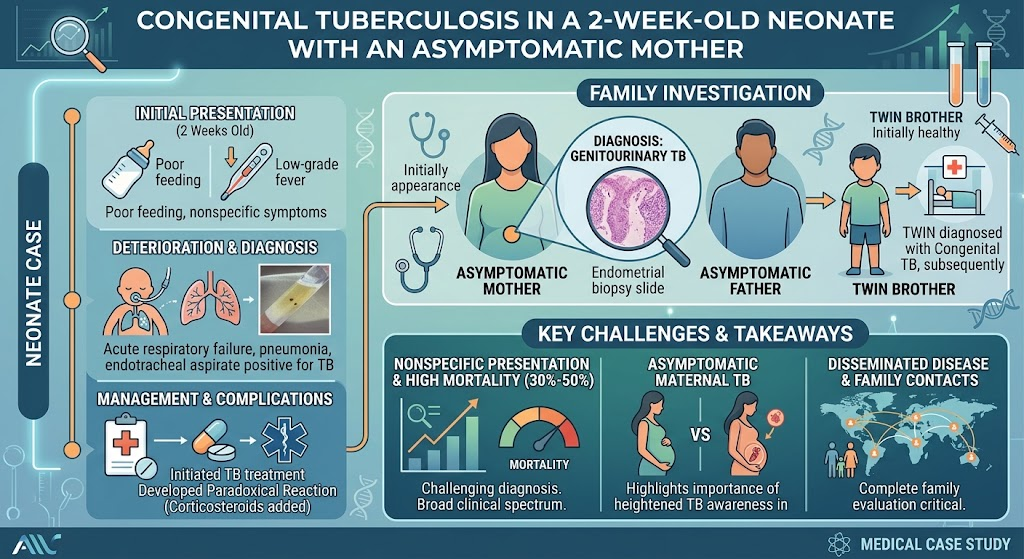
A 2-week-old male neonate was admitted with symptoms of poor feeding and low-grade fever. He was born at 36 weeks and 1 day via an uncomplicated diamniotic, dichorionic twin pregnancy. The infant had no significant perinatal complications reported, and his mother was asymptomatic with no known history of tuberculosis or recent illness. The father and the neonate’s twin brother were also asymptomatic at initial presentation.
Diagnosis
Initial blood, urine, and cerebrospinal fluid (CSF) cultures were negative for bacterial pathogens. Viral polymerase chain reaction (PCR) assays from nasopharyngeal and CSF samples also returned negative results. Despite this, the neonate’s condition did not improve; persistent poor feeding and elevated inflammatory markers warranted continued hospitalization.
By the fourth day of admission, the infant developed acute hypoxemic and hypercarbic respiratory failure complicated by apneas and progressive lung parenchymal disease, necessitating intubation and mechanical ventilation. Diagnostic bronchoscopy with endotracheal aspirate sampling revealed Mycobacterium tuberculosis, confirming the diagnosis of congenital tuberculosis.
Subsequent investigations revealed that the neonate’s twin brother was also diagnosed with congenital tuberculosis after hospital admission. The mother was later diagnosed with genitourinary tuberculosis based on findings from an endometrial biopsy, despite having been asymptomatic throughout the pregnancy and postpartum period.
Differential Diagnosis
The differential diagnosis initially included common neonatal infectious etiologies such as bacterial sepsis, viral pneumonia, and meningitis, given the infant’s nonspecific symptoms and inflammatory signs. These were ruled out by negative cultures and PCR tests. Other considerations included neonatal respiratory distress syndrome, congenital viral infections (e.g., CMV, HSV), and metabolic disorders but were less consistent with clinical and laboratory findings.
The diagnosis of congenital tuberculosis was considered later due to the progression of pulmonary disease, lack of response to broad-spectrum antibiotics, and unusual presentation, underscoring the diagnostic challenge of this rare condition.
Treatment and Management
After confirming Mycobacterium tuberculosis infection, the neonate was started on standard anti-tuberculosis therapy, including isoniazid, rifampin, pyrazinamide, and ethambutol. Supportive care consisted of mechanical ventilation for respiratory failure and close monitoring in the pediatric intensive care unit.
During treatment, the infant developed a paradoxical reaction characterized by clinical worsening despite adequate therapy, a known immune-mediated phenomenon in tuberculosis management. This required readmission and administration of corticosteroids to control inflammation and improve clinical status.
The neonate’s twin was also treated with similar anti-tuberculosis therapy following diagnosis. The mother underwent treatment for genitourinary tuberculosis based on biopsy findings.
Outcome and Prognosis
Both neonates responded to anti-tuberculosis therapy, including management of paradoxical reaction in the index case. Early identification and treatment have likely improved their prognosis, although congenital tuberculosis carries a high mortality risk estimated between 30% and 50%. Long-term follow-up is warranted to monitor for developmental sequelae and organ dysfunction.
Discussion
Congenital tuberculosis is exceedingly rare and often presents with nonspecific symptoms that overlap with common neonatal infections, leading to delays in diagnosis. This case emphasizes the importance of considering TB in differential diagnosis of neonates with persistent respiratory symptoms and unexplained systemic inflammation, particularly in populations or mothers at risk.
The unique features of this case include the asymptomatic presentation of the mother and initially asymptomatic twin brother, with the index neonate presenting severe progressive disease requiring intensive respiratory support. The detection of maternal genitourinary tuberculosis highlights the potential for vertical transmission even in the absence of pulmonary involvement or maternal symptoms, supporting the need for heightened vigilance during pregnancy.
Management of congenital tuberculosis is complicated by paradoxical reactions and the delicate balance of providing adequate antimicrobial therapy with supportive care. Corticosteroids may be required for inflammatory complications.
This case contributes to scarce literature on congenital tuberculosis, reinforcing the need for clinical awareness, early diagnostic evaluation using microbiologic and molecular tools, and multidisciplinary management involving neonatology, infectious diseases, and obstetric care.
References
1. Gupta A, Holla R. Congenital tuberculosis: a diagnostic challenge. J Clin Neonatol. 2015;4(1):45-47.
2. Marais BJ, Gie RP, Schaaf HS, et al. The natural history of childhood intra-thoracic tuberculosis: a critical review of literature from the pre-chemotherapy era. Int J Tuberc Lung Dis. 2004;8(4):392-402.
3. World Health Organization. Guidance for National Tuberculosis Programmes on the Management of Tuberculosis in Children. Geneva: WHO; 2014.
4. Golden MP, Vikram HR. Extrapulmonary tuberculosis: an overview. Am Fam Physician. 2005;72(9):1761-1768.
5. Tang PC, Hsu SH, Hsieh KS, et al. Paradoxical reaction of tuberculosis meningitis in a neonate successfully treated with corticosteroids. Pediatr Infect Dis J. 2009;28(2):172-174.
This article was created using several editorial tools, including AI, as part of the process. Human editors reviewed this content before publication.