Bariatric Surgery, Gestational Diabetes, and Perinatal Outcomes: Insights from a Large Population-Based Study in New South Wales
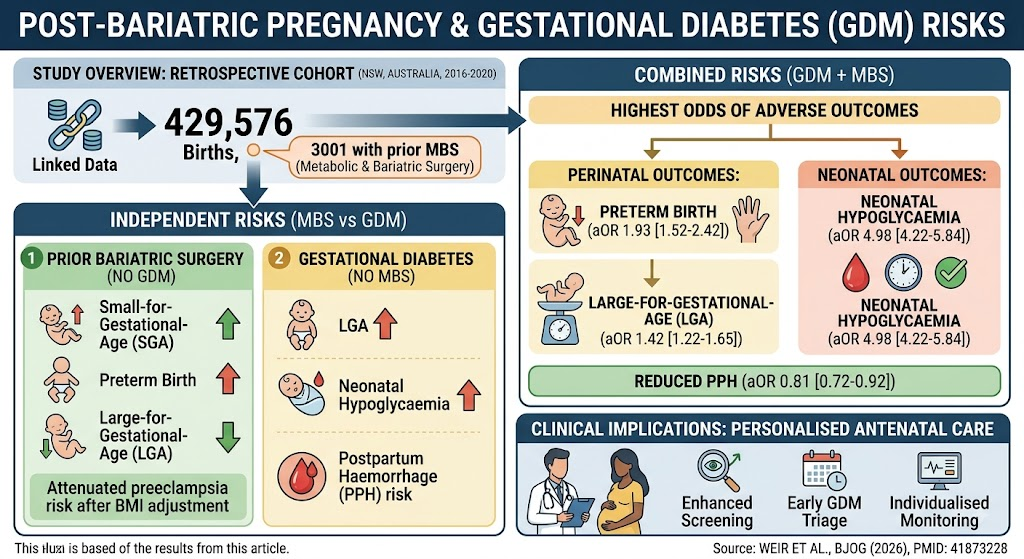
Highlight
1. Women with prior metabolic and bariatric surgery (MBS) and gestational diabetes mellitus (GDM) have the highest odds of adverse neonatal outcomes, including large-for-gestational-age infants, preterm birth, and neonatal hypoglycaemia.
2. Preeclampsia risk is modestly increased in women with GDM or prior MBS but is largely explained by body mass index.
3. Prior bariatric surgery is associated with reduced postpartum haemorrhage, while labor induction is more frequent in women with GDM or MBS history.
4. These findings highlight the complexity of perinatal risks in pregnant women with prior MBS and/or GDM and underscore the importance of tailored antenatal care.
Study Background
The increasing prevalence of obesity has led to a rise in metabolic and bariatric surgery (MBS) as a therapeutic intervention to improve obesity-related comorbidities, including type 2 diabetes and metabolic syndromes. Pregnancy after bariatric surgery is becoming more common, raising clinical questions about gestational outcomes. Gestational diabetes mellitus (GDM) complicates a significant proportion of pregnancies globally and is associated with adverse maternal and neonatal outcomes such as preeclampsia, preterm birth, and abnormal fetal growth patterns.
Although bariatric surgery often results in improved metabolic profiles, its impact on pregnancy outcomes remains complex. Some studies suggested improvements in GDM incidence post-surgery, while others indicated potential risks such as small-for-gestational-age (SGA) infants possibly due to maternal nutritional deficiencies. Understanding the independent and combined effects of MBS and GDM is essential for optimizing antenatal care strategies in this growing patient population.
Study Design
This retrospective population-based cohort study analyzed linked perinatal and hospital data encompassing 429,576 singleton births in New South Wales (NSW), Australia, from 2016 to 2020. The cohort included 3,001 women with a history of metabolic and bariatric surgery prior to their pregnancy. Women were stratified into four groups based on exposure status: no MBS/no GDM, MBS/no GDM, GDM/no MBS, and GDM/MBS.
Primary outcomes assessed were adverse maternal and neonatal events including preterm birth (<37 weeks gestation), large-for-gestational-age (LGA), small-for-gestational-age (SGA), neonatal hypoglycaemia, preeclampsia, postpartum haemorrhage, and induction of labor. Multivariable logistic regression models adjusted for potential confounders such as maternal age, body mass index (BMI), parity, smoking status, country of birth, and gestational age were employed to examine associations.
Key Findings
The study revealed that women who had both GDM and prior bariatric surgery exhibited the highest odds of adverse perinatal outcomes. Compared to women without GDM or MBS, this group had significantly increased adjusted odds for:
- Large-for-gestational-age infants (aOR 1.42; 95% CI 1.22–1.65)
- Preterm birth (aOR 1.93; 95% CI 1.52–2.42)
- Neonatal hypoglycaemia (aOR 4.98; 95% CI 4.22–5.84)
Women with either exposure alone also had elevated risks but to a lesser extent. Notably, preeclampsia risk was modestly elevated across all three exposure groups (MBS-only, GDM-only, and combined GDM/MBS) but diminished upon BMI adjustment, indicating obesity as a major mediating factor. Furthermore, postpartum haemorrhage risk was reduced in women with prior MBS (aOR 0.81; 95% CI 0.72–0.92), which warrants further investigation. Importantly, induction of labor was more commonly observed in all groups with MBS and/or GDM.
Additional subgroup analyses were not detailed in the abstract but would be critical for detecting potential effect modification by factors such as type of bariatric procedure, timing between surgery and conception, glycemic control, and nutritional status.
Expert Commentary
This large, population-level study offers valuable insights into the complex interplay between prior bariatric surgery and gestational diabetes on perinatal outcomes. The increased risk of LGA and neonatal hypoglycaemia in women with the dual exposures underscores that despite improved baseline metabolic health following bariatric surgery, gestational hyperglycemia remains a significant driver of fetal overgrowth and metabolic disturbance.
The attenuation of preeclampsia risk after BMI adjustment reinforces the central role of obesity in hypertensive disorders of pregnancy. Reduced postpartum haemorrhage risk in women with previous bariatric surgery is intriguing, possibly related to altered uterine blood flow or coagulation profiles, but requires confirmation and elucidation through prospective studies.
Limitations inherent to retrospective observational designs include potential residual confounding, lack of granular data on glycemic levels, nutritional status, and bariatric surgery subtypes. Additionally, the mechanisms contributing to the higher preterm birth rates among MBS and GDM groups remain speculative but may involve placental insufficiency or metabolic stress.
Current guidelines emphasize careful antenatal surveillance for women post-MBS, including nutritional optimization and tailored glycemic monitoring. This study reinforces the need for multidisciplinary pregnancy care involving endocrinologists, obstetricians, and nutritionists to mitigate perinatal risks.
Conclusion
The findings of this comprehensive population-based study demonstrate that gestational diabetes mellitus and prior metabolic and bariatric surgery independently and jointly elevate the risk for adverse maternal and neonatal outcomes, especially large-for-gestational-age infants, preterm birth, and neonatal hypoglycaemia. While bariatric surgery can confer metabolic benefits, vigilance in gestational management and personalized antenatal care strategies remain paramount to optimize outcomes in this high-risk group.
Future research directions should focus on prospective cohort studies to delineate the influence of different bariatric procedures, timing of conception post-surgery, and optimized protocols for GDM screening and management in post-bariatric surgery pregnancies. Addressing nutritional deficiencies and ensuring close glycemic control are likely critical components for improving maternal and neonatal health outcomes.
Funding and ClinicalTrials.gov
The abstract and article do not specify funding sources or clinical trial registration. Further details may be available in the full publication.
References
1. Weir T, Ibiebele I, Randall D, et al. Bariatric Surgery, Gestational Diabetes and Perinatal Outcomes: A Population-Based Study. BJOG. 2026;133(9):1753-1761. doi:10.1111/1471-0528.17356
2. American College of Obstetricians and Gynecologists. Practice Bulletin No. 190: Gestational Diabetes Mellitus. Obstet Gynecol. 2018;131(2):e49-e64.
3. Feig DS, Moses RG. Obesity and metabolic surgery before and during pregnancy: insights into disease management and mechanisms. Diabetologia. 2019;62(7):1078-1089.
4. Kjaer MM, Nilas L, Nilsson L, Christiansen M, Richelsen B. Bariatric surgery and pregnancy: an observational study on outcome and adverse events in a Danish national cohort. BJOG. 2022;129(6):956-963.
This article was created using several editorial tools, including AI, as part of the process. Human editors reviewed this content before publication.