Highlight
1. Approximately 65% of pregnant patients with preexisting depression or anxiety experienced a significant gap (>60 days) in antidepressant treatment during pregnancy.
2. Discontinuation of antidepressants, especially during the first and third trimesters, is associated with increased behavioral health-related emergency department visits.
3. Risk peaks in the second and ninth months of pregnancy and continues up to eight months postpartum.
4. Findings emphasize the importance of supporting continuation of antidepressant therapy during pregnancy to reduce maternal mental health crises.
Study Background
Depression and anxiety are common perinatal mental health disorders affecting a substantial proportion of pregnant individuals worldwide. These conditions can adversely affect both maternal and fetal outcomes if not optimally managed. Selective serotonin reuptake inhibitors (SSRIs) and serotonin-norepinephrine reuptake inhibitors (SNRIs) are frequently prescribed antidepressants with established efficacy in treating these conditions. However, concerns about potential teratogenic effects, neonatal adaptation syndrome, and long-term developmental outcomes often lead to the discontinuation of antidepressant therapy during pregnancy. Unplanned or abrupt cessation may precipitate symptom relapse or worsening, potentially culminating in mental health crises that necessitate urgent care. Despite extensive research on antidepressant safety, data on contemporary real-world patterns of discontinuation and subsequent maternal mental health outcomes remain limited, especially in the United States. This study addresses an important clinical and public health gap by assessing the frequency of antidepressant cessation during pregnancy and its association with behavioral health-related emergency department visits among women with diagnosed depression or anxiety.
Study Design
This retrospective cohort study analyzed a state-based private insurance claims database in Pennsylvania, including patients who delivered between January 1, 2023, and December 31, 2024. Eligibility required a pre-pregnancy diagnosis of depression or anxiety and documented active SSRI or SNRI prescriptions within three months preceding pregnancy. The exposure of interest was antidepressant continuation versus discontinuation during pregnancy, with discontinuation defined as either no medication fills or a medication gap exceeding 60 days after the last prescription fill. The primary endpoint was the rate of behavioral health-related emergency department (ED) visits during pregnancy and the postpartum period. The investigators conducted bivariate statistical comparisons to assess differences in mental health-related ED visit rates between continuing and discontinuing patients.
Key Findings
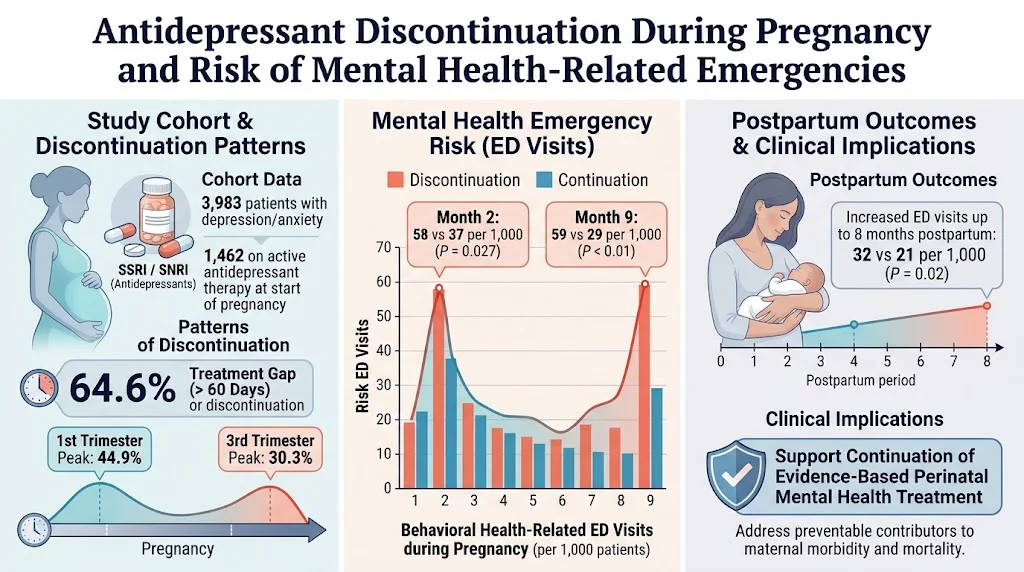
Out of 3,983 pregnant individuals with preexisting depression or anxiety, 1,462 (36.7%) were actively prescribed SSRIs or SNRIs prior to pregnancy. Among these:
260 patients (17.8%) had no antidepressant prescription fills during pregnancy.
945 patients (64.6%) experienced a medication gap of more than 60 days, indicating treatment discontinuation or interruption.
Notably, discontinuation occurred most frequently during the first trimester (44.9%), followed by the third trimester (30.3%). Before pregnancy, both groups (continuers and discontinuers) had similar rates of outpatient and emergency mental health service use, indicating comparable baseline severity.
During pregnancy, patients who discontinued antidepressants had significantly higher rates of behavioral health-related ED visits, with prominent peaks in the second month (58 vs 37 per 1,000; P=.027) and ninth month (59 vs 29 per 1,000; P<.01). This elevated risk extended into the postpartum period, with higher mental health-related ED visit rates within eight months after delivery among discontinuers (32 vs 21 per 1,000; P=.02).
These data suggest that interruption or cessation of antidepressant treatment is associated with increased acute mental health crises requiring emergency care. The timing of risk peaks indicates critical windows where close monitoring and intervention may be particularly beneficial.
Expert Commentary
The study provides compelling real-world evidence highlighting the complex balance clinicians face when managing antidepressant therapy in pregnancy. The high rates of discontinuation reinforce documented patient and provider concerns about medication safety in the perinatal period. However, the resultant elevated risk of emergency mental health visits confirms that untreated or undertreated perinatal depression and anxiety pose significant morbidity risks. These findings align with previous observational data and expert guidelines advocating judicious use of antidepressants when clinically indicated during pregnancy.
Importantly, the study’s reliance on claims data imposes inherent limitations, including possible misclassification of medication adherence, lack of granular clinical severity measures, and potential unmeasured confounding. Additionally, the cohort comprised privately insured patients in Pennsylvania, which may limit generalizability to broader populations including uninsured or publicly insured groups.
Clinicians should carefully individualize decisions, weighing risks of fetal exposure against maternal mental health deterioration. Shared decision-making enhanced by perinatal psychiatry consultation, psychoeducation, and close follow-up may help optimize outcomes. Moreover, enhanced support systems and policies to maintain antidepressant treatment continuity during pregnancy could reduce preventable maternal morbidity and improve overall perinatal care quality.
Conclusion
Antidepressant discontinuation during pregnancy remains common in patients with preexisting depression or anxiety and is associated with a notable increase in behavioral health-related emergency department visits both during pregnancy and postpartum. These findings underscore the critical need for clinical and health policy strategies focused on supporting appropriate continuation of evidence-based perinatal mental health treatments. Addressing this gap is vital for reducing maternal mental health emergencies, improving maternal-child outcomes, and mitigating preventable maternal morbidity and mortality.
Funding and Clinical Trials Registration
The study was funded by unspecified sources. No clinical trials registration was reported.
References
1. Zafman KB, Zhu Y, Kornfield SL, Smith-McLallen A, Srinivas SK. Antidepressant Discontinuation During Pregnancy and Risk of Mental Health-Related Emergencies. Obstet Gynecol. 2026 Oct 27. PMID: 42945501.
2. Yonkers KA, Wisner KL, Stewart DE, et al. The Management of Depression During Pregnancy: A Report from the American Psychiatric Association and the American College of Obstetricians and Gynecologists. Obstet Gynecol. 2009;114(3):703-713.
3. Vigod SN, Polcher K, Wilton AS, et al. Patterns of Antidepressant Use Before, During, and After Pregnancy Among Women in a Population-Based Cohort. Can J Psychiatry. 2014;59(10):519-527.