We use cookies

Our website uses essential cookies and, with your consent, additional cookies to measure performance and improve our services. Cookie Policy.

You can change your choice at any time.

MMedXYNews
HomeVideos
MedXY AI/MedXY News/Section: Diabetes & Endocrinology

Accelerating Radioiodine Therapy in Differentiated Thyroid Cancer: A Novel 24-Hour Diagnostic 131I Scan Protocol Post-rhTSH Administration
MedXY Editorial Team•Aug 25, 2026•Diabetes & Endocrinology
differentiated thyroid cancerDiagnostic 131I ScanRadioiodine TherapyRecombinant Human Thyrotropin

Highlight

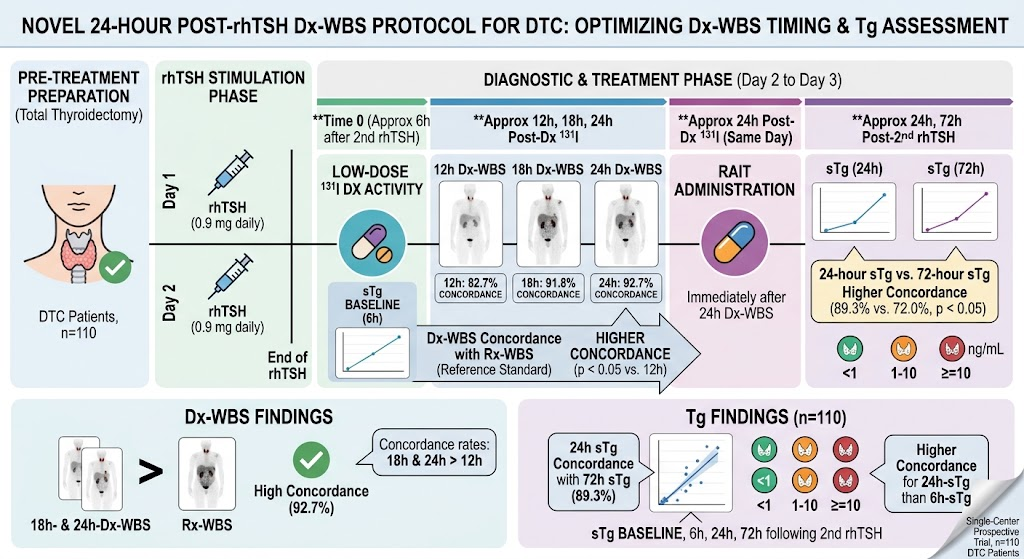
  • Implementation of diagnostic 131I whole-body scans within 24 hours after the second recombinant human thyrotropin (rhTSH) injection is feasible and reliable in differentiated thyroid cancer (DTC) patients.
  • High concordance rates (over 90%) between early diagnostic scans at 18 and 24 hours versus post-therapy scans support immediate pre-treatment disease evaluation.
  • Serum thyroglobulin (sTg) measurements at 24 hours post-rhTSH correlate strongly with 72-hour levels, reflecting consistent biochemical disease status.
  • This accelerated protocol enables radioiodine therapy (RAIT) within the same two-injection rhTSH cycle, potentially reducing costs and improving clinical workflow.

Study Background

MedXY registered readers

Sign in free to continue reading

Create or use your MedXY account to unlock the complete article.

This article was created using several editorial tools, including AI, as part of the process. Human editors reviewed this content before publication.

Related articles

Open language-specific specialty feeds and department pages.

Reevaluating Radioactive Iodine Therapy in T3b Differentiated Thyroid Cancer: Insights from a SEER-Based Cohort StudyThis cohort study of 6,638 T3b differentiated thyroid cancer patients found no survival benefit from adjuvant radioactive iodine therapy, suggesting the need for individualized treatment strategies and prospective studies focusing on recurrSep 17, 2026Long-Term Fatigue in Differentiated Thyroid Cancer Survivors: Early Predictors and the Non-Impact of Thyrotropin SuppressionA nationwide prospective study identifies early fatigue and poor mental health as key predictors of long-term fatigue in differentiated thyroid cancer patients, while thyrotropin suppression shows no association with fatigue.Aug 21, 2026Long-Term Risk of Second Primary Malignancies in Pediatric and Young Adult Differentiated Thyroid Cancer Survivors: A Four-Decade Real-World StudyPediatric and young adult survivors of differentiated thyroid cancer face a significant long-term risk of second primary malignancies, especially with radioactive iodine treatment, highlighting the need for extended surveillance and tailoreAug 17, 2026
Loading comments...
MedXY briefing

Get the free newsletter

Evidence-led clinical news, trends, and analysis—delivered to your inbox.

Ask MedXY AI

Most popular

Intimate Health
Five Benefits for Women Continuing Sexual Activity After Menopause
Intimate Health
Why Some Women Have a Strong Sex Drive—And Why Men Shouldn't Worry About It
Nursing & care
How often should a couple have sex?
Intimate Health
Classic Intimacy Recommendations: How to Help Women Reach Orgasm and Enjoy Mutual Pleasure
Intimate Health
What Makes a Woman "Physiologically Addicted" Is Never Money, But These Two Relationship Qualities
© 2026 MedXY
Contact usAbout usPrivacy PolicyMedXY story
Can Long-Term Thyroid Cancer Follow-Up Safely Move to Primary Care? Prospective Data Support De-Escalation After Excellent Response
A prospective cohort study suggests that differentiated thyroid cancer patients with sustained excellent response after at least 5 years of specialist follow-up can be safely transitioned to primary care with very low recurrence risk.
May 26, 2026
TSH Stimulation Methods Show Comparable Outcomes in Radioiodine-Avid Metastatic Differentiated Thyroid CancerIn radioiodine-avid metastatic differentiated thyroid cancer, rhTSH and mixed rhTSH/thyroid hormone withdrawal preparation produced comparable adjusted outcomes. Prognosis was driven mainly by metastatic burden and age, supporting individuaMay 16, 2026
Prolonged TSH Suppression in Postmenopausal Thyroid Cancer Patients Linked to Worse Cardiovascular and Quality-of-Life OutcomesStudy finds long-term TSH suppression in postmenopausal women with thyroid cancer correlates with poorer cardiovascular health, reduced quality of life, and increased osteoporosis risk compared to controls.Apr 30, 2026