Violence Against ICU Nurses: Study Quantifies Risk and Links to Longer Stays, Initial Aggression
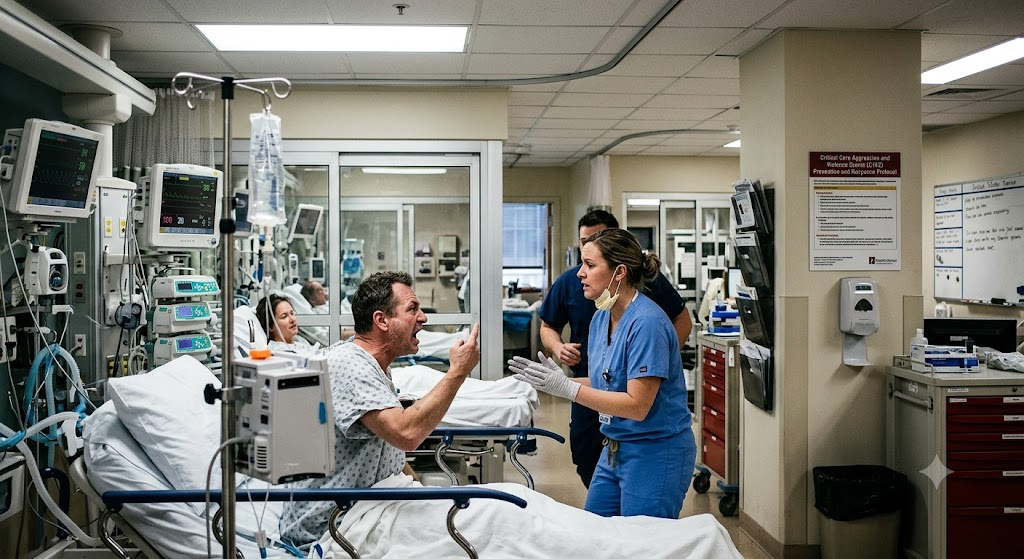
Workplace violence is a recognized threat to healthcare professionals, yet its frequency and patterns in intensive care units remain poorly characterized. A new retrospective study from University Hospital Basel provides granular data on the incidence, nature, and predictors of recurrent aggression and violence against ICU nurses, highlighting areas for targeted prevention.
Aggression or violence occurred in 14% of all nursing shifts over one year in a 35-bed ICU.
75% of incidents involved violence; most were physical (79%) and verbal (43%), often combined.
Recurrence (27% of cases) was independently associated with longer ICU stay, an initial aggressive event (aOR 6.9), and initial verbal violence (aOR 4.3).
Staff harm was rarely documented (1.3%), but patient complications—oversedation and restraint-related injury—were reported in 60% of incidents.
Study Snapshot
Design: Retrospective single-center cohort study
Setting: 35-bed medical-surgical ICU, University Hospital Basel, 2023–2024
Population: All clinical reports from ICU nurses over 2190 shifts
Primary outcome: Incidence and characteristics of aggression/violence events
Secondary outcome: Risk factors for recurrent events (≥24 h apart)
Analysis: Multivariable logistic regression adjusted for covariates
How the Study Was Conducted
Investigators screened clinical incident reports filed by nurses in a tertiary medical-surgical ICU over a 12-month period. Aggression was defined as hostile behavior or resistance to care without intent to harm; violence encompassed verbal, physical, or sexual acts intended to threaten or inflict harm. Recurrent events were defined as multiple episodes separated by at least 24 hours. The team extracted patient demographics, clinical characteristics, shift timing, incident type, and consequences for both staff and patients. Multivariable logistic regression identified independent predictors of recurrence.
What the Researchers Found
Across 2190 shifts, 308 aggressive or violent incidents were reported (14% of shifts). Most occurred during late (37%) or night (34%) shifts, and 75% were classified as violent. Violent incidents were frequently combined: 79% physical, 43% verbal, and 3% sexual. Patients were responsible in 97% of cases, most often male (71%), with a median age of 67 years, and 90% were emergency admissions. Approximately one-third had documented psychiatric comorbidities, drug abuse, or alcohol abuse.
Recurrent aggression or violence occurred in 27% of cases. Three factors independently predicted recurrence: longer ICU stay (adjusted odds ratio [aOR] 1.05 per additional hour), aggression as the first incident (aOR 6.9), and verbal violence as the first incident (aOR 4.3). Nurses (89% of reports filed by nurses; two-thirds female; median 7 years of experience) rarely documented personal harm (1.3%), but patient complications were reported in 60% of incidents, chiefly oversedation and physical harm from restraints.
What the Findings May Mean
The results underscore that violence in the ICU is not random; it clusters among patients with longer lengths of stay and a pattern that begins with either nonviolent aggression or verbal threats. The strong independent associations with initial incident type suggest that early warning signs are identifiable. The high proportion of patient complications associated with incidents raises concern that current management strategies—sedation and restraints—may themselves carry risk. The authors emphasize that while staff physical harm was rare, the psychological and operational toll of frequent violence may be underappreciated.
Strengths and Limitations
This study provides granular, shift-level data from a systematic review of incident reports over a full year, with clear definitions of aggression and violence. Limitations include its single-center design, reliance on self-reported forms (which may miss unreported events), and lack of adjustment for nurse staffing ratios, patient acuity, or unit culture. The definition of recurrence (≥24 h apart) is arbitrary and may not capture multiple same-shift incidents. Additionally, the study period predates the COVID-19 pandemic; applicability to post-pandemic ICU environments requires confirmation.
Implications for Practice and Research
Identifying patients at elevated risk for recurrent violence—particularly those with longer ICU stays and an initial episode of aggression or verbal violence—could allow proactive de-escalation strategies, environmental modifications, and targeted staff training. Hospitals may consider integrating these risk factors into safety huddles or handoff communication. Future multicenter prospective studies with standardized reporting and inclusion of nurse-level variables are needed to validate the findings and develop effective prevention bundles.
Funding, Disclosures, and Registration
Not reported in the abstract. The study was conducted at University Hospital Basel.
Reference:
Frei AI, Berger S, Grzonka P, Amacher SA, Kliem P, Gebhard CE, Hunziker S, Sutter R. Critical Care Aggression and Violence Events (CAVE) Against Nurses in the ICU: Epidemiology and Risk Factors for Recurrence. Crit Care Med. 2026 Jul 24. doi: 10.1097/CCM.0000000000007264. Epub ahead of print. PMID: 42496194.
This article was created using several editorial tools, including AI, as part of the process. Human editors reviewed this content before publication.