Highlight
Parents of children with medical complexity (CMC) encounter frequent safety challenges related to tube care in the home environment.
Common issues include supply shortages, device malfunction, and normalization of irregular care occurrences that may pose risks.
Parents develop personalized, innovative strategies to manage care safely but often do not communicate these challenges or solutions to healthcare teams.
Systemic, multipronged interventions are needed to support families and enhance safety in home-based care for CMC.
Study Background
Children with medical complexity represent a vulnerable population characterized by chronic conditions requiring substantial healthcare support, often including implanted medical devices such as feeding tubes. Advances in pediatric medicine have enabled many CMC to live at home rather than in hospitals or specialized care environments. However, home care involving medical devices introduces patient safety challenges, as parental caregivers assume complex medical responsibilities without the continuous oversight available in clinical settings. Prior research has indicated a correlation between implanted tubes and increased safety events, emphasizing a critical gap in understanding the real-world challenges faced by parents and the strategies they employ to mitigate risks.
Study Design
This qualitative study employed a virtual contextual inquiry methodology involving a national sample of 21 parents from English- and Spanish-speaking families of children with medical complexity. Data collection occurred asynchronously over one week, where parents self-submitted 267 messages comprising photos, text-based inputs, or audio recordings twice daily, describing their tube-related care practices and experiences. Following data submission, 18 parents participated in interviews to discuss these messages in greater depth. Content analysis was performed to classify and characterize the types of challenges faced and the strategies developed by parents, aiming to elucidate opportunities for system-level interventions.
Key Findings
Data analysis classified parent messages into challenges (13%), strategies (57%), or both (26%) regarding tube-related care safety.
Challenges
The principal challenges cited by parents included:
– Supply issues (24% of challenges): difficulties obtaining or managing necessary medical supplies essential for tube care.
– Device malfunction or failure (22%): instances where feeding tubes or associated devices did not operate as intended, potentially compromising care.
– Normalization of irregularities (20%): parents often perceived deviations from standard care procedures as routine or expected, potentially masking safety risks.
Other challenges involved managing sudden changes in the child’s condition, coordination with healthcare providers, and handling emergencies related to medical devices.
Parental Strategies
Parents reported diverse and often ingenious strategies to overcome safety challenges:
– Supporting activities of daily living tailored to their child’s needs (63%), such as adapting feeding techniques or positioning.
– Organization techniques (42%) to maintain supply readiness and streamline care routines.
– Tube-related preparation (40%), including preventive measures to avoid complications and meticulous hygiene practices.
These methods reflected parents’ deep expertise and resourcefulness, often developed independently or through trial and error.
Communication Gaps
Significantly, parents frequently withheld information about both challenges and coping strategies from their child’s healthcare team, possibly hindering coordinated care and targeted support.
Expert Commentary
The study underscores the critical need for healthcare systems to recognize and integrate parental experiences into the care continuum for CMC. Dr. Katherine L. High, a noted pediatric patient safety expert, emphasizes that “parental insights are invaluable and must be harnessed systematically to design interventions that are both practical and effective in the home environment.”
Limitations of the study include the relatively small sample size and potential selection bias of parents willing and able to participate in virtual data collection. Furthermore, the normalization of irregularities warrants further exploration to understand its psychological and safety impacts.
Conclusion
Parents of children with medical complexity perform complex tube-related care at home while navigating multiple safety challenges that require personalized and inventive strategies. The frequent lack of communication with healthcare providers about these issues signals an important gap that may impede safety improvements. To enhance patient safety for CMC in home care settings, multipronged systemic interventions—such as supply chain stabilization, device reliability enhancements, caregiver education, and improved parent-provider communication pathways—are essential. Recognizing and leveraging parental expertise can drive pragmatic solutions and improve clinical outcomes for this vulnerable population.
Funding and Trial Registration
No funding or clinical trial registration details were provided in the study abstract.
References
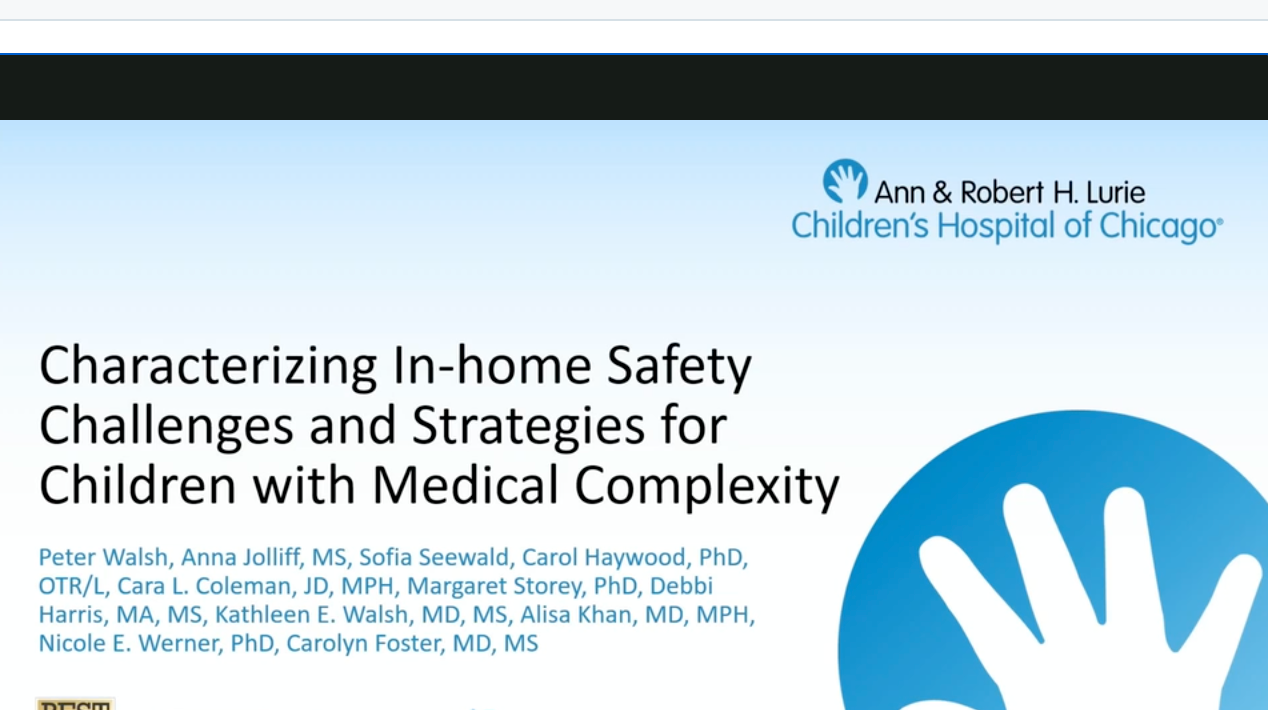
1. Walsh P, Jolliff A, Seewald S, et al. Characterizing In-Home Safety Challenges and Strategies for Children With Medical Complexity. Pediatrics. 2026 Oct 15. PMID: 42875029.
2. Cohen E, Kuo DZ, Agrawal R, et al. Children with medical complexity: an emerging population for clinical and research initiatives. Pediatrics. 2011 Nov;128(6):e1750-62. doi: 10.1542/peds.2011-0910.
3. Berry JG, Hall M, Kuo DZ, et al. Hospital utilization and characteristics of patients experiencing recurrent readmissions within children’s hospitals. JAMA. 2011 May 18;305(7):682-90.
4. For further context on patient safety in home care, see: Collins SA, Bradley CJ. Predictors of hospitalizations in children with medical complexity. J Pediatr. 2019;204:106-113.