We use cookies

Our website uses essential cookies and, with your consent, additional cookies to measure performance and improve our services. Cookie Policy.

You can change your choice at any time.

MMedXYNews
HomeVideos
MedXY AI/MedXY News/Tag: catheter ablation
MedXY News
EnglishTag

catheter ablation

Ask MedXY AI
type 2 diabetesclinical trialheart failureimmunotherapyobesitycardiovascular riskatrial fibrillationbiomarkerscritical careclinical trialsHypertensionartificial intelligenceCardiologyoncologypublic healthtype 1 diabetesdiabetesMortalityAlzheimer's diseasecardiovascular diseasebreast cancerepidemiology

Latest news

Tag

Reducing Procedure Time with CT-Guided Catheter Ablation in Ventricular Tachycardia: Insights from the InEurHeart Trial
Cardiologycatheter ablationComputed tomography

Reducing Procedure Time with CT-Guided Catheter Ablation in Ventricular Tachycardia: Insights from the InEurHeart Trial

By MedXY|Jul 4, 2026

The InEurHeart trial demonstrates that computed tomography-guided ventricular tachycardia ablation significantly reduces procedure duration while maintaining safety and efficacy compared to conventional methods in patients with ischemic car


Understanding Scar Evolution: How Post-Ablation Cardiac MRI Predicts Long-Term Outcomes in Ventricular Tachycardia
CardiologyCardiac Magnetic Resonancecatheter ablation

Understanding Scar Evolution: How Post-Ablation Cardiac MRI Predicts Long-Term Outcomes in Ventricular Tachycardia

By MedXY|Mar 7, 2026

The PAM-VT 2 study reveals that cardiac MRI (LGE-CMR) performed 3 to 6 months after ventricular tachycardia ablation can accurately predict long-term recurrence risks by analyzing scar stability and conducting channels.

Rethinking Rhythm Control for Secondary Stroke Prevention: Insights from the STABLED Randomized Clinical Trial
Clinical Updatesatrial fibrillationcatheter ablation

Rethinking Rhythm Control for Secondary Stroke Prevention: Insights from the STABLED Randomized Clinical Trial

By MedXY|Mar 6, 2026

This review analyzes the STABLED trial findings alongside major AFib rhythm control studies, evaluating the efficacy and safety of catheter ablation added to DOAC therapy for secondary stroke prevention.

Mapping the Maze: How 3D Imaging is Transforming VT Ablation in Congenital Heart Disease
Cardiologycatheter ablationcongenital heart disease

Mapping the Maze: How 3D Imaging is Transforming VT Ablation in Congenital Heart Disease

By MedXY|Mar 3, 2026

The CORECA study reveals that preprocedural 3D anatomic and substrate reconstruction from CT or MRI effectively identifies ventricular tachycardia targets in complex congenital heart disease, achieving 87.5% concordance with electroanatomic

SGLT2 Inhibition and Atrial Fibrillation Recurrence Post-Ablation: Insights from the DARE-AF Randomized Clinical Trial
Cardiologyatrial fibrillationcatheter ablation

SGLT2 Inhibition and Atrial Fibrillation Recurrence Post-Ablation: Insights from the DARE-AF Randomized Clinical Trial

By MedXY|Mar 3, 2026

The DARE-AF trial demonstrates that 10 mg of dapagliflozin for three months does not significantly reduce early arrhythmia recurrence or AF burden following catheter ablation in patients without existing indications for SGLT2 inhibitors.

Catheter Ablation and Edoxaban for Secondary Stroke Prevention: Critical Analysis of the STABLED Randomized Trial
Cardiologyatrial fibrillationcatheter ablation

Catheter Ablation and Edoxaban for Secondary Stroke Prevention: Critical Analysis of the STABLED Randomized Trial

By MedXY|Mar 2, 2026

The STABLED randomized clinical trial found that adding catheter ablation to standard edoxaban therapy did not significantly reduce the risk of recurrent stroke or composite cardiovascular outcomes in patients with atrial fibrillation and a

Nurse-Led Integrated Care Slashes Recurrence and Boosts Quality of Life After Atrial Fibrillation Ablation
Cardiologyatrial fibrillationcatheter ablation

Nurse-Led Integrated Care Slashes Recurrence and Boosts Quality of Life After Atrial Fibrillation Ablation

By MedXY|Mar 2, 2026

The NURSECAT-AF trial demonstrates that structured nurse-led care significantly improves quality of life and reduces arrhythmia recurrence and emergency visits by 80% in patients undergoing their first catheter ablation for atrial fibrillat

GLP-1 Receptor Agonists Significantly Reduce Atrial Fibrillation Recurrence and Mortality Following Catheter Ablation in Obese Patients
Cardiologyatrial fibrillationcatheter ablation

GLP-1 Receptor Agonists Significantly Reduce Atrial Fibrillation Recurrence and Mortality Following Catheter Ablation in Obese Patients

By MedXY|Feb 4, 2026

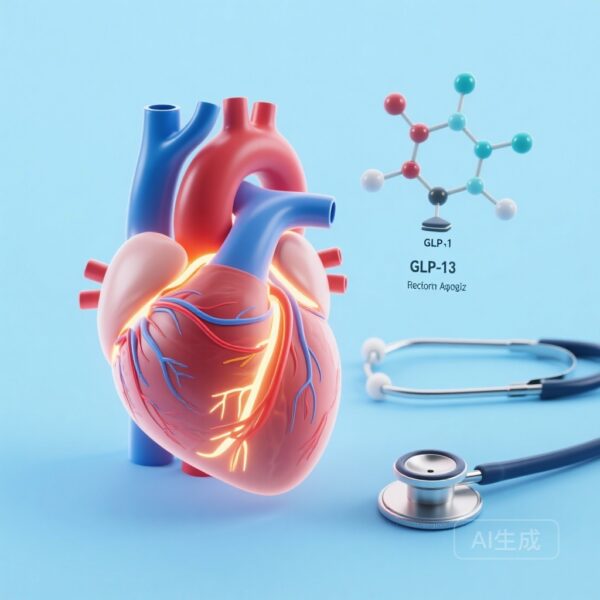
This large-scale real-world analysis reveals that GLP-1 receptor agonist therapy reduces atrial fibrillation recurrence by 18% and lowers all-cause mortality in obese patients following catheter ablation, highlighting a potent upstream stra

GLP-1 Receptor Agonists Associated with Lower Atrial Fibrillation Recurrence After Catheter Ablation in Obese Patients
Cardiologyatrial fibrillationcatheter ablation

GLP-1 Receptor Agonists Associated with Lower Atrial Fibrillation Recurrence After Catheter Ablation in Obese Patients

By MedXY|Feb 4, 2026

This real-world study demonstrates that GLP-1 receptor agonists significantly reduce AF recurrence, progression to permanent AF, and cardiovascular hospitalizations in obese patients following catheter ablation, highlighting their role as a

Rethinking Rhythm Management: Catheter Ablation Outperforms Medical Therapy in Atrial Fibrillation Patients with High Comorbidity Burden
Cardiologyatrial fibrillationcatheter ablation

Rethinking Rhythm Management: Catheter Ablation Outperforms Medical Therapy in Atrial Fibrillation Patients with High Comorbidity Burden

By MedXY|Jan 21, 2026

A post hoc analysis of the CABANA trial reveals that catheter ablation significantly reduces major cardiovascular events and improves quality of life in AF patients with high comorbidity burden (≥4 conditions), suggesting that multimorbidit

Is Indefinite Heart Failure Therapy Necessary After AF Rhythm Control? Insights from the WITHDRAW-AF Trial
Cardiologyatrial fibrillationcardiomyopathy

Is Indefinite Heart Failure Therapy Necessary After AF Rhythm Control? Insights from the WITHDRAW-AF Trial

By MedXY|Jan 17, 2026

The WITHDRAW-AF trial suggests that heart failure therapy can be safely withdrawn in patients with atrial fibrillation-mediated cardiomyopathy who achieve rhythm control and ejection fraction normalization, showing no significant decline in

Bailout Catheter Ablation: A Lifesaving Strategy for Refractory Ventricular Tachycardia in Early Acute Myocardial Infarction
Cardiologyacute myocardial infarctioncatheter ablation

Bailout Catheter Ablation: A Lifesaving Strategy for Refractory Ventricular Tachycardia in Early Acute Myocardial Infarction

By MedXY|Jan 3, 2026

A clinical study demonstrates that catheter ablation is a highly effective rescue therapy for refractory, scar-related ventricular tachycardia occurring in the early phase of acute myocardial infarction, challenging traditional management t

Cryoballoon Ablation Is Non‑Inferior to Radiofrequency for 1‑Year Arrhythmia Control in Persistent AF — but Left Atrium Shrinks Less: Insights from the CRRF‑PeAF Trial
Cardiologyatrial fibrillationcatheter ablation

Cryoballoon Ablation Is Non‑Inferior to Radiofrequency for 1‑Year Arrhythmia Control in Persistent AF — but Left Atrium Shrinks Less: Insights from the CRRF‑PeAF Trial

By MedXY|Nov 28, 2025

The randomized CRRF‑PeAF trial (n=499) found cryoballoon pulmonary vein isolation non‑inferior to radiofrequency ablation for 1‑year atrial tachyarrhythmia recurrence in persistent atrial fibrillation, but radiofrequency produced greater le

Does Anticoagulation After Successful AF Ablation Matter? The OCEAN Trial Shows No Clear Advantage of Rivaroxaban over Aspirin
Cardiologyanticoagulationatrial fibrillation

Does Anticoagulation After Successful AF Ablation Matter? The OCEAN Trial Shows No Clear Advantage of Rivaroxaban over Aspirin

By MedXY|Nov 10, 2025

In patients who underwent successful catheter ablation for atrial fibrillation at least one year earlier, rivaroxaban did not significantly reduce the composite of clinical or covert embolic stroke compared with aspirin over 3 years, while

Catheter Ablation vs Drug Therapy for Atrial Fibrillation: Insights from the CABANA Trial by Nonmodifiable Risk Profiles
Cardiologyatrial fibrillationcatheter ablation

Catheter Ablation vs Drug Therapy for Atrial Fibrillation: Insights from the CABANA Trial by Nonmodifiable Risk Profiles

By MedXY|Oct 7, 2025

This secondary analysis of the CABANA trial reveals catheter ablation significantly benefits AF patients with fewer than three nonmodifiable recurrence risk factors, underscoring the potential for personalized treatment strategies.

Reevaluating Long-Term Anticoagulation After Atrial Fibrillation Ablation: Insights from the ALONE-AF Randomized Trial
Cardiologyatrial fibrillationcatheter ablation

Reevaluating Long-Term Anticoagulation After Atrial Fibrillation Ablation: Insights from the ALONE-AF Randomized Trial

By MedXY|Dec 12, 2025

The ALONE-AF trial reveals that discontinuation of oral anticoagulants post-successful atrial fibrillation ablation may reduce stroke, systemic embolism, and major bleeding compared to continued therapy, informing anticoagulation strategies

Ask MedXY AI

Most popular

Intimate Health
Five Benefits for Women Continuing Sexual Activity After Menopause
Intimate Health
Why Some Women Have a Strong Sex Drive—And Why Men Shouldn't Worry About It
Nursing & care
How often should a couple have sex?
Intimate Health
Classic Intimacy Recommendations: How to Help Women Reach Orgasm and Enjoy Mutual Pleasure
Intimate Health
What Makes a Woman "Physiologically Addicted" Is Never Money, But These Two Relationship Qualities
© 2026 MedXY
Contact usAbout usPrivacy PolicyMedXY story