Predicting Long-Term Mortality: Insights from a Multi-Metabolite Signature in the PREDIMED Trial
Highlight
1. A multi-metabolite risk score derived from baseline plasma samples predicts long-term mortality in high-risk populations.
2. Consistent associations were found across genders and in external cohorts, emphasizing the robustness of the findings.
3. The study identifies specific metabolites associated with lower and higher mortality risk, paving the way for future clinical applications.
Study Background and Disease Burden
Metabolic disorders and chronic diseases account for a significant burden on global health systems. Identifying biomarkers that can predict the risk of all-cause mortality is crucial for improving preventive strategies and interventions in at-risk populations. The PREDIMED (Prevención con Dieta Mediterránea) trial was designed to assess the health effects of the Mediterranean diet in individuals at high cardiovascular risk. Prior research has shown that metabolomic profiling can serve as an effective tool for discovering pathways related to disease mechanisms and overall mortality. Given this context, the current study aimed to evaluate whether a multi-metabolite signature could serve as a robust predictor of long-term mortality in participants from this trial.
Study Design
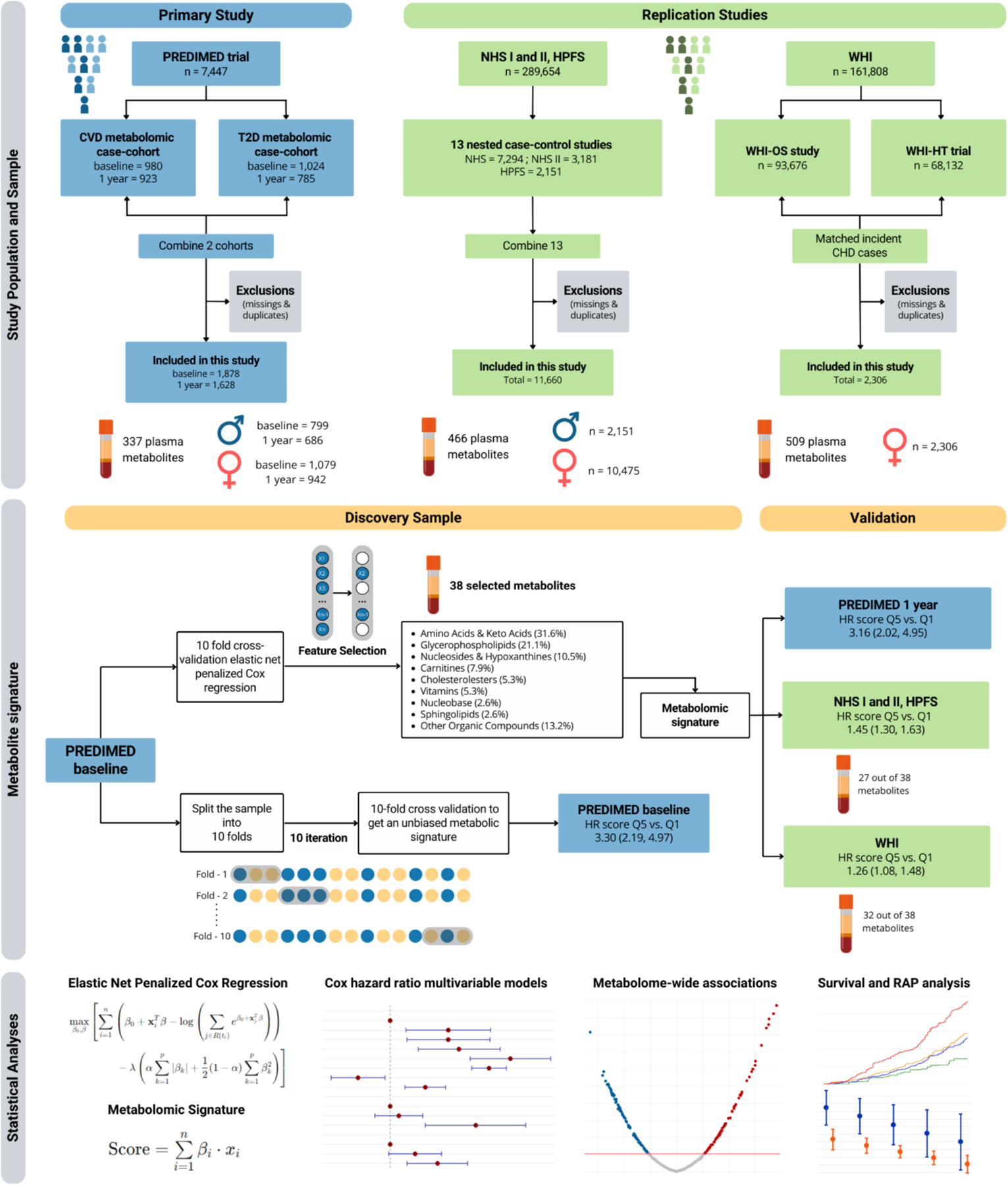
The study was conducted on a subsample of participants from the PREDIMED trial, which included 7447 participants primarily aged 55 to 80 years at baseline. The analytical cohort consisted of 1878 individuals with complete baseline plasma metabolomic profiling data (mean age = 67 years). Among these participants, 1628 provided repeat plasma samples after one year for validation purposes. The study analyzed 337 candidate baseline plasma metabolites, utilizing a long-term follow-up from 2003 to 2019 to ascertain associations between metabolite levels and all-cause mortality. The primary endpoint was all-cause mortality during the follow-up period.
Key Findings
Out of the initial 337 metabolites, a total of 154 were significantly associated with all-cause mortality after correcting for multiple comparisons. Among these, 85 showed inverse associations while 69 showed direct associations. Notably, the following metabolites were identified:
– **Inverse Associations**:
– **SM 22:1**
– **PC-plasmalogen 38:7**
– **Cholesterol esters**
– **Creatine**
– **Gamma-aminobutyric acid (GABA)**
– **Serine and other amino acids**
– **Direct Associations**:
– **Dimethylguanidino valeric acid (DMGV)**
– **Acylcarnitines**
– **Nucleosides and hypoxanthines**
– **Creatinine**
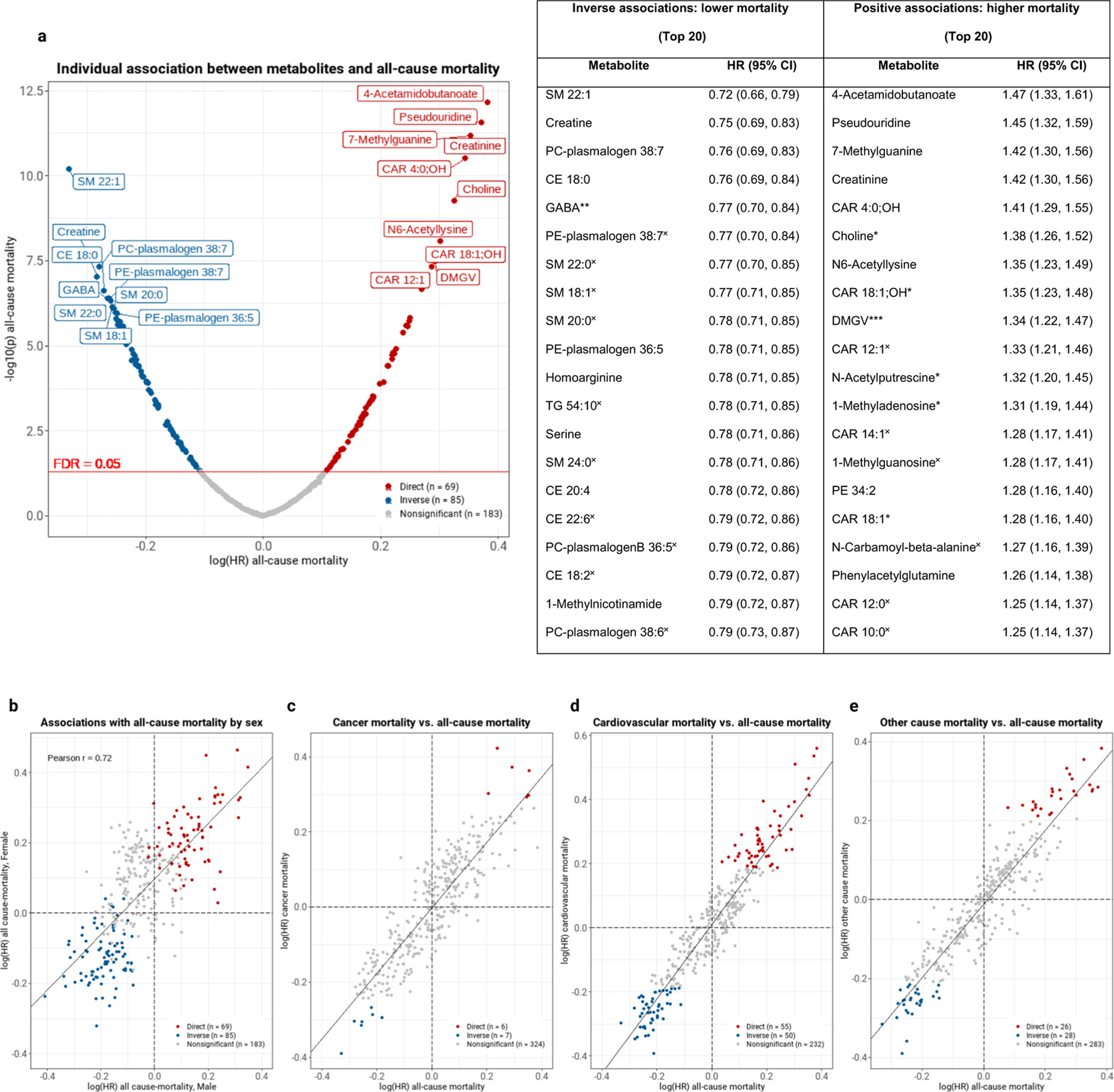
Using a penalized elastic net Cox regression model, the researchers identified a multi-metabolite score consisting of 38 baseline plasma metabolites which consistently predicted all-cause mortality. The multi-metabolite score demonstrated a high predictive capability with a hazard ratio of 3.16 (95% CI 2.02, 4.95; C-index 0.756) when comparing extreme quintiles and an HR of 1.69 (95% CI 1.51, 1.90; C-index 0.766) for each one standard deviation increase in score. The association remained robust across genders, with a Pearson correlation coefficient between male and female beta coefficients of 0.72. The score was further validated using repeat plasma measurements at one-year follow-up and in four independent American cohorts.
Expert Commentary
The findings of this study position metabolomic profiling as a promising adjunct in the risk stratification of patients, particularly in high-risk populations. As metabolic pathways are implicated in essential physiological processes, understanding the correlation between specific metabolites and mortality can illuminate potential biological mechanisms driving health disparities. Experts in metabolic medicine express optimism about the clinical utility of these findings in guiding patient management and preventive strategies. However, the study acknowledges limitations such as the specific high-risk nature of the study population, posing challenges to the generalizability of results to wider populations. Further studies should validate these findings and explore the mechanistic pathways underlying these associations.
Conclusion
This comprehensive analysis underscores the potential of a multi-metabolite signature as a robust predictor of long-term mortality. The identification of specific metabolites associated with mortality risk offers a valuable tool for clinicians in stratifying risks and tailoring interventions for patients, particularly in clinical settings focused on preventative care. Further research is warranted to explore the application of these findings in routine clinical practice.
References
– Fernández-Duval G, Razquin C, Wang F, Yun H, Hu J, Guasch-Ferré M, et al. A multi-metabolite signature robustly predicts long-term mortality in the PREDIMED trial and several US cohorts. Metabolism. 2025 Sep;170:156195. doi: 10.1016/j.metabol.2025.156195 IF: 11.9 Q1 . Epub 2025 Mar 17. PMID: 40107652 IF: 11.9 Q1 ; PMCID: PMC12245597 IF: 11.9 Q1 .
This article was created using several editorial tools, including AI, as part of the process. Human editors reviewed this content before publication.