Understanding Physicians’ Mental Models on Goals of Care in Chronic Critical Illness: Implications for Shared Decision Making
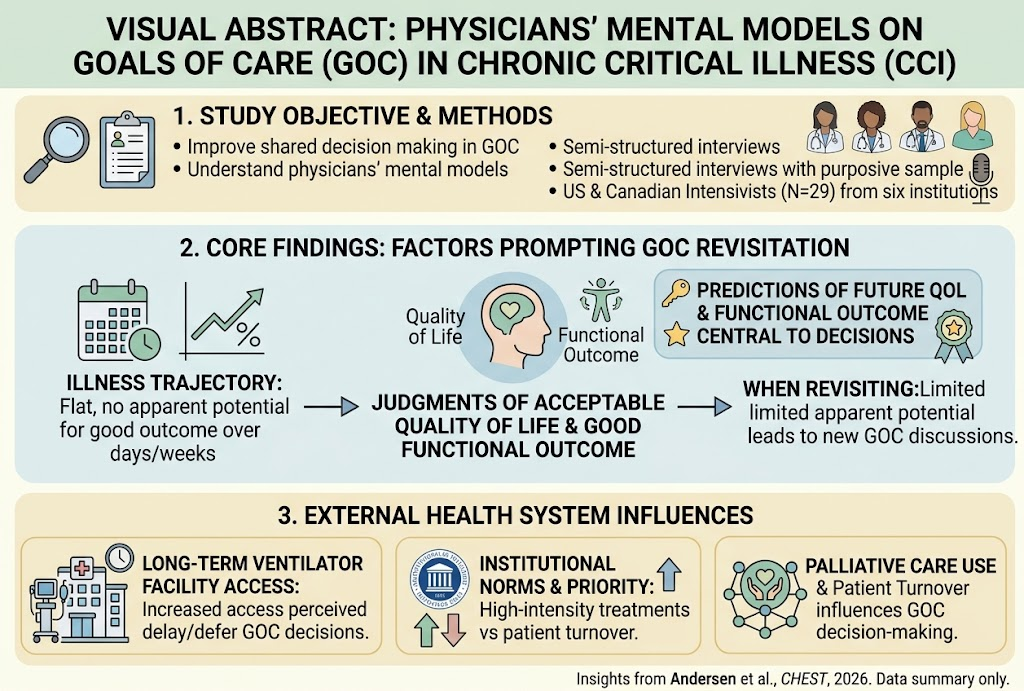
Study Background
Chronic critical illness (CCI) is characterized by prolonged dependence on intensive care support, often including long-term mechanical ventilation, with survivors facing significant morbidity, uncertain prognosis, and complex care needs. The clinical trajectory of CCI patients is typically protracted and unpredictable, placing a heavy decision-making burden on physicians, patients, and families. Goals of care (GOC) discussions are crucial in this context to align medical interventions with patient values, quality of life considerations, and expected outcomes. However, shared decision-making in CCI remains challenging due to prognostic uncertainty, evolving clinical status, and varied institutional resources, particularly regarding access to long-term ventilator facilities. Understanding how intensivists conceptualize and approach GOC decisions—their mental models—is essential to improving communication strategies and patient-centered care in CCI.
Study Design and Methods
Sign in free to continue reading
Create or use your MedXY account to unlock the complete article.
This article was created using several editorial tools, including AI, as part of the process. Human editors reviewed this content before publication.