We use cookies

Our website uses essential cookies and, with your consent, additional cookies to measure performance and improve our services. Cookie Policy.

You can change your choice at any time.

MMedXYNews
HomeVideos
MedXY AI/MedXY News/Section: Diabetes & Endocrinology

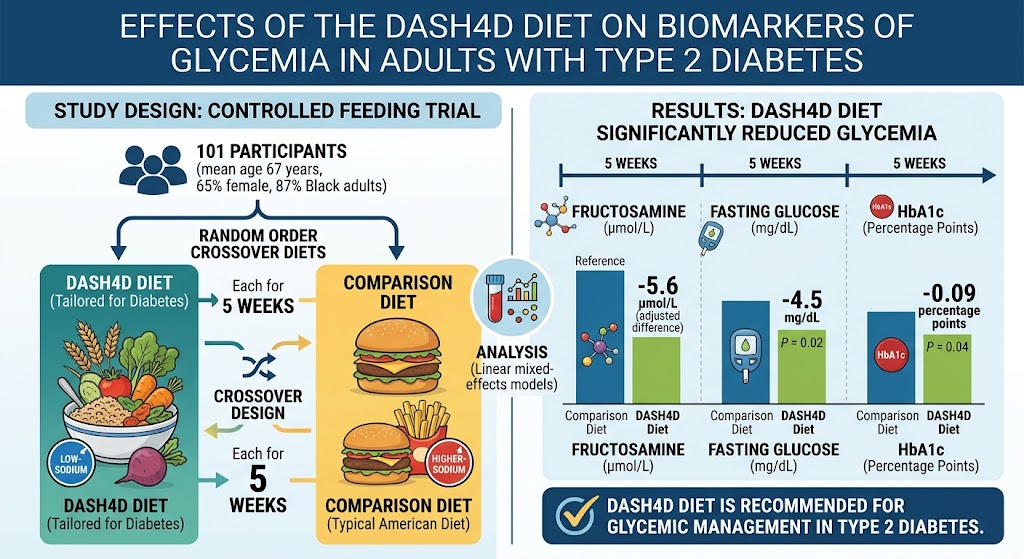
Impact of the DASH4D Diet on Glycemic Biomarkers in Adults with Type 2 Diabetes: Insights from a Randomized Controlled Feeding Trial
MedXY Editorial Team•Aug 29, 2026•Diabetes & Endocrinology
DASH4D dietGlycemic Controlrandomized clinical trialtype 2 diabetes

Highlight

  • The DASH4D diet, adapted specifically for type 2 diabetes, significantly reduced fructosamine, fasting glucose, and HbA1c levels over 5 weeks.
  • The controlled feeding randomized trial included 101 adults with type 2 diabetes, predominantly Black and older adults, enhancing the study’s clinical relevance.
  • Findings support the DASH4D dietary approach as an effective glycemic management tool in type 2 diabetes, with implications for clinical dietary counseling.

Study Background

MedXY registered readers

Sign in free to continue reading

Create or use your MedXY account to unlock the complete article.

This article was created using several editorial tools, including AI, as part of the process. Human editors reviewed this content before publication.

Related articles

Open language-specific specialty feeds and department pages.

Fenofibrate Use and Reduced Risk of Sight-Threatening Diabetic Retinopathy in Type 2 Diabetes: Insights from UK Real-World DataFenofibrate use in type 2 diabetes patients is associated with a significant reduction in the risk of sight-threatening diabetic retinopathy compared to statins, based on UK primary care data over 12 years.Sep 18, 2026IVIG Plus Prednisone Enhances Recovery in Newly Diagnosed Idiopathic Inflammatory Myopathies: Insights from a Randomized Clinical TrialA recent randomized trial shows that adding intravenous immunoglobulin (IVIG) to high-dose prednisone significantly improves muscle strength and disease activity in newly diagnosed idiopathic inflammatory myopathies with rapid and clinicallSep 17, 2026Differential Gastrointestinal Risks of Opioids in Type 2 Diabetes Patients on GLP-1RA Therapy: A Comparative AnalysisAmong type 2 diabetes patients using GLP-1 receptor agonists, oxycodone is linked to higher short-term risks of severe gastrointestinal complications compared to hydrocodone and tramadol, warranting cautious opioid selection in this populatSep 15, 2026
Loading comments...
MedXY briefing

Get the free newsletter

Evidence-led clinical news, trends, and analysis—delivered to your inbox.

Ask MedXY AI

Most popular

Intimate Health
Five Benefits for Women Continuing Sexual Activity After Menopause
Intimate Health
Why Some Women Have a Strong Sex Drive—And Why Men Shouldn't Worry About It
Nursing & care
How often should a couple have sex?
Intimate Health
Classic Intimacy Recommendations: How to Help Women Reach Orgasm and Enjoy Mutual Pleasure
Intimate Health
What Makes a Woman "Physiologically Addicted" Is Never Money, But These Two Relationship Qualities
© 2026 MedXY
Contact usAbout usPrivacy PolicyMedXY story
Common Anti-Inflammatory Drugs Linked to Lower Risk of Vision-Threatening Diabetic Retinopathy in Type 2 Diabetes
A large retrospective cohort study suggests that cetirizine, ibuprofen, and prednisone use in adults with type 2 diabetes is associated with significantly reduced incidence of diabetic macular edema and proliferative diabetic retinopathy, h
Sep 15, 2026
Safety and Effects of Gildeuretinol Acetate on Retinal Atrophic Lesions in Stargardt Disease: Insights from the TEASE-1 Randomized Clinical TrialThis review synthesizes evidence from the TEASE-1 trial and related studies on gildeuretinol acetate, highlighting its safety profile and modest efficacy in slowing retinal atrophic lesion growth in Stargardt disease over 24 months.Sep 7, 2026
Linking Female Infertility History to Type 2 Diabetes Risk: Insights from the Nurses’ Health Study IIThis study explores the increased risk of type 2 diabetes among women with a history of infertility, highlighting specific infertility causes and implications independent of BMI.Sep 6, 2026