Expiratory Pressure Alleviation in CPAP Therapy: Impact on Upper Airway Patency and Obstructive Sleep Apnea Control
Highlight
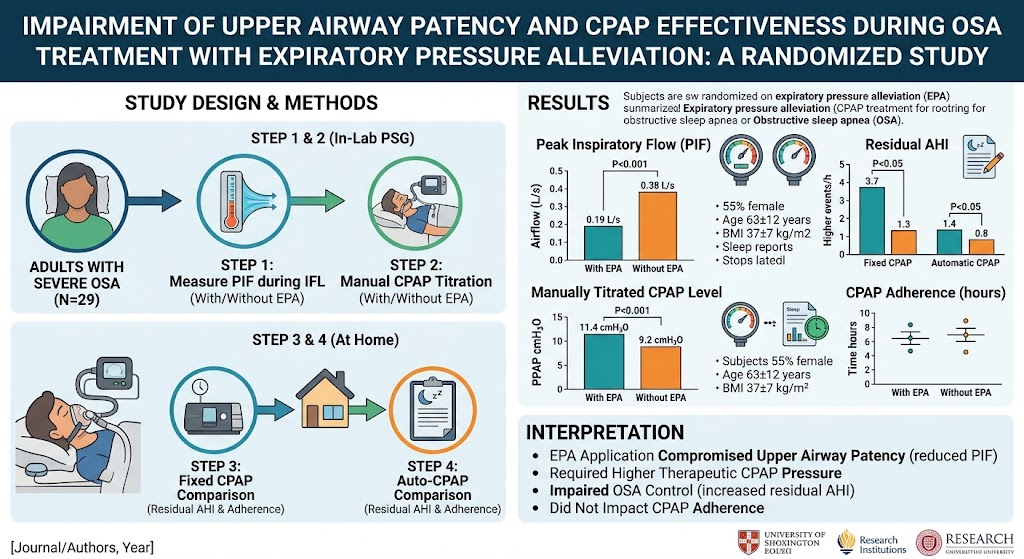
– Expiratory pressure alleviation (EPA) in CPAP therapy reduces peak inspiratory flow and compromises upper airway patency in severe obstructive sleep apnea (OSA) patients.
– EPA requires higher therapeutic CPAP pressures to maintain airway patency and control apnea-hypopnea events.
– Residual apnea-hypopnea index (AHI) is significantly higher with EPA than without during both fixed and automatic CPAP settings.
– CPAP adherence is unaffected by the use of EPA despite impaired airway patency and OSA control.
Study Background
MedXY registered readers
Sign in free to continue reading
Create or use your MedXY account to unlock the complete article.
This article was created using several editorial tools, including AI, as part of the process. Human editors reviewed this content before publication.