We use cookies

Our website uses essential cookies and, with your consent, additional cookies to measure performance and improve our services. Cookie Policy.

You can change your choice at any time.

MMedXYNews
HomeVideos
MedXY AI/MedXY News/Section: Cardiology

Evaluating PCSK9 Inhibitor Effects on Outcomes in ASCVD Patients Without Prior Ischemic Events: Real-World Insights

MedXY Editorial Team•Aug 17, 2026•Cardiology
Nghiên cứu quan sátischemic eventsLDL Cholesterolatherosclerotic cardiovascular diseasePCSK9 inhibitors
For image description, please refer to the figure legend and surrounding text.

Highlight

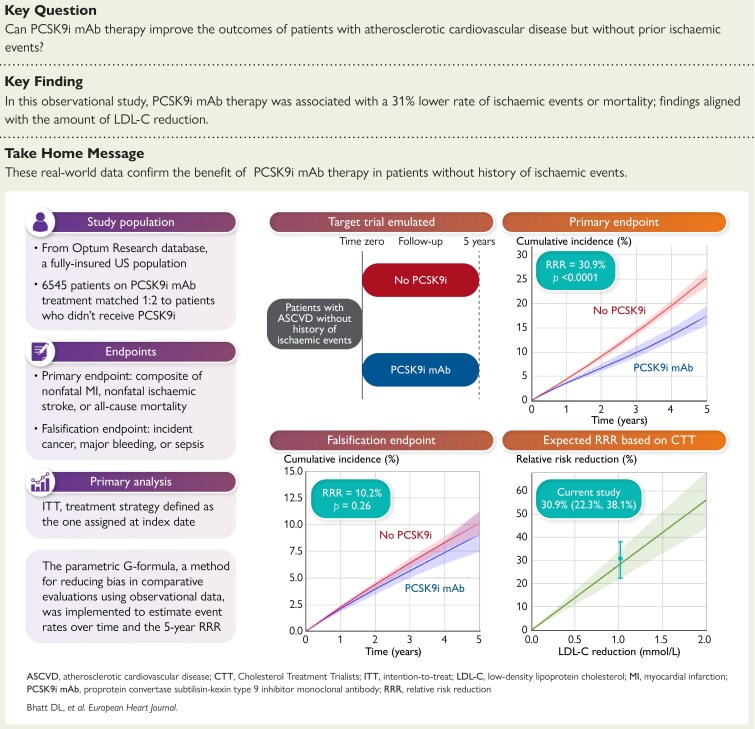
  • PCSK9 inhibitor monoclonal antibodies (PCSK9i mAb) markedly lower rates of ischaemic cardiovascular events and all-cause mortality in patients with established atherosclerotic cardiovascular disease (ASCVD) without prior ischaemic events.
  • Five-year outcome analyses reveal a 30.9% relative risk reduction (RRR) and 7.8% absolute risk reduction (ARR) in the primary composite endpoint with PCSK9i treatment.
  • Initiation of PCSK9i mAb resulted in substantial LDL-C reductions (mean absolute reduction 63.1 mg/dL, 53.6% decrease from baseline), demonstrating potent lipid-lowering in a real-world setting.

Study Background

MedXY registered readers

Sign in free to continue reading

Create or use your MedXY account to unlock the complete article.

This article was created using several editorial tools, including AI, as part of the process. Human editors reviewed this content before publication.

Related articles

Open language-specific specialty feeds and department pages.

Evaluating Quality of Life and Recurrence in Recurrent Diverticulitis: A Prospective Multicenter Study Comparing Colectomy and ObservationThis multicenter prospective study reveals that colectomy in recurrent sigmoid diverticulitis improves disease-specific quality of life and reduces 1-year recurrence compared to observation, informing surgical decision-making.Sep 8, 2026Lipoprotein(a) and Atherosclerotic Cardiovascular Disease Risk Across the Adult Lifespan: Insights from a Large Population StudyElevated lipoprotein(a) confers a consistent relative risk increase for atherosclerotic cardiovascular disease across all adult ages, with absolute risks rising substantially in older adults.Sep 1, 2026Sustained Cardiovascular Protection With Evolocumab in Patients Without Prior MI or Stroke: Insights From the VESALIUS-CV TrialEvolocumab significantly reduces first and subsequent major adverse cardiovascular events in high-risk patients without prior myocardial infarction or stroke, affirming the benefit of intensive LDL-C lowering for cumulative cardiovascular rAug 29, 2026
Loading comments...
MedXY briefing

Get the free newsletter

Evidence-led clinical news, trends, and analysis—delivered to your inbox.

Ask MedXY AI

Most popular

Intimate Health
Five Benefits for Women Continuing Sexual Activity After Menopause
Intimate Health
Why Some Women Have a Strong Sex Drive—And Why Men Shouldn't Worry About It
Nursing & care
How often should a couple have sex?
Intimate Health
Classic Intimacy Recommendations: How to Help Women Reach Orgasm and Enjoy Mutual Pleasure
Intimate Health
What Makes a Woman "Physiologically Addicted" Is Never Money, But These Two Relationship Qualities
© 2026 MedXY
Contact usAbout usPrivacy PolicyMedXY story
Assessing Cardiovascular Risks Associated with Bruton’s Tyrosine Kinase Inhibitors: Insights from a Meta-Analysis of Phase 3 Trials
This meta-analysis of 17 Phase 3 RCTs reveals that BTK inhibitors, primarily ibrutinib, increase the risk of non-fatal ischemic cardiovascular events in patients with B-cell malignancies, highlighting important safety considerations.
Aug 24, 2026
Enlicitide: A Breakthrough Oral PCSK9 Inhibitor Offering Superior LDL-C Reduction Compared to Established Oral Nonstatin TherapiesThis phase 3 trial demonstrates that the oral PCSK9 inhibitor enlicitide achieves significantly greater LDL-C reduction than bempedoic acid, ezetimibe, or their combination in statin-treated adults at elevated cardiovascular risk, with compAug 18, 2026
Coronary Artery Calcium and Statin Allocation in the Era of PREVENT: Evidence from MESAThis study assesses how coronary artery calcium (CAC) scoring refines statin eligibility using the new PREVENT risk calculator, emphasizing its value in borderline risk patients and cautioning against withholding statins solely for CAC 0 inJul 16, 2026