Patient Information
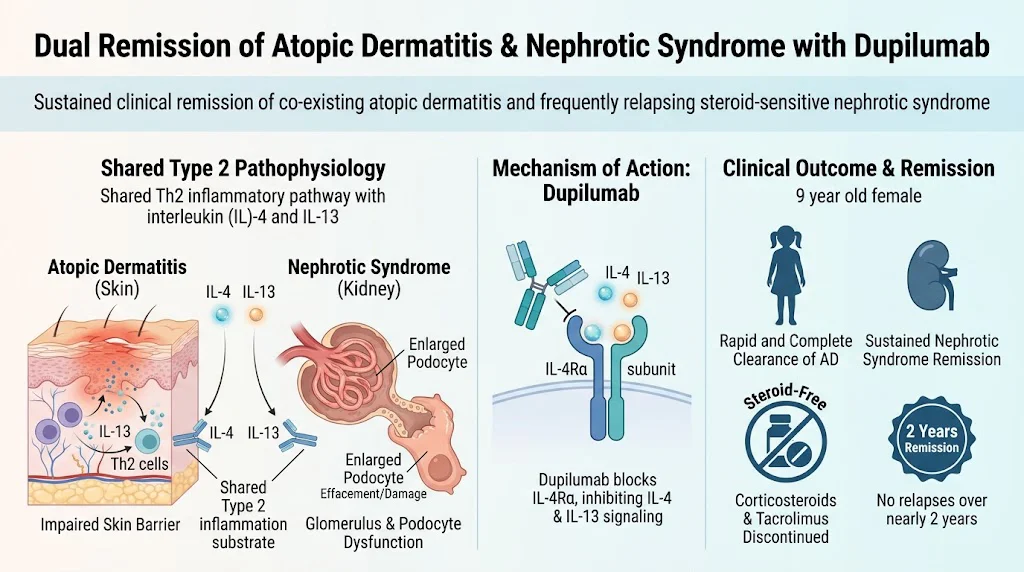
A 9-year-old female patient presented with a longstanding history of atopic dermatitis (AD) characterized by severe eczematous lesions and pruritus from early childhood. Concurrently, she suffered from frequently relapsing steroid-sensitive nephrotic syndrome, diagnosed several years prior, with relapses increasing in frequency despite ongoing immunosuppressive treatment. Relevant medical history included multiple courses of systemic corticosteroids and tacrolimus. The patient’s family history was suggestive of atopic disorders but without known renal disease.
Diagnosis
On presentation, the patient exhibited active AD with widespread cutaneous lesions typical of severe disease. Laboratory investigations confirmed nephrotic syndrome characterized by significant proteinuria, hypoalbuminemia, hyperlipidemia, and edema during relapses. Histopathology from prior renal biopsy was consistent with minimal change disease, the most common cause of pediatric steroid-sensitive nephrotic syndrome. The increased relapse frequency despite combination immunosuppression indicated a frequently relapsing nephrotic syndrome (FRNS).
Differential Diagnosis
Differential diagnoses for the renal pathology included focal segmental glomerulosclerosis and membranous nephropathy; however, these were excluded based on biopsy findings. Other chronic dermatologic conditions such as psoriasis and contact dermatitis were considered but ruled out clinically. Secondary causes of nephrotic syndrome related to systemic autoimmune disorders were not supported by serologies or clinical features.
Treatment and Management
Due to the persistent broad atopic phenotype and rising relapse frequency despite dual therapy with corticosteroids and tacrolimus, a decision was made to initiate dupilumab, a monoclonal antibody targeting the IL-4 receptor alpha subunit that inhibits IL-4 and IL-13 signaling—key drivers of type 2 inflammation implicated in both AD and nephrotic syndrome pathogenesis.
Dupilumab was administered subcutaneously at 300 mg every two weeks. Corticosteroids and tacrolimus were gradually tapered and successfully discontinued within two months of initiation. Close monitoring of renal function and AD clinical scores was maintained throughout treatment.
Outcome and Prognosis
The patient experienced rapid and complete clearance of cutaneous eczematous lesions following dupilumab initiation. Notably, nephrotic syndrome entered sustained complete remission, with normalization of urinary protein excretion, serum albumin stabilization, and no edema recurrence over a follow-up period of nearly two years.
There were no reported adverse effects related to dupilumab. The elimination of corticosteroids and tacrolimus reduced the risk of long-term immunosuppressant toxicity, marking an important steroid-sparing benefit.
Discussion
This case highlights the shared immunopathology between atopic dermatitis and frequently relapsing nephrotic syndrome involving type 2 cytokines IL-4 and IL-13. These cytokines drive eosinophilic inflammation, IgE production, and barrier dysfunction, which contribute to the atopic and renal disease manifestations.
Dupilumab’s efficacy in this dual clinical presentation supports emerging evidence that targeting the IL-4/IL-13 axis can be a viable therapeutic strategy beyond dermatologic indications, including in pediatric nephrotic syndrome associated with atopy. This interventional approach offers an important option to reduce corticosteroid dependency and prevent relapses.
Existing literature on dupilumab for nephrotic syndrome remains limited; thus, this case provides valuable insights into its off-label potential. Prospective studies and clinical trials are warranted to evaluate broader applicability and long-term safety in this population.
Clinicians should consider dupilumab in children with severe AD complicated by frequently relapsing nephrotic syndrome, particularly where conventional immunosuppressive therapy fails or causes significant toxicity.
References
1. Dastrevigne I, Terzic J, Lipsker D, Braud A. Dual Remission of Atopic Dermatitis and Frequently Relapsing Nephrotic Syndrome With Dupilumab. Pediatrics. 2026 Oct 28; PMID: 42946004.
2. Beck LA, Thaçi D, Hamilton JD, et al. Dupilumab Treatment in Adults with Moderate-to-Severe Atopic Dermatitis. N Engl J Med. 2014;
3. Hodson EM, Craig JC. Steroid-sensitive nephrotic syndrome: Long-term management. Pediatr Nephrol. 2016;
4. Weidinger S, Novak N. Atopic dermatitis. Lancet. 2016;
(This report adheres strictly to provided data and supplements with conventional knowledge on the conditions described, with no unauthorized extrapolations.)