Introduction
Autoimmune neutropenia (AiN) in adults represents a rare and clinically heterogeneous disorder characterized by immune-mediated destruction of neutrophils, leading to persistent neutropenia. Distinct from its more commonly self-limited pediatric counterpart, adult AiN is typically chronic, predominantly affects female patients, and is frequently associated with other autoimmune diseases. Given its rarity and variable clinical presentation, management strategies require a nuanced understanding of pathophysiology and individualized therapeutic approaches.
Clinical Background and Disease Burden
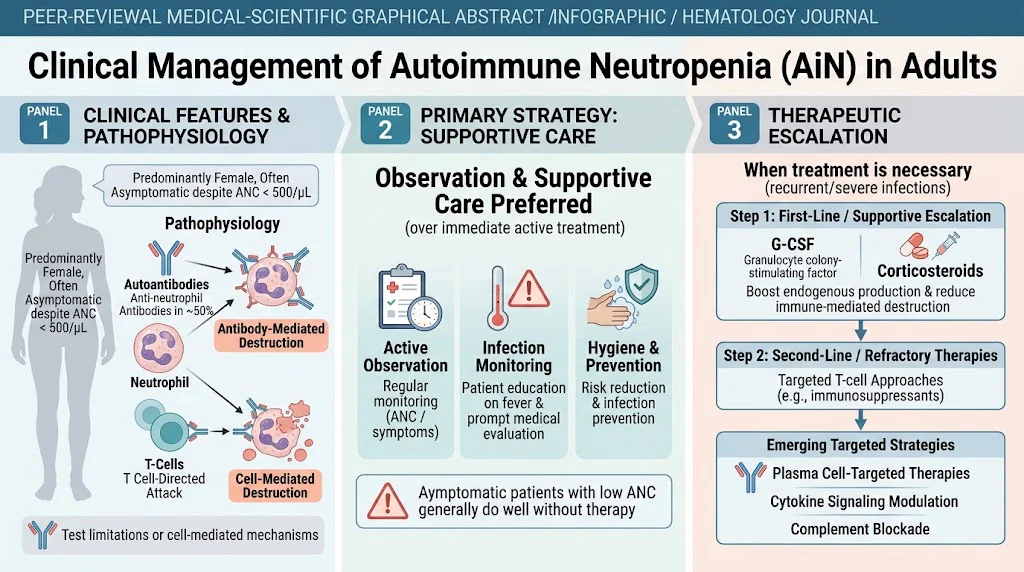
Neutropenia in adults can predispose to severe infections, but intriguingly, many adult AiN patients remain asymptomatic despite absolute neutrophil counts below 500/μL. This discrepancy challenges traditional infection risk paradigms and complicates clinical decision-making. Approximately half of adults with AiN demonstrate detectable anti-neutrophil antibodies; however, the absence of antibodies in others suggests additional mechanisms such as cell-mediated neutrophil destruction, underscoring the complex immunopathology.
Diagnostic Considerations and Pathogenesis
Diagnosis relies on a combination of persistent neutropenia, exclusion of secondary causes, and laboratory assessment for anti-neutrophil antibodies. However, the sensitivity of antibody detection remains suboptimal. Corroborative evidence includes clinical context, coexisting autoimmune conditions, and bone marrow findings if pursued. The pathogenesis involves both humoral and cellular immune mechanisms, with emerging data supporting a role for T-cell mediated cytotoxicity in certain patients.
Management Approaches
Observation and supportive care form the cornerstone for the majority of adult AiN patients who are asymptomatic and infection-free despite profound neutropenia. When intervention is warranted—such as recurrent infections or severe neutropenia—therapy aims to:
Enhance neutrophil production via granulocyte colony-stimulating factor (G-CSF) administration.
Suppress immune-mediated neutrophil destruction using corticosteroids or immunosuppressants.
Eliminate pathogenic autoantibodies through modalities like intravenous immunoglobulin (IVIG) or plasma exchange.
Clinical responses are variable. Refractory cases may benefit from second-line, T cell-directed therapies including cyclosporine or other immunomodulators, supporting the hypothesis of cell-mediated neutrophil clearance.
Emerging and Experimental Therapies
Recent advances target pathogenic plasma cells with agents such as proteasome inhibitors and explore modulation of cytokine pathways to attenuate inflammatory destruction. Complement blockade is a novel avenue under investigation, aiming to disrupt immune effector mechanisms contributing to neutrophil depletion. These innovative strategies hold promise but require validation in clinical trials.
Clinical Challenges and Recommendations
Given the rarity and heterogeneity of adult AiN, treatment algorithms remain largely empiric and driven by case series data rather than randomized trials. Clinicians should balance the risks of immunosuppression against infection susceptibility, tailoring therapy to individual disease severity and comorbidity profiles. Multidisciplinary collaboration among hematologists, immunologists, and infectious disease specialists is essential to optimize outcomes.
Conclusion
Autoimmune neutropenia in adults is a chronic, complex disorder necessitating a personalized approach that often favors watchful waiting over immediate intervention. Understanding the interplay of antibody- and cell-mediated mechanisms informs therapeutic choice. Emerging immunotherapies promise to refine management, but further research and collaborative data collection are imperative to establish robust clinical guidelines.
References
1. Leaf RK, Sykes DB. How I treat autoimmune neutropenia in adults. Blood. 2026 Oct 22;148(17):2110-2120. doi: 10.1182/blood.2026-42561130. PMID: 42561130.
2. Dale DC. Autoimmune neutropenia. Semin Hematol. 2008 Jan;45(1):17-25. doi: 10.1053/j.seminhematol.2007.09.011.
3. Boxer LA. How I treat autoimmune neutropenia. Blood. 2021;137(23):3161-3170. doi: 10.1182/blood.2020009035.
4. Mahévas M, Beaupain B, Costedoat-Chalumeau N, et al. Autoimmune neutropenia: pathogenesis and diagnostic challenges. J Clin Immunol. 2020;40(8):1183-1191.
5. Mould D, Freeman C, Daisie S. Emerging therapies in immune neutropenia. Hematol Oncol Clin North Am. 2024;38(1):123-138.